Field Hockey: rules of

England Hockey's "25 in 2025" initiative has been touring the country, bringing two-hour on-pitch workshops to 25 locations. The focus: practical practice ideas that coaches can take straight back to their clubs. Here's a summary of the key concepts being shared.

The Philosophy

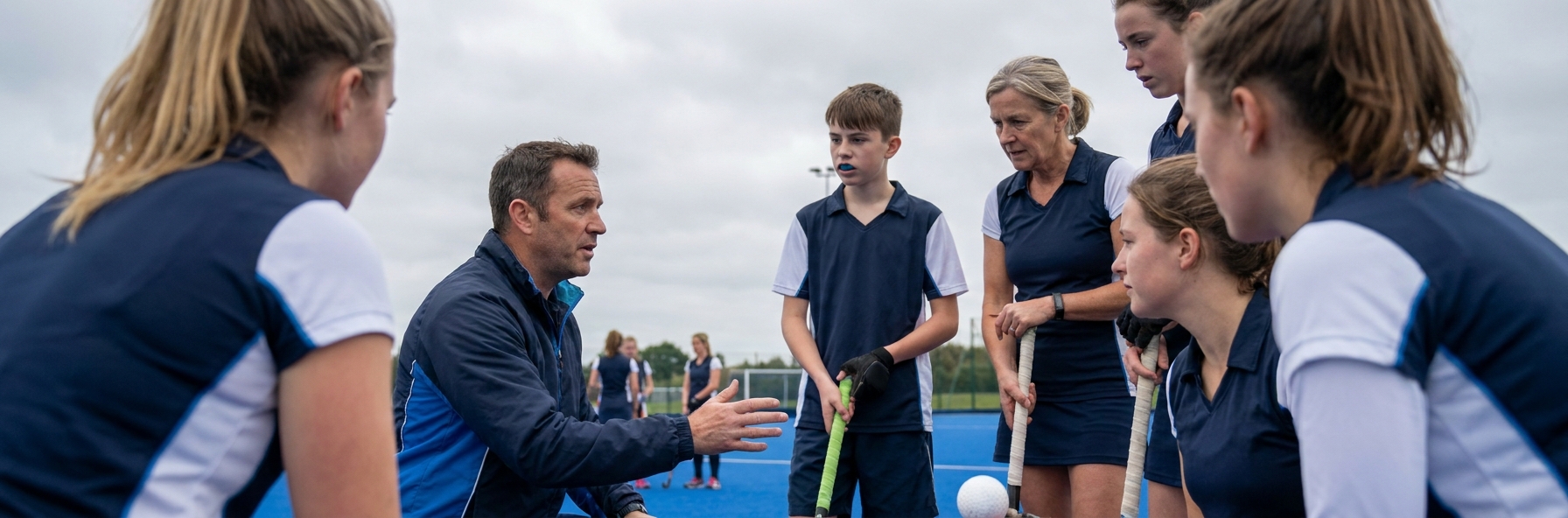
The workshops are designed for everyone involved in delivering hockey, from experienced coaches to volunteers just starting out. The emphasis is on fun, engaging sessions that keep players coming back - because player retention depends on the quality of the experience we create.

Each workshop covers arrival activities, carrying and passing progressions, and game-based learning. Participants leave with a bank of ideas they can implement immediately.

Arrival Activities That Work

The first few minutes of any session set the tone. Arrival activities should be:

Self-managing: Players can start without detailed instruction. This lets the coach focus on organisation while early arrivals get active.

Engaging: Not just standing in lines. Movement, decision-making, maybe a competitive element.

Scalable: Works with 2 players or 20. As more arrive, they join seamlessly.

Examples include: grid-based possession games where players can join any team, skill stations with clear visual instructions, and small-sided games that expand as numbers grow.

Carrying and Moving with Purpose

A significant portion of the workshops focuses on ball carrying. The key insight: carrying isn't just about technique, it's about purpose. Why are you carrying? Where are you taking the ball? What's your next action?

Practices progress from technique-focused (head up, ball position, change of pace) to decision-focused (when to carry vs pass, reading space, timing runs with teammates).

The workshops emphasise "game-realistic" carrying - not just running through cones, but carrying with pressure, carrying to eliminate, carrying to create passing angles.

Passing as Communication

The workshops reframe passing as communication between players. A good pass says "here's where I want you to receive." A great pass also says "here's what I want you to do next."

Practices focus on:

  • Weight of pass - firm enough to arrive quickly, soft enough to control
  • Timing - not too early (intercepted), not too late (receiver can't use it)
  • Receiver's next action - passing to the correct foot/side for what follows

Games-Based Learning

Perhaps the biggest takeaway from the workshops is the shift toward games-based learning. Instead of isolated drills, players learn through modified games that naturally develop the required skills.

The coach's role becomes designing games that create the learning outcomes, then facilitating rather than instructing. Questions replace commands: "What did you notice there?" "Why did that work?" "What could you try differently?"

This approach develops players who can problem-solve, adapt, and transfer learning to match situations.

Making Sessions Engaging

The workshops share specific techniques for keeping energy high:

Quick transitions: Minimise time between activities. Have the next game ready before the current one finishes.

Appropriate challenge: Too easy is boring, too hard is frustrating. Find the "just right" level for your group.

Variety within structure: Keep the same game framework but change small elements - scoring methods, playing areas, team compositions.

Player voice: Give players choices. "Do you want to play again or try something new?" This builds ownership.

Video Support

All workshop practices are available on YouTube, allowing coaches to revisit and refine after attending. This resource bank is growing as the roadshow continues.

Who Should Attend?

The workshops are pitched at all levels. Experienced coaches report learning new ideas and getting reinforcement of good practice. New coaches gain confidence and practical tools. The shared experience of learning together builds community within the sport.

If a workshop is coming to your area, it's worth attending. The time investment is small; the return in practical ideas is significant.

Key Coaching Points

  • Arrival activities set the tone - make them engaging
  • Carrying with purpose, not just technique
  • Passing is communication between players
  • Games-based learning develops problem-solvers
  • Keep sessions varied and appropriately challenging

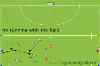
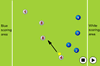
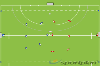
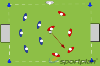
Drills to Build Your Practice Bank

VIEW ALL WARM-UP DRILLS

JOIN SPORTPLAN FOR FREE

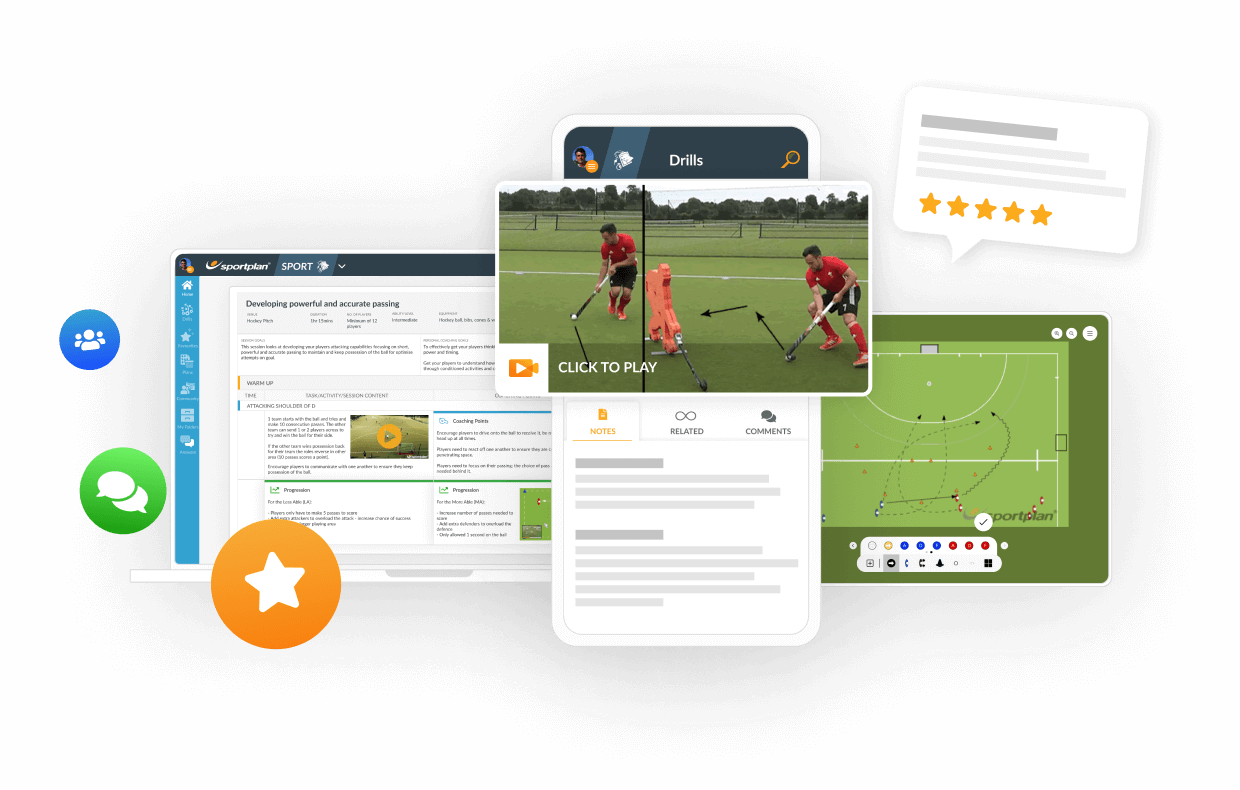
  • search our library of 1000+ field hockey drills
  • create your own professional coaching plans
  • or access our tried and tested plans
rules of DRILLS
View All
Unfortunately there were no results for your search! Please try again
rules of ANSWERS
View All

I am the Skipper of an under-achieving 2XI.

I am the Skipper of an under-achieving 2XI. Individually most of my players could play 1XI but opted for an easier life lower down the Club. I struggle to get them to training on-mass and so I'm limited to pre-match warm ups to get them all together. We tend to do well against strong oppo but take far too long to get going against weaker teams. Any suggestions to help us start with the correct momentum?

Archived User Coach

Any tips for the new hockey self pass rules

Any tips for the new hockey self pass rules

Archived User Coach

are the new hockey rules ie hitting into the d direct?

are the new hockey rules ie hitting into the d direct from a free hit being applied to junior hockey

Grant Homann Coach, England

my forwards are fouling when pressin for the ball is?

my forwards are fouling when pressin for the ball is there a drill ican do to help stop this

Jamesydods Coach, Northern Ireland

yellow card rule

can a player take a stroke in a penalty stroke comp if is still on a yellow card suspension at the end of extra time.

bob bulasch Coach, Australia

Q) Can the keeper use the back of his/her stick? The?

Q) Can the keeper use the back of his/her stick? The rules say players can't use the back of his/her stick. However also says the GK can use ANY part of the equipment. Thaks Jeevs %3A)

Archived User Coach

self pass rule confusion

Hi everyone, I have been hunting for a more detailed explanation on the self pass rule for hockey. My under standing of it is that a self pass must involve the ball moving five meters before it is hit by the player or it must be hit from a dead positon (not moving) I have umpired many games where the players 'tap and hit' the ball, often with another player rushing in to tackle just as the 'tap' is played. This seems dangerous but im not sure if the tackler is playing dangerously or if the 'tap and hit' player is dangerous? I have read the rule book but this rule is not explicit enough. Any interpretaions welcome. Thanks

Archived User Coach

Is it legal to use a "stealth" tackle and a poke tackle?

For high school, I can't find it saying it isn't allowed, but I don't want to teach it to my girls or make them aware of these if they can't technically use them

Amanda Coach, United States of America

Mini games I could use in a school enviroment?

I help out at local skill teaching children from yr 1 to yr 7 the skills of hockey. I am always looking for fun mini games which encases all skill types. This is from non hockey to excellent hockey players.

Rodney Johnson Coach, Australia

FIH format change - for better or for worse?

As of 1 September, major FIH events such as the Champions Trophy, Hockey World League Final and Rio 2016 Olympic Games will assume a new format that includes moving to four 15-minute quarters and having 40-second time-outs when a penalty corner is awarded and after a goal is scored. Do you think this a positive or negative for the future of hockey?

Sportplan Team Coach, United Kingdom

white board sessions

any ideas on what to cover in a white board session for adults and junior during a wet night when training is postponed thanks

Onny Gajadhar Coach, New Zealand

Team loyalty, not talking down team mates.

Hi all,I coach a school boys teams, ages 12-18.Late last season after a disappointing loss, one of the younger boys made the comment 'Its all xxxx's fault that we lost'. This was made at the end of the game while I was packing away our gear and most, but not all, of the boys had already departed. XXXX wasn't there to hear the comment. Being dumbfounded by this comment, I let it go at the time and have stewed on it during the our off season. I'm of the opinion that this type of comment is unacceptable and should result in disciplinary action of some kind. My thinking at the moment is that I would be remove the player from the game ( if made during the game, even if it leaves us short), pass them on to the school for whatever punishment is deemed appropriate with a request to remove them from the team. Am I being too harsh or unreasonable in my thinking? Are there any strategies that I could employ to stop this kind of commentary? I'm going to discuss it with the school when we get back together before the season starts.

David Smith Coach, New Zealand

Rules for 7-11 year olds

Would anyone have a powerpoint suitable for 7-11 year olds to introduce them to the game of hockey, basically explaining the game, rules, equipment, game play and so on?I'd love to inspire the children.Many thanks

Natty Coach, England

Field positioning- how to get youngsters to play their position

How do I get young hockey players to learn to play in their positions? I often tell them what their position details are but they never seem to stick to their positions and end up bunching Asked using Sportplan Mobile App

Storm Wilson Coach, South Africa

Beginner Coach NEED HELP PLEASE

I'm new to coaching and i'm coaching a team that barely knows how to even hold a stick properly. Where can i start with improving there skills and hockey kowledge ?

Liancke Laureti Coach, South Africa

rules of free hit

rules of free hit

Coach, United Kingdom

rules of free hit | Sportplan

rules of free hit

Coach, United Kingdom

What are the rules for a penal...

What is the rules for a penalty corner pusher or injector? Must have one leg in or u can have both leg out to use a sweep?

Dahlia Borhan Coach, Singapore

5-yard rule in hockey? | Sport...

could someone comment on the 5 yard rule when entering the scoring area? There always seams to be a lot of wrong information regarding this rule.

Gaby Coach, United States of America

claiming fouls by hitting the ...

if a player in possession of the ball intentionally hits the ball at the foot of the opposing player in order to slow down the game or for any other advantage is it permissible,what if the same scenario occurs in the shooting circle.

Archived User Coach

JOIN SPORTPLAN FOR FREE

  • search our library of 1000+ field hockey drills
  • create your own professional coaching plans
  • or access our tried and tested plans

Sportplan App

Give it a try - it's better in the app

YOUR SESSION IS STARTING SOON... Join the growing community of field hockey coaches plus 1000+ drills and pro tools to make coaching easy.
LET'S DO IT