Field Hockey: team defense

England Hockey's "25 in 2025" initiative has been touring the country, bringing two-hour on-pitch workshops to 25 locations. The focus: practical practice ideas that coaches can take straight back to their clubs. Here's a summary of the key concepts being shared.

The Philosophy

The workshops are designed for everyone involved in delivering hockey, from experienced coaches to volunteers just starting out. The emphasis is on fun, engaging sessions that keep players coming back - because player retention depends on the quality of the experience we create.

Each workshop covers arrival activities, carrying and passing progressions, and game-based learning. Participants leave with a bank of ideas they can implement immediately.

Arrival Activities That Work

The first few minutes of any session set the tone. Arrival activities should be:

Self-managing: Players can start without detailed instruction. This lets the coach focus on organisation while early arrivals get active.

Engaging: Not just standing in lines. Movement, decision-making, maybe a competitive element.

Scalable: Works with 2 players or 20. As more arrive, they join seamlessly.

Examples include: grid-based possession games where players can join any team, skill stations with clear visual instructions, and small-sided games that expand as numbers grow.

Carrying and Moving with Purpose

A significant portion of the workshops focuses on ball carrying. The key insight: carrying isn't just about technique, it's about purpose. Why are you carrying? Where are you taking the ball? What's your next action?

Practices progress from technique-focused (head up, ball position, change of pace) to decision-focused (when to carry vs pass, reading space, timing runs with teammates).

The workshops emphasise "game-realistic" carrying - not just running through cones, but carrying with pressure, carrying to eliminate, carrying to create passing angles.

Passing as Communication

The workshops reframe passing as communication between players. A good pass says "here's where I want you to receive." A great pass also says "here's what I want you to do next."

Practices focus on:

  • Weight of pass - firm enough to arrive quickly, soft enough to control
  • Timing - not too early (intercepted), not too late (receiver can't use it)
  • Receiver's next action - passing to the correct foot/side for what follows

Games-Based Learning

Perhaps the biggest takeaway from the workshops is the shift toward games-based learning. Instead of isolated drills, players learn through modified games that naturally develop the required skills.

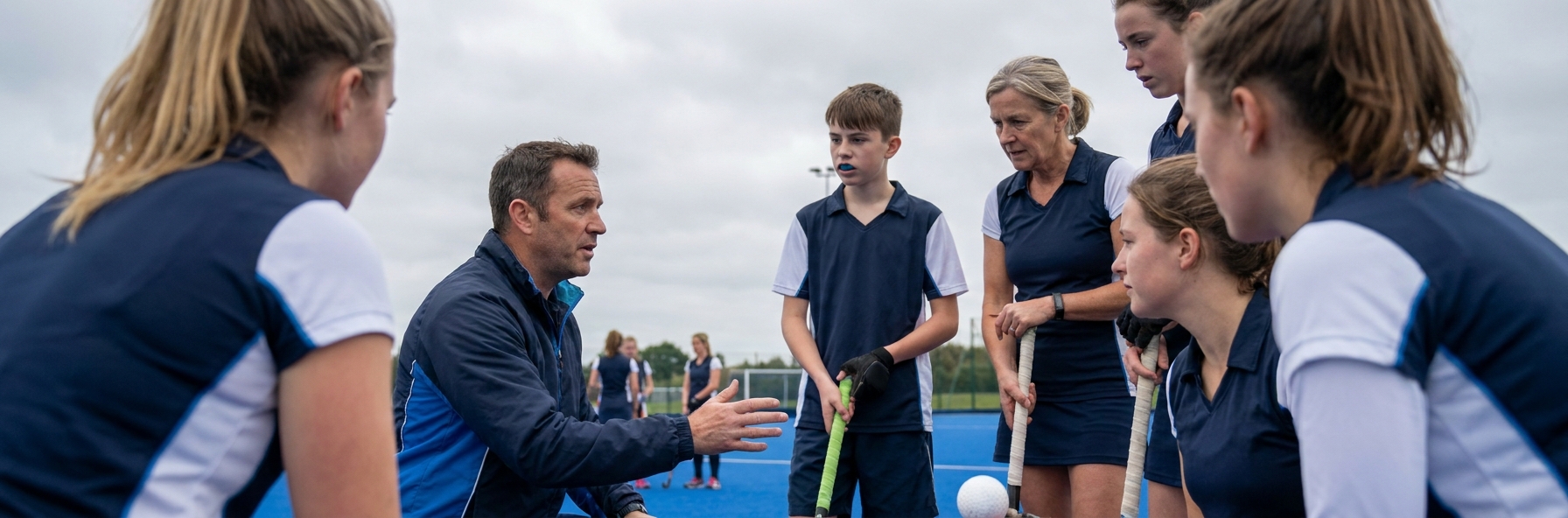
The coach's role becomes designing games that create the learning outcomes, then facilitating rather than instructing. Questions replace commands: "What did you notice there?" "Why did that work?" "What could you try differently?"

This approach develops players who can problem-solve, adapt, and transfer learning to match situations.

Making Sessions Engaging

The workshops share specific techniques for keeping energy high:

Quick transitions: Minimise time between activities. Have the next game ready before the current one finishes.

Appropriate challenge: Too easy is boring, too hard is frustrating. Find the "just right" level for your group.

Variety within structure: Keep the same game framework but change small elements - scoring methods, playing areas, team compositions.

Player voice: Give players choices. "Do you want to play again or try something new?" This builds ownership.

Video Support

All workshop practices are available on YouTube, allowing coaches to revisit and refine after attending. This resource bank is growing as the roadshow continues.

Who Should Attend?

The workshops are pitched at all levels. Experienced coaches report learning new ideas and getting reinforcement of good practice. New coaches gain confidence and practical tools. The shared experience of learning together builds community within the sport.

If a workshop is coming to your area, it's worth attending. The time investment is small; the return in practical ideas is significant.

Key Coaching Points

  • Arrival activities set the tone - make them engaging
  • Carrying with purpose, not just technique
  • Passing is communication between players
  • Games-based learning develops problem-solvers
  • Keep sessions varied and appropriately challenging

Drills to Build Your Practice Bank

VIEW ALL WARM-UP DRILLS

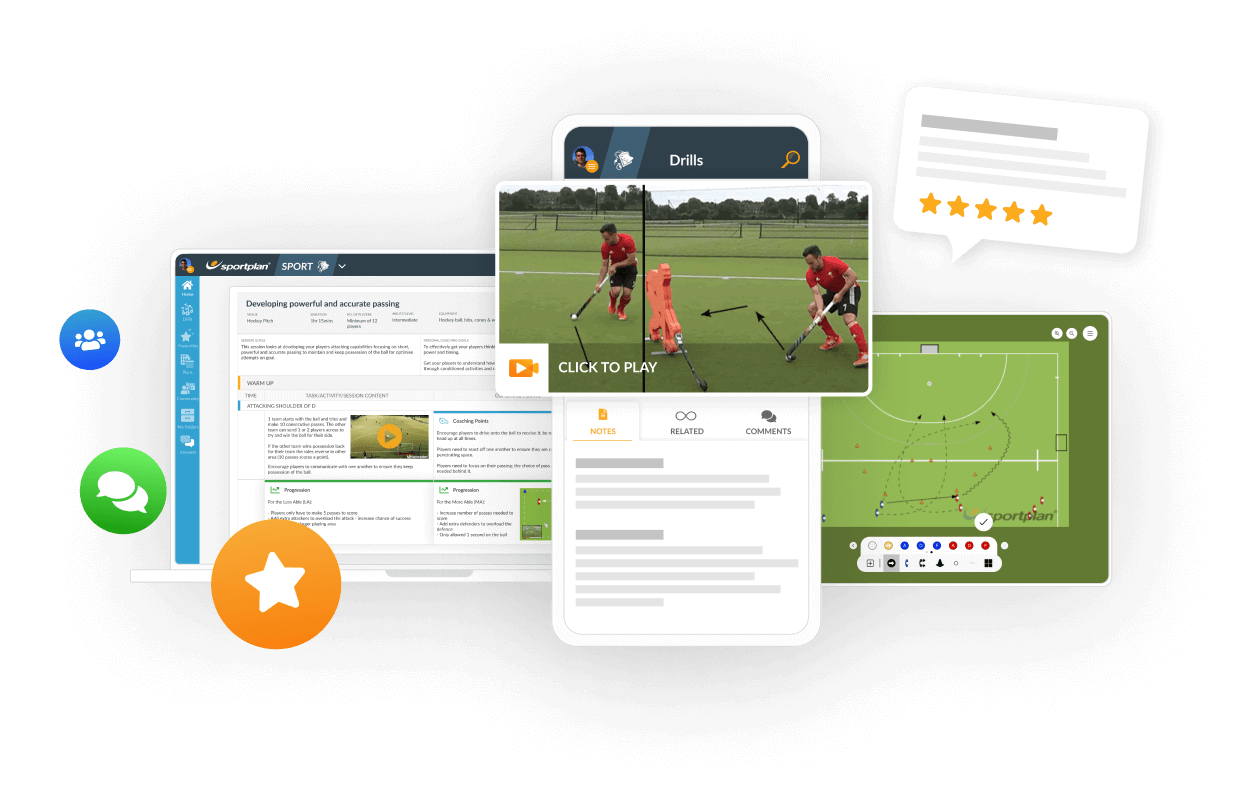
JOIN SPORTPLAN FOR FREE

  • search our library of 1000+ hockey drills
  • create your own professional coaching plans
  • or access our tried and tested plans
team defense DRILLS
View All
Unfortunately there were no results for your search! Please try again
team defense ANSWERS
View All

Where do the defensive players stand during a corner?

Where do the defensive players stand during a corner?

Archived User Coach

Indoor Hockey Situations for Russel Garcia- Solutions to tactical situations

2 Indoor Hockey situations%3A 1.)Could Sportsplan have Russel lay out how to defend a free hit/push into your circle from the left,center and right? More importantly show how the team moves/shifts when a pass is made from that area of the court to another in this situation. 2.) How to play against a 1/2 court system defense. What should the team be looking to do to find space and be successful.

Archived User Coach

can anyone give me some field hockey scenarios that?

can anyone give me some field hockey scenarios that i could use for a lesson i will be teaching the pupils in which they will learn through the game and will be stopped and told a scenario and will need to try to work out with their team what they think they should do?

Archived User Coach

My team is very poor in defense, so we change the system?

My team is very poor in defense, so we change the system to 3-2-3-2, but, now i dont have punch in offensive. What can i do?

Archived User Coach

Can some explain the Steal the Bacon drill?

Can some explain how the Steal the Bacon drill works. I don't see it in the list of drills

Archived User Coach

What is your best advice to a boy playing sweeper in a team with a poor defense

My son has been given the role of sweeper in a team that has only won  twice in two years.  He is probably the weakest player in the team.  What advice can I give him to think about when playing, so that he can improve and enjoy a personal sense of achievement. In training sessions I have never seen any drills designed to organise the defence which is amazing since the teams ambition is usually to keep the goals against to single figures! Are there standard apporoaches as to how close to be  to the player you are marking or which side to stand to stop the attacker getting free with the ball on his open stick?.

Archived User Coach

How can I stop my team from diving in and over-committing in defence?

I am coaching my first season as head coach. I am confident that my team has improved on alot of skills (mostly due to sportplan.net, thank you!). The only thing that is driving me crazy that my team has not improved on is the over committing block tackle. When an opponent is coming down the field on a breakway, my defense runs up and block tackles, and the opponent shoots right past them. This will happen two or three times in a row, one defender after the other. I've told them to keep their feet moving and to keep off their toes, keeping their momentum with the opponent. I don't know how to practice this with them. We only have 9 players (this is a high school varsity team) so we can't scrimmage full field during practice. Please help! I'm desperate for a solution.

Archived User Coach

Indoor hockey defending

Dear colleagues, what are the best ways to defend an attacking team that is playing with a field player with goalkeeping privileges? Te question concerns indoor hockey only.

Marco Koudijs Coach, Netherlands

What position should I play my weaker players?

Hi Im new to coaching hockey want to know what position do I play some of my weaker players without them losing interest and there confidence.

Archived User Coach

How do I balance players personalities to get results

I want our team to make our team and hopefully get promoted, however in my opinion player personalities are holding us back such disliking position and certain players wanting to do things that other players are better at.

Jack Rhodes Coach, Wales

formations for a team with no to few subs & a weaker defense.

I have a week defense JV team. I have few to no subs. Interested in advice or comments about both a 4-2-4 formation and a 2-3-2-3 formation. Suggestions appreciated

Colleen Romero Coach, United States of America

role of center midfielders in a 3223 system

what are the key responsibilities of midfielders in a 3223 system ie how do the centre midfielders organise themselves and who do they mark

peter garlick Coach, Australia

protecting inexperienced keeper

Playing adult mens at a low league level, mixture of ageing experienced players, inexperienced young and not so young players.We normally play 343 diamond, with mixed results, when I works it works well.We are without our keeper , so an outfield player (me , not so young, not so good) padding up.Really need a formation that is going to discourage pressure on the last line of defence (this section has the best, older experienced players).Bit vague and difficult to answer, I would think but a pointer would be good. Many thanks

Jimmy Harwood Coach, England

Indoor Hockey

Hi allOver the weekend I coached my U18s and we did well but I wanted to find out, is there any tactics, coaching sessions for indoor hockey to help defend in different structures or heck even stop attackers from getting their angles right0

Damien Life Liversedge Coach, South Africa

Defensive formations

Hi, my defense I'm worried cos two of my boys are heavy and slow. they working hard but I'm struggling to create a formation that doesn't put my defense at risk. I need your advice on what to do.

graham Coach, South Africa

pre planned sessions

Why can't I open the Team Defense Progressions session on my iPad? It loads great on my laptop. Actully, I am having trouble browsing all drills on the ipad. It wont load them.

Christine Cowden Coach, United States

How can I stop my team from di...

I am coaching my first season as head coach. I am confident that my team has improved on alot of skills (mostly due to sportplan.net, thank you!). The only thing that is driving me crazy that my team has not improved on is the over committing block tackle. When an opponent is coming down the field on a breakway, my defense runs up and block tackles, and the opponent shoots right past them. This will happen two or three times in a row, one defender after the other. I've told them to keep their feet moving and to keep off their toes, keeping their momentum with the opponent. I don't know how to practice this with them. We only have 9 players (this is a high school varsity team) so we can't scrimmage full field during practice. Please help! I'm desperate for a solution.

Archived User Coach

teaching presses on free hits ...

Hi allI am looking for advice on how to implement processes in my girls school hockey team. processes of setting up presses, defensive structures and counter attacking thinking. I have 14 players in the team from 15 years old to 18. we train twice a week. only a few play club hockey as well. We either play a 3-1-4-2 or a 3-1-3-3.I find it difficult for example, when you want to teach a press on the opposition 16, to simulate gameplay with only 14 players (if they are all at training). I can have my halves setup for taking the 16 and then get my strikers and links to setup, but then I still want defenders to see things from the back but they are taking the 16? Also when taking the 16 they then don't have any support in the drill because everyone else is setting up a press?I know we need to work on our basics in order for the other tactics and skills and game plans to work. However I find it frustrating with this team that on counter attacks for a few reasons which I am struggling to mend;- they only head forward. No one holds up the ball to wait for support.- they run straight and don't use angles- they pass too late and get tackled - they don't have the vision to see an early pass or pass into space- players without the ball do not run into useful positions and angles and get caught out by the person with the ball who then makes a pass to no one and it runs out of play.So suggestions please for;- open, creative but simple counter attacking- teaching processes for presses on free hits and 16s- coaching how to take 16s and work your way out- coaching vision and expecting your players to be in support. RegardsMatt

Matthew Lydall Coach, South Africa

To man mark or zone? | Sportpl...

My Girls team I coach get caught a lot between man marking and zonal marking in the 23 yard area and sometimes end up with half the team doing one and the rest the other. Suggestions on the ideal defensive set up inside the 23?

Archived User Coach

Base line defence - How to pre...

Baseline defence: How to prevent teams from Scoring goals from the left and Right baseline.Do I tell my left and Right half to channel player outwards ,protect feet,frontal pressure and allow other defenders to tuck infield.Or do I opt to tell defenders to go man to man inside 23 and then apply frontal pressure ,channel player outwards ,watch angle of engagment.As recently we only conceded through attack on our baseline

Jason Adams Coach, South Africa

JOIN SPORTPLAN FOR FREE

  • search our library of 1000+ hockey drills
  • create your own professional coaching plans
  • or access our tried and tested plans

Sportplan App

Give it a try - it's better in the app

YOUR SESSION IS STARTING SOON... Join the worlds largest hockey coaching resource for 1000+ drills and pro tools to make coaching easy.
LET'S DO IT