Rugby: goal kick

September 2026

Early season in community rugby has a familiar pattern. The first few matches are full of dropped balls, passes that arrive behind runners, and promising overlaps that die because someone could not catch and give in one movement. It is rarely a lack of effort. It is handling that was learned without pressure, being asked to work under pressure.

The fix is not more passing lines. It is a handful of simple technical habits, drilled until they are automatic, and then deliberately tested against defenders, time limits and tired legs. That applies to your props and second rows just as much as your centres.

Why Handling Breaks Down

Most handling errors come from the same few causes. Hands arrive late, so the ball is caught against the chest and has to be reloaded before it can be passed. The catch is taken beside or behind the body, so the carrier drifts and loses the shape of the line. And players have a strong side, so anything asked of the weaker hand becomes slow and loopy.

Pressure magnifies every one of these. A defender closing the space removes the extra half-second a player was using to tidy up. Fatigue does the same thing more slowly. If the technique needs time, pressure will expose it.

A Five-Step Framework

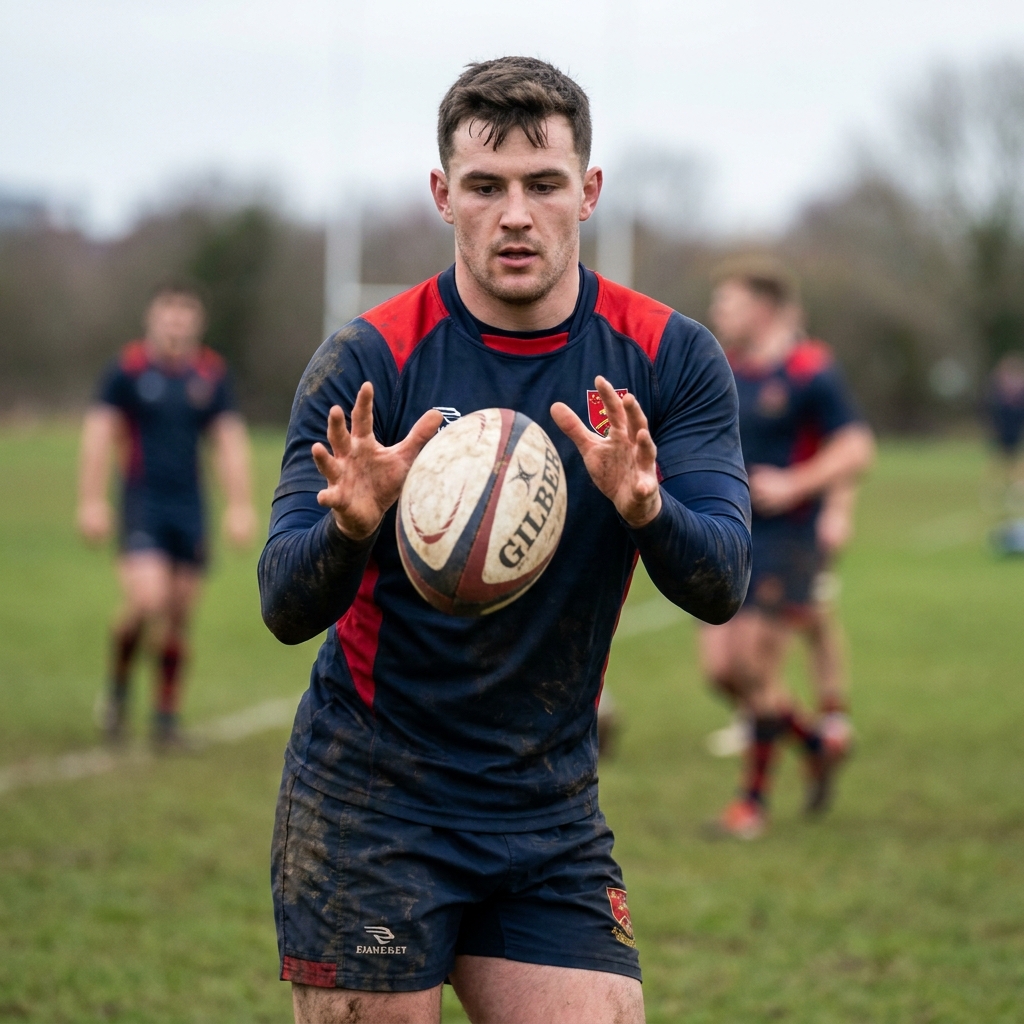
Step One: Hands early. Receivers show a target with both hands up and fingers spread before the ball is passed, not as it arrives. The passer has something to aim at and the catcher is ready to give straight away.

Step Two: Catch in front. Reach for the ball and take it early, away from the body. A catch in front keeps the player running straight and lets them move the ball on without reloading at the hip.

Step Three: Pass off both hands. Build the weaker side on purpose. In every handling block, make sure the ball travels both ways in equal amounts, and coach the same finish: hands following through towards the target.

Step Four: Choose short or long. A short, flat pass keeps a defender fixed and suits tight spaces. A longer pass moves the ball past a defender into space but gives the defence more time to drift. Teach players to look up before they catch so the decision is already made.

Step Five: Keep it simple when tired. Late in a phase or a match, the right pass is often the simpler one. Encourage players to pick a pass they can deliver accurately when their legs have gone, rather than the ambitious one that only works when they are fresh.

How to Train It

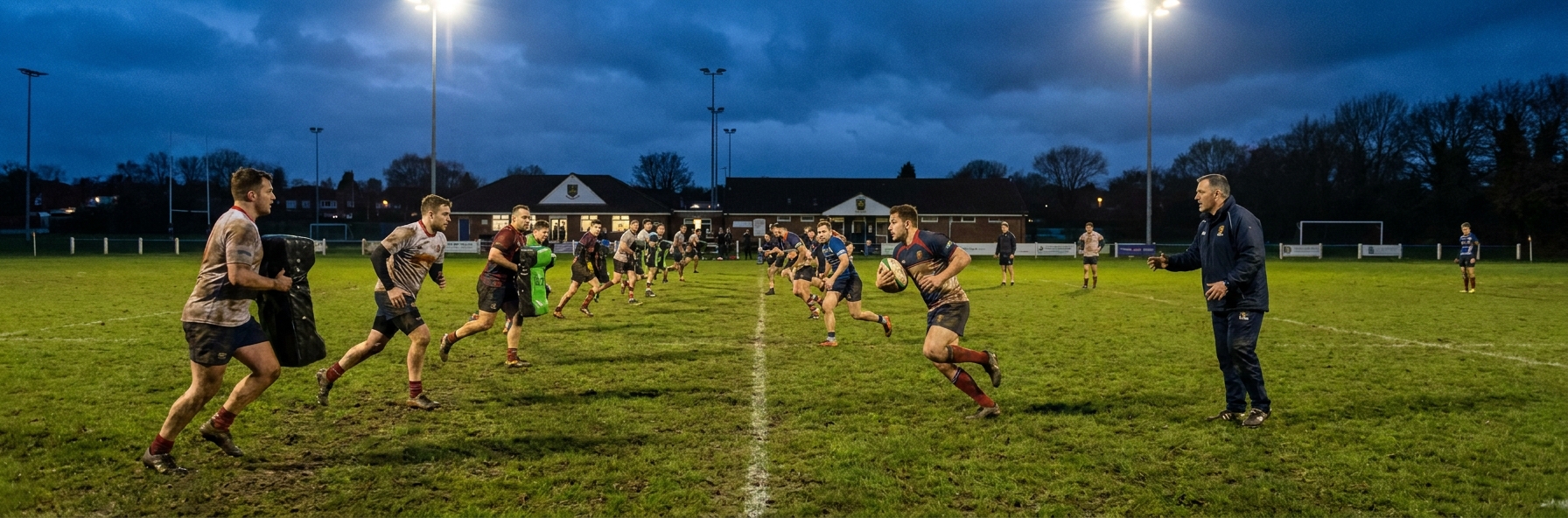
Start with a short technical block where the only focus is hands early and catching in front. Keep it moving and keep the reps high. Then add one form of pressure at a time: a defender who closes, a time limit, or a narrow channel.

Finish with handling under fatigue. Put the passing work straight after a short, sharp conditioning effort, or build it into a continuous game so players have to catch and pass while breathing hard. For forwards, make the passes short, flat and close to contact, because that is where they will need them.

Key Coaching Points

  • Show hands early as a target before the pass is thrown, not as the ball arrives.
  • Catch the ball in front of the body so there is no need to reload before passing.
  • Give the weaker hand equal work in every handling session, for backs and forwards.
  • Look up before the catch so the short or long decision is made in advance.
  • Add pressure one layer at a time: a defender, then time, then fatigue.
  • When players are tired, reward the accurate simple pass over the ambitious one.

Recommended Drills
VIEW ALL PASSING DRILLS

Frequently Asked Questions

My forwards say passing is a job for the backs. How do I get them to buy in?

Show them where the ball goes to ground in your matches. Most community sides lose possession close to the ruck, not out wide. Keep forwards' handling work short, flat and near contact so it feels like their game, and they will see the point quickly.

Should I teach the spin pass to everyone?

Not before the basics. A spin pass is useful for distance, but a player who cannot catch in front and give a flat pop pass off both hands will not benefit from it. Build accurate short passing first, then add the spin pass for players who need the range.

How much handling should we do in a session?

A little and often works better than one long block. A short technical focus in the warm-up, handling built into your games, and a pressured practice near the end when players are tired will do more than twenty minutes of static passing lines.
goal kick DRILLS
View All

Flip It Warm Up - Rugby Drills...

<div class=&quot;&quot;&quot;MsoNormal&quot;&quot;&quot;>Be brief when telling the players the laws of this game, it's important to get them moving quickly. </div> <li class=&quot;&quot;&quot;MsoNormal&quot;&quot;&quot;>This is not a contact game. <li class=&quot;&quot;&quot;MsoNormal&quot;&quot;&quot;>Break your players into two teams, giving each team their own colour of bibs if necessary. <li class=&quot;&quot;&quot;MsoNormal&quot;&quot;&quot;>One team goes to attack, and one to defence. <li class=&quot;&quot;&quot;MsoNormal&quot;&quot;&quot;>Nominate a Scrum Half for each team. <li class=&quot;&quot;&quot;MsoNormal&quot;&quot;&quot;>There is no kicking in this game. <li class=&quot;&quot;&quot;MsoNormal&quot;&quot;&quot;>Normal laws of rugby apply e.g. a forward pass will result in the ball being turned over to the opposition. <li class=&quot;&quot;&quot;MsoNormal&quot;&quot;&quot;>If an attacking player is touched: they must go to ground, present the ball, two of their teammates ruck over (staying over the ball), and the Scrum Half moves the ball for the next phase of attack. <li class=&quot;&quot;&quot;MsoNormal&quot;&quot;&quot;>When you start playing this game make sure that the defence is employing your defensive pattern around the ruck. As the game develops consider telling the defenders that they must have one or more players at the back of the ruck, if they are not fast enough to do this - push them back 10 meters. <li class=&quot;&quot;&quot;MsoNormal&quot;&quot;&quot;>It’s important that defenders are employing their defensive pattern behind the primary defensive line. <li class=&quot;&quot;&quot;MsoNormal&quot;&quot;&quot;>Have attacking players do what they normally would at the ruck. <li class=&quot;&quot;&quot;MsoNormal&quot;&quot;&quot;>Depending on your goals decide on the number of touches you wish to allow e.g. unlimited is not a bad option as mistakes will be made! <li class=&quot;&quot;&quot;MsoNormal&quot;&quot;&quot;>When you feel the time is appropriate, usually during a ruck, blow you whistle and should FLIP IT – kicking in or throwing in a second ball to the back 3/2 defenders on the team currently in defence OR just kick it behind the defenders. The defensive team goes, without hesitation, into attack. The team that was attacking goes into defence and you or an assistant coach remove the other ball from play when you can. Ideally you might have two balls with different markings. <li class=&quot;&quot;&quot;MsoNormal&quot;&quot;&quot;>Don't hesitate to shape the game to focus on your session goals, and let us and other coaches know what worked for you!
General

3 Touch Kick Warm Up - Rugby D...

Split your players into two teams, giving one group of players a set of coloured bibs to set them apart, and quickly tell your players the following laws: We will be playing a rugby league style touch. When touched: set the ball down, stand over the ball, allow the scum-half to move the ball away from the point of contact. The defenders should stay on side following a touch, and should not compete for the ball. Any infringements in defence should result in the defending team conceding 10 Meters or possibly giving 1 or more extra touches to the attacking team. I'll leave this to your judgement depending on your team's age, skill level, and your session target/s. The attacking team can sustain three touches before they have to kick. Their kick should be as it would be in the game: a kick to touch, a kick for territory, or a kick that can be regained e.g. a grubber kick. The defenders should behave as they would in a real game. Quick put in's from the touchlines replace lineouts. Defenders who take the ball from an attacking kick should counter attack. A forth touch results in a turn over. The Scrum Half has a maxium of 5 seconds to move the ball from the point of touch. A ball kicked directly to touch from outside the attacking teams 22, or where the ball has been taken into the 22 by the attacking team and then kicked into touch - will result in a turn over with play starting on the five meter line closest to where the kick was made. The defence should be 10 meters back. A ball kicked from inside the attacking teams 22 can go directly to touch, as long as the attacking team did not carry the ball into their own 22 before the kick. The resulting put in will be to the opposition from where the ball has went into touch. Quick put-in's are enoucraged, if not possible the ball is played from the 5 meter line with the defence 10 meters back. Give points for quick put ins that work. Feel free to play with any of noted laws, let us know the law variations that work for you!

General

Unfortunately there were no results for your search! Please try again
goal kick ANSWERS
View All

Anyone have a for they use to keep track of match data?

Anyone have a for they use to keep track of match data like lineouts/scrum won/lost? We have our first match and I want to be able to keep some statistical data to use for post gae analysis.

Archived User Coach

What is the correct restart after a player has missed?

What is the correct restart after a player has missed a drop goal?

Archived User Coach

How do you teach a goal kicker to get more distance?

How do you teach a goal kicker to get more distance form a goal kick. The boy (u/15) has the direction and hight but lacks the distance. Please help with a tip or two.

George Coach, South Africa

Hi would anyone have drills for a scrum half position.?

Hi would anyone have drills for a scrum half position. Passing of the ball both ways, quick ball, box kicking ect.

Tyrone Elliott Coach, Ireland

Successive quick tap penalties - at referee's discretion ??

During a recent U17's league game, the opposing side took two consecutive quick tap penalties. During a break in play shortly after, as the coach attending an injured player, I questioned the referee on the legality of this passage of play, as my understanding was that two consecutive quick taps, used to catch the opposition in an offside position and therefore gain terratorial advantage, was not allowed under current law. The referee responded that this law is at his discretion and when we discussed after the game, he stated there is no such aw and that it is a "gentlemens agreement". I have since reviewed the laws on penalties and there is no specific law preventing a side taking two quick tap penalties. Has anyone else come across this interpretation and how can this be managed consistantly if when watching elite games, such a move is not allowed yet can be allowed at junior level ?

Archived User Coach

When the ball is kicked directly over the touch line?

When the ball is kicked directly over the touch line but does not hit the ground and bends back in field before landing in play, is this in or out?

Archived User Coach

I have a question a little strange, but%3A during the?

I have a question a little strange, but%3A during the mach, a player can drop kick at goal which will give a score of 3 points. But this can be done anywhere on the field? Thank you%3A)

Archived User Coach

hi i need some box kick drills, can anyone help?

hi i need some box kick drills, can anyone help?

Archived User Coach

difference between a free and a penalty kick?

I need to know the difference between a free and a penalty kick. Because I am learning to be a ref

Archived User Coach

What can the referee do when in-goal player catches the ball and is late tackled?

An in-goal player catches the ball from an opponent's kick and touches it down. That player is then late tackled. What actions are available to the referee?

Archived User Coach

Foul play in a rugby game

2An in-goal player catches the ball from an opponent's kick and touches it down. That player is then late tackled. What actions are available to the referee? Asked using Sportplan on Mobile

Archived User Coach

Is this penalty play legal?

I want to run a play that catches opposing players off guard when my team has been given a penalty. Is it legal to call for a shot at the posts, place the ball on the tee, and go through the motions of a penalty kick. However, I keep four or so guys ready behind my kicker, who only kicks the ball off the tee 10m in front. Both the kicker and 4 team mates then run onto the ball, scoop it up and put it through the hands if required to score. I notice a lot of our opposition huddle under the posts, or leave massive areas open, when we call for a shot. Can you call for a shot, but not actually take a shot?

Archived User Coach

. What actions are available to the referee?

An in-goal player catches the ball from an opponent's kick and touches it down. That player is then late tackled. What actions are available to the referee?

Archived User Coach

FOUL PLAY

An in-goal player catches the ball from an opponent's kick and touches it down. That player is then late tackled. What actions are available to the referee?

ARNOLD Coach, Zimbabwe

Foul play

An in-goal player catches the ball from an opponent's kick and touches it down. That player is then late tackled. What actions are available to the referee?;Penalty kick anywhere on the 5m linePenalty kick on the 5m lineA goal line drop-outPenalty kick at the centre of the 22m linePlayer temporary suspensionPlayer send-off

Aldrid Coach, South Africa

foul play

An in-goal player catches the ball from an opponent's kick and touches it down. That player is then late tackled. What actions are available to the referee?;

Luwatlyne Coach, South Africa

How do you teach a goal kicker...

How do you teach a goal kicker to get more distance form a goal kick. The boy (u/15) has the direction and hight but lacks the distance. Please help with a tip or two.

George Coach, South Africa

What can the referee do when i...

An in-goal player catches the ball from an opponent's kick and touches it down. That player is then late tackled. What actions are available to the referee?

Archived User Coach

. What actions are available t...

An in-goal player catches the ball from an opponent's kick and touches it down. That player is then late tackled. What actions are available to the referee?

Archived User Coach

difference between a free and ...

I need to know the difference between a free and a penalty kick. Because I am learning to be a ref

Archived User Coach

JOIN SPORTPLAN FOR FREE

  • search our library of 1100+ rugby drills
  • create your own professional coaching plans
  • or access our tried and tested plans

Sportplan App

Give it a try - it's better in the app

YOUR SESSION IS STARTING SOON... Join the growing community of rugby coaches plus 1100+ drills and pro tools to make coaching easy.
LET'S DO IT