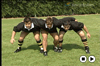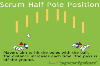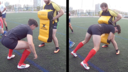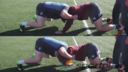
Rugby: scrums

The 50:22 law, introduced as a trial and now a permanent fixture, has fundamentally changed how teams approach tactical kicking. A kick from your own half that bounces in-field, crosses the 22, and finds touch rewards the kicking team with the lineout throw-in. This single law change has altered both attacking and defensive strategies across the game.

Understanding the Law

The requirements:

  • Kick must originate from behind your own 10-metre line
  • Ball must bounce in the field of play (not direct to touch)
  • Ball must cross the opposition's 22-metre line
  • Ball must then go into touch
  • Kicking team retains the throw at the lineout

These requirements create specific technical demands. The kick must be long enough to reach the 22, accurate enough to hit the corner, and struck correctly to bounce in-field first.

Why 50:22 Matters

Before the 50:22, kicking from your own half that went to touch gave the throw to the opposition. The only benefit was territorial gain. Now, an accurate 50:22 delivers both territory AND possession - a game-changing combination.

The tactical impact:

  • Lineout attacking platform in the opposition 22
  • Defensive scramble if full-back fails to cover
  • Forces back three to position wider, creating space elsewhere
  • Punishes lazy defensive positioning

Executing the 50:22

The Grubber Option

A well-struck grubber can beat the full-back to the corner. The low trajectory keeps the ball in play, and end-over-end rotation makes the bounce predictable.

Grubber technique:

  • Strike through the middle of the ball, toe down
  • Generate end-over-end spin for predictable bounce
  • Aim for the gap between full-back and touchline
  • Follow up - if it doesn't reach touch, contest the chase

The Chip and Chase

A chip kick over the defensive line that bounces in the 22 and reaches touch. Higher risk - defenders can field it before it reaches touch - but effective against narrow defences.

Chip technique:

  • Get under the ball with angled foot
  • Enough height to clear defenders, not so much that chase time is lost
  • Backspin for controlled bounce toward touchline

The Cross-Field Kick

Against a defence shifted to one side, the cross-field kick to the far corner can find space. This is a longer kick requiring more accuracy but exploits defensive imbalance.

Defensive Adjustments

The 50:22 has forced defensive positioning changes. Full-backs can no longer sit narrow - they must cover the width. Wings must be aware of their touchline responsibilities.

Defending against 50:22:

  • Full-back positions wider to cover both corners
  • Wings drop deeper to provide secondary cover
  • Communication about kick threats: "Watch grubber!"
  • Quick identification and reaction to kicks

These defensive adjustments create space elsewhere. If the full-back is wide, the central channel opens. If wings drop deep, the defensive line loses numbers.

When to Attempt 50:22

Good opportunities:

  • Full-back positioned narrow or deep
  • Wide channel space visible
  • Defence rushed up, leaving back field exposed
  • Slow ball where running attack is risky

Poor opportunities:

  • Full-back already covering the corner
  • Quick ball with attacking momentum
  • Wind against making accurate kicking difficult
  • Kicker not in optimal position

Training 50:22 Execution

Individual kicking practice:

  • Set targets at the corner - grubber to specific zones
  • Practice both feet (advantage when on either side)
  • Vary distances - not every 50:22 opportunity is from the same position

Team practice:

  • Live scenarios with defence - read the full-back position
  • Decision-making: kick, run, or pass?
  • Chase organisation when the kick doesn't reach touch

Alternative Outcomes

Not every 50:22 attempt succeeds. But the threat creates secondary benefits:

If fielded before touch: You've still gained territory and forced the opposition to start from deep. Apply chase pressure and compete for their exit kick.

If it bounces out before 22: Opposition throw, but you've gained significant ground. Reset defensive line.

If full-back covers: Your threat has pulled them wide. Subsequent attacks may find more space centrally.

The Mental Game

The 50:22 threat changes how oppositions defend, even when you don't kick. Simply having players capable of executing the kick forces wider positioning and changes defensive dynamics.

Make sure your opposition knows you have this weapon. Execute it successfully early in matches, and they'll respect the threat throughout.

Key Coaching Points

  • The 50:22 rewards accurate kicking with possession AND territory
  • Grubbers are highest percentage - practise them
  • Read the full-back position before deciding
  • Even unsuccessful attempts gain territory
  • The threat changes defensive positioning

Drills to Master the 50:22

VIEW ALL KICKING DRILLS

JOIN SPORTPLAN FOR FREE

  • search our library of 1100+ rugby drills
  • create your own professional coaching plans
  • or access our tried and tested plans
scrums DRILLS
View All
Unfortunately there were no results for your search! Please try again
scrums ANSWERS
View All

Likely outcome of scrum fed fr...

What would be the likely outcome of a scrum fed from the thrower's tighthead side? Who would more likely win possession and what quality of possession could be expected? What if the law was that most scrums were required to be fed from the thrower's tighthead with the non offender determining who was to feed? The remainder, such as penalty scrums, would stay as is. Could this encourage a more constructive approach to scrummaging?

Archived User Coach

Openside flanker position afte...

My coach has put me at openside flanker and I'm confused of where i should be after the scrum. Should I be attacking the opposing scrum half or just trailing behind the backs waiting to clean up/ form a ruck? It would be great to know what I'm doing !

Archived User Coach

how many players in a u9 team

how many players in a u9 team

Archived User Coach

Anyone have a for they use to keep track of match data?

Anyone have a for they use to keep track of match data like lineouts/scrum won/lost? We have our first match and I want to be able to keep some statistical data to use for post gae analysis.

Archived User Coach

How can the Elv's help my team playing against more?

How can the Elv's help my team playing against more physical opposition at the rucks , scrums and mauls?

Archived User Coach

u19 scrum rules

u19 scrum rules

Rob Middlehurst Coach, Bahrain

Do anybody have good pre season training exercises?

Do anybody have good pre season training exercises for my schools first team?

Alwyn Burger Coach, South Africa

What is the best way to transfer tag rugby to contact?

What is the best way to transfer tag rugby ability to contact rugby in 8-9 year olds? How can one best teach the basics of the breakdown?

Ed Bevan Coach, United Arab Emirates

RFU - proposed Mini's rule changes

RFU - proposed Mini's rule changes%3A All - just a quick straw poll%3A Have any CLUBS that you are aware of officially come out in SUPPORT of these changes? If not, have they come out officially rejecting the proposed changes, or are they adopting a "wait and see" attitude? Regards Stephe

Archived User Coach

any one know drills for defending a attack from scrum?

any one know drills for defending a attack from scrum in midfield?

Archived User Coach

I am coaching the U11 this season. There are some significant?

U11 Rugby I am coaching the U11's this season. There are some significant rule changes from U10. Please can I get some advice on what lessons were learned from coaches who have been through a similar experience.

William OBrien Coach, England

French Mini Rugby- U11 Rules

We are touring France. Where can I find the French rules for U11's ?

William OBrien Coach, England

Can I and should I coach basic tackle skills to U8s?

Does anyone have a definitive answer to this question%3A can I coach basic tackling skills to U8s now, in preparation for next season, without falling foul of any RFU rules or regulations? Hugo

Hugo Norton-Taylor Coach, England

U9 Positional Play Advice

What options are there for positional play in the U9s game? What formations are recommended in attack or defence? What's a good place to start teaching this? No scrums at this level so that's out of the question. Greatful for any advice. Thank you. Matt Asked using Sportplan Mobile App

Matt Potter Coach, England

Advice on playing flyhalf

Tomorrow i am going for rugby trials and i wanna play flyhalf. What do i have to do to get the position

sima Coach, South Africa

Setting up maul directly from a penalty

Why don’t teams set up a driving maul directly from a penalty, rather than risk losing a scrum or line out?

Ade Collingham Coach, England

forwards play

how do u play a smaller pack against bigger opposition? especially at scrum time. Thanks

Marius Coach, South Africa

At u11 level can the scrum hal...

I think a pass has to be made from the back of a maul or ruck but I am not clear about the rules at the scrum .

Mike Hancox Coach, England

Flanker pickup from scrum | Sp...

Is it legal for a flanker to unbind and pick up the ball from a scrum if the ball comes to his channel?

Archived User Coach

Scrum half approach to the ruc...

I'm a new player trying to learn to play Scrum half. I have a general idea of how the game works having played back positions a few times. However, I'm confused about one thing (and this might be dumb but bear with me). The thing is, I'm pretty quick. I can usually make it to a ruck before the forwards have fully formed it. When this happens I don't really have a good sense of where to stand in order ot have good access to the ball but also avoid blocking other forwards coming in to ruck.  Usually I've already surveyed the field (to my newbie abilities anyway) and made a decision as to what I want to do with the ball, yelled the call on my way to the ruck, etc, so that puts me in a mindset that I REALLY want to be close to the ball so I can make it happen.  Should I just keep my distance instead until the ruck is fully formed? Where specifically should I be standing and how quickly should I get there? Thanks!

Archived User Coach

JOIN SPORTPLAN FOR FREE

  • search our library of 1100+ rugby drills
  • create your own professional coaching plans
  • or access our tried and tested plans

Sportplan App

Give it a try - it's better in the app

YOUR SESSION IS STARTING SOON... Join the growing community of rugby coaches plus 1100+ drills and pro tools to make coaching easy.
LET'S DO IT