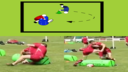
Rugby: slow ball out of maul

Rugby is a game of decisions. Every second, players choose: pass, carry, or kick? Blitz or drift? Jackal or get back in the line? The team that makes better decisions more consistently wins matches - not necessarily the team with more talent or better fitness.

Game management is the skill of making these decisions correctly under pressure, with fatigue setting in, with the crowd noise, with the stakes rising. It can be developed.

The Decision-Making Framework

Good decisions start with good information. Players need to see the game clearly before they can choose correctly.

The OODA loop in rugby:

  • Observe: What do I see? Defensive structure, space, support
  • Orient: What does this mean? Opportunity, threat, neutral
  • Decide: What's my best option? Pass, carry, kick, hold
  • Act: Execute with commitment

The faster and more accurately players cycle through this loop, the better their decisions. Training should develop each stage.

Developing Observation Skills

Many poor decisions come from poor observation. Players who don't see the full picture can't make informed choices.

Training observation:

  • Pre-scan: look before receiving the ball
  • Peripheral awareness: what's beside you, not just ahead
  • Key cues: what specifically to look for (defender's hips, space, numbers)

Drills for observation: Play games where the coach calls "freeze" and asks players to describe what they see. What options exist? Where's the space? Where's the threat?

Situational Awareness

Understanding the game situation frames decision-making. The right decision at 0-0 in the first minute differs from 3-0 down in the 79th minute.

Situation factors:

  • Score: leading, trailing, or level
  • Time: first half, second half, final minutes
  • Field position: own 22, midfield, attacking 22
  • Conditions: wind, rain, surface
  • Momentum: who's on top right now?

Players need to know the situation without thinking about it. Score, time, and field position should be automatic awareness.

Risk Management

Every rugby decision involves risk. The question is whether the potential reward justifies the risk in this specific situation.
High-risk decisions:

  • Running out of your own 22
  • Offloads under pressure
  • Speculative kicks without chase support
  • Committing extra players to the ruck

When high-risk is acceptable:

  • Trailing with time running out
  • Attacking in the opposition 22
  • Momentum strongly in your favour

When to play conservative:

  • Protecting a lead late in the game
  • Deep in your own half
  • Opposition on top and looking for turnovers

Pressure Moments

Certain moments in matches carry extra pressure. Decision-making under pressure deteriorates without specific training.

High-pressure scenarios:

  • Final play of the half or game
  • Penalty opportunity to win/draw the match
  • Defending a one-point lead in your 22
  • Restart after conceding a score

Training pressure: Create pressure in training through consequences, time limits, and competitive scenarios. Players who've experienced pressure in training cope better when it matters.

Communication in Decision-Making

Rugby decisions are rarely individual. Communication coordinates group decision-making and ensures everyone understands the plan.
Essential communications:

  • Ball carrier: "Carrying!" "Kicking!" "Looking left!"
  • Support: "With you!" "On your shoulder!"
  • Defence: "Up!" "Drift!" "Numbers!"
  • General: "Time!" "Space outside!" "Keep it!"

Leaders must take ownership of communication. The fly-half and captain should constantly talk, directing the team's decision-making.

Learning from Decisions

Post-match review should examine decisions as much as execution. Why did we make that choice? What did we see? What would we do differently?

Effective review questions:

  • "What was your thinking there?"
  • "What options did you see?"
  • "Given what you know now, what would you do?"
  • "What can we learn from this?"

Avoid blame. Focus on understanding and improvement. Players who fear judgment stop taking responsibility for decisions.

Developing Decision-Makers

Coaching approaches:

  • Guided discovery: ask questions rather than give answers
  • Constrained games: rules that force specific decisions
  • Decision overload: faster game speed to develop instinct
  • Post-play review: brief discussions about choices made

The goal is players who can read, decide, and act without waiting for coach instruction. Games move too fast for external direction - players must be autonomous decision-makers.

Key Coaching Points

  • Good decisions require good observation - train players to see
  • Situation awareness frames every choice
  • Risk must match the situation
  • Pressure can be trained - create it in practice
  • Communication coordinates group decisions

Drills to Develop Game Intelligence

VIEW ALL DECISION MAKING DRILLS

JOIN SPORTPLAN FOR FREE

  • search our library of 1100+ rugby drills
  • create your own professional coaching plans
  • or access our tried and tested plans
slow ball out of maul DRILLS
View All

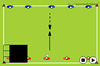
Maul Touch Warm Up - Rugby Dri...

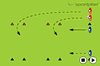
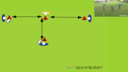
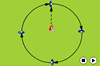
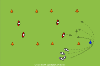
Be brief when telling the players the laws of this game, it's important to get them moving quickly. This is not a contact game, but there will be some light contact. Break your players into two teams, giving each team their own colour of bibs if necessary. One team goes to attack, and one to defence. Nominate a Scrum Half for each team, it will be their job to move the ball from the back of the maul and out to an attacking line. There is no kicking in this game. Normal laws of rugby apply e.g. a forward pass will result in the ball being turned over to the opposition. If an attacking player is touched: they must stop and turn, a maul is then built based on how you have trained your players to Maul. Only four players should be in the maul - but every player should be able to maul - including the backs! When you start playing this game make sure that the defence is employing your defensive pattern around the maul. They will commit 4 players, but will not do anything more than provide light resistance. Once formed the maul can take four steps before moving the ball. If there is a delay in creating the maul, or the quality of the maul is poor - the ball can be turned over. Depending on your goals decide on the number of touches you wish to allow e.g. unlimited is not a bad option as mistakes will be made! If a team has been in possession for a long time, don't forget to turn the ball over to give the opposition a run. Don't hesitate to shape the game to focus on your session goals, and let us and other coaches know what worked for you.

General

Unfortunately there were no results for your search! Please try again
slow ball out of maul ANSWERS
View All

(U11 Rugby) - How to referee t...

I'm coaching and reffing U11 rugby and one of my players is the definitive 'big lad'. His 'strength' is his size and his power, but last weekend he didn't seem to get reffed fairly. The opposition couldn't tackle him down, one on one and when another two joined in to make a mini maul, that didn't slow him down much either. The ref then let other people join in the (one sided) struggle to tackle him down, which seemed very unfair as A) it's outside the laws of U11 rugby,, B) it makes it nigh on impossible for him to offload, C) when he is brought to ground, he has 4-5 players all over him and he got pinged for 'holding on'. He is a recent arrival to rugby and it was our first game for a couple of months, so the situation hadn't reared his head before. We are keen that he learns all of the core skills of rugby and doesn't get used as a battering ram, but after seeing a pack of hyenas trying to pull down the big fella, something just didn't seem right to me.I'd be grateful for any thoughts and opinions.

Archived User Coach

Interpretation of the maul - f...

I will be coaching under 10 next season and need some guidance on how to interpret the rules for the maul?

Ezra rushen Coach, England

My fowards seem afraid to ruck...

My fowards seem afraid to ruck and stand around the ruck while in the way of the scrum half trying to get the ball out to the backs. They also don't support the ball carrier while he is being tackled. Please help me with any suggestions!!!

William Barrett Coach, United States of America

First time coaching the U13s n...

I have just started helping our head coach with under12's team. He wants to retire and has put me forward to be head coach next season. I am a little worried on how i should aproach training with the boys, going to a full 15 a side team on a full pitch. Any ideas would be greatly appreciated.

Archived User Coach

U10s organisation in defence. ...

I have started an under 10s team up, and I would say about 8 from the 13 children I have , did not play rugby until about 6 months ago. Of these players, there seems to be a lot of potential, as we are scoring tries against teams, that very rarely concede tries.the problem I got with them, is that we are very poor at organising our selves in defense when the opposition has the ball, which does result in us conceding quite a few tries. We have some very good tacklers in the team. Can anyone offer some ideas on how I can get them to organise themselves? Thanks . Chris.

christopher jenkins Coach, Wales

Forward positions at kickoffs ...

Hi there, I was wondering thoughts on forward positions at the kickoff. Do you have the catchers deep so the are coming forward to meet the ball or have one deep and one short? For the pods do you have a "quick" pod made up of all three loosies and a lock and a "slow" pod made up of the front row and the lock or do you split them in two pods made up of a prop, a lock and two loosies and the other pod of a prop, a lock, the hooker and a loosie? Who would you tell to be the ball carrier, body movers and bridger? All thoughts welcome. CheersDave

Archived User Coach

JOIN SPORTPLAN FOR FREE

  • search our library of 1100+ rugby drills
  • create your own professional coaching plans
  • or access our tried and tested plans

Sportplan App

Give it a try - it's better in the app

YOUR SESSION IS STARTING SOON... Join the growing community of rugby coaches plus 1100+ drills and pro tools to make coaching easy.
LET'S DO IT