Rugby: support running

August 2026

Ask a club player what their serve is for and most will say aces. Watch a match and count how many points actually end on the serve, and the answer at almost every level below professional is very few. What the serve actually does is create a weak reply, and the point is won or lost on what happens next.

Serve plus one is simply the discipline of planning the serve and the following shot together as a single unit. It is the most reliable pattern in tennis, and it is almost entirely absent from club practice, where serving is usually done as an isolated basket drill.

Why the Serve Alone Is Not Enough

A serve that is hit hard but without a target produces an unpredictable reply, which means the server cannot prepare for anything. That is why so many club players hit a big first serve and then get caught flat-footed by a routine return.

A serve hit to a specific location does the opposite. It narrows the range of possible returns to something you can anticipate, which means you are moving into position before the ball is struck rather than reacting after it.

The Core Patterns

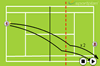
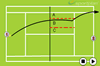
There are two patterns worth owning before anything else. From the deuce court, a wide serve pulls the returner off the court and opens the space down the line for the next shot. From the advantage court, a serve into the body or down the T jams the returner and gives you a short reply into the open court.

Both work on the same logic: the serve moves the opponent, and the second shot goes into the space the serve created. The player is not hitting a winner from nowhere; they are finishing a point the serve already set up.

Depth matters as much as direction. A wide serve that lands short lets the returner step in and take the initiative, and the whole pattern collapses. Depth is what buys the time for the second shot.

Building the Pattern

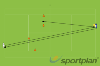
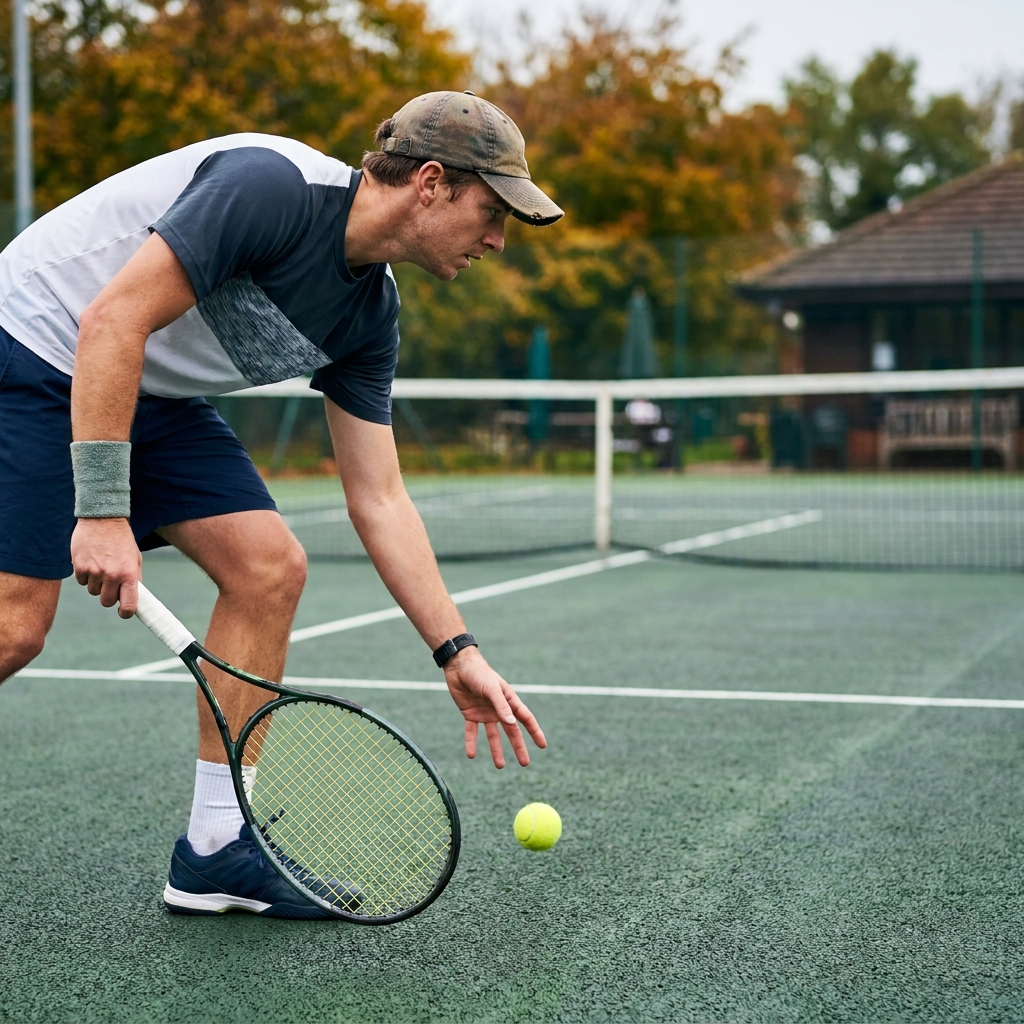
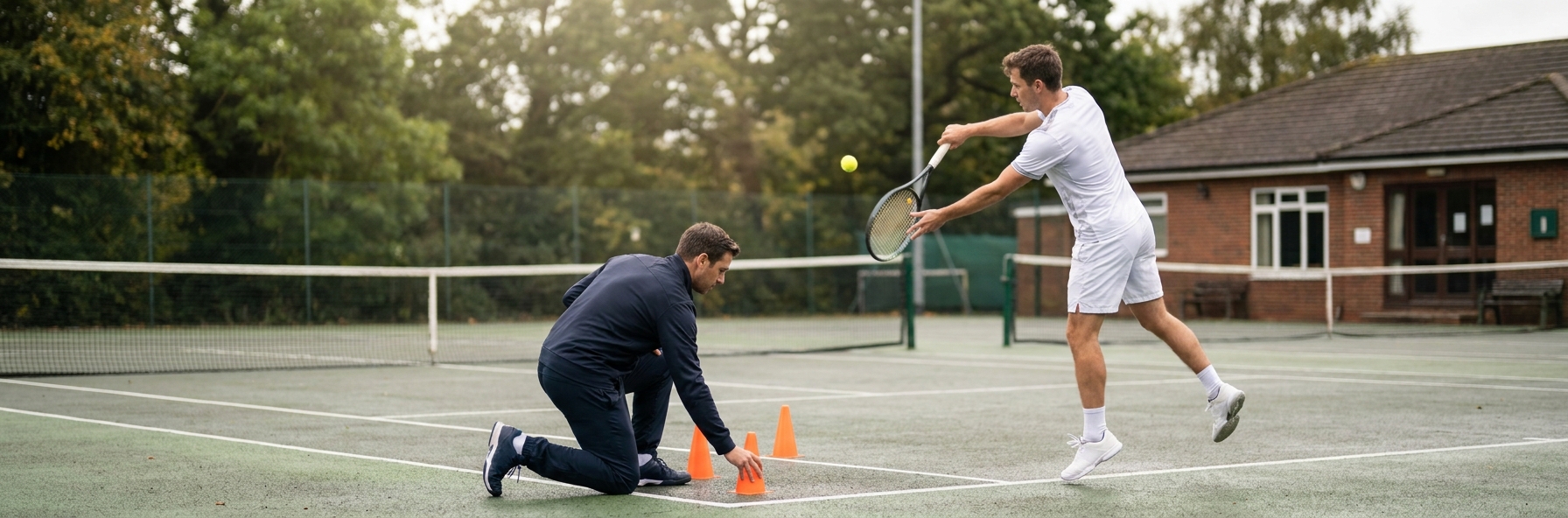
Step One: Serve to targets, always. Put cones or markers in the service box and make every practice serve have an intended location. A serve without a target is just exercise.

Step Two: Never practise the serve alone. Every serve in practice should be followed by a live second shot, even if it is fed by the coach.

Step Three: Recover to the right place. Where you stand after serving depends on where you served. Wide serves require a different recovery position from body serves, and most players recover to the middle out of habit.

Step Four: Own two patterns per side before adding more. Depth of execution beats breadth of options every time.

Step Five: Play points from the serve. Practice sets where every point is played out from a serve, with the server naming their intended pattern beforehand.

The Second Serve Problem

Most club players have a first serve plan and a second serve prayer. That is a mistake, because more points are played from second serves than most people realise, and the returner is expecting to attack.

The answer is not a bigger second serve; it is a second serve with a location and a plan attached. A high, kicking serve to the backhand with the server prepared to take the next ball early is far more effective than a flat second serve hit with hope.

Key Coaching Points

  • The serve creates a weak reply; the point is usually won on the shot after it.
  • Serving to a target narrows the range of returns and lets you anticipate.
  • Depth buys the time for the second shot; a short wide serve invites attack.
  • Recovery position depends on where you served, not on a default centre mark.
  • Own two patterns per side properly before adding any more.
  • Give the second serve a location and a plan, not just a reduced first serve.

Recommended Drills
VIEW ALL SERVE DRILLS

Frequently Asked Questions

Is serve plus one relevant for beginners?

Yes, in a simplified form. Even a beginner benefits from serving to one side rather than anywhere, and from knowing that the next ball is likely to come back to a particular place. The pattern scales down easily.

What if my second shot is not strong enough to finish points?

Then the goal of the second shot is not to finish but to take the initiative. Hitting into the open space and moving forward puts you in control of the point even if it takes three more shots to win it.

How do I practise this without a hitting partner?

Serve to targets, then have a coach or a basket feed the likely return so you play the second shot. It is not identical to a live return, but it builds the recovery movement and the shot selection, which are the parts most players lack.
support running DRILLS
View All
Unfortunately there were no results for your search! Please try again
support running DRILL CATEGORIES
View All
support running ANSWERS
View All

what are simple drills for touch rugby...to get ready?

what are simple drills for touch rugby...to get ready for the season?

Archived User Coach

Taking the ball into contact

Several of my players are taking the ball a yard too far into contact and losing possession as a result.Do you have any suggestions or drills that would help to address this? Dave Knights. Hong Kong

Archived User Coach

where can I get an under 8 year program of training?

where can I get an under 8 year program of training or activities to introduce them to the game of Rugby?

Archived User Coach

Back Row support of 12

Hi there. Does anyone have any session plans on back row support of 12 taking quick ball off the top of a lineout?

Archived User Coach

Our under tens when they go into a ruck situation often go straight over the ball leaving it in the open. A is this ball then available to be played by any player from both teams and B if this ball is out how can we teach them to secure the ball.

Ask a question and have it answered by Coaches from around the world and Sportplan's team of Experts.

Archived User Coach

Looking to open a bit of a debate. I was running a?

Looking to open a bit of a debate. I was running a 'coach the coaches' course last night and I asked the candidates 'do you coach your players to run at the man? or run at space?'. There was a 50/50 split, the older coaches said 'the man', younger ones 'the space', and others who'd never played before 'both!'. What do you coach?

Archived User Coach

Forward running; positoning after breakdown

I am trying to explain to my Under 12 forwards where they should run to after a breakdown. Inevitably the committed lads end up running from ruck to ruck without getting there hands on the ball. How do you coach positioning? When to hang in the back line, when to cover wide, when to set up a chain play? Traditional unopposed has the forwards going thru ruck after ruck when the backs have broken the play down but how do you explain positioning to the big men?

David Mason Coach, England

Hello. I'm coaching an U8s side and looking for any?

Hello. I'm coaching an U8s side and looking for any games/fun drills that condition players to a) Pass before the tag b) Pass while running c) Support team mates . Cheers!!

Harry Wooller Coach, Wales

Can you show me how to tackle cleanly?

Can you show me how to tackle cleanly?

Archived User Coach

how do you become better at running lines and angles?

how do you become better at running lines and angles when attacking with the ball in rugby
Archived User Coach

Can I and should I coach basic tackle skills to U8s?

Does anyone have a definitive answer to this question%3A can I coach basic tackling skills to U8s now, in preparation for next season, without falling foul of any RFU rules or regulations? Hugo

Hugo Norton-Taylor Coach, England

Using pads & contact shields - good or bad?

an RFU directive states that coaches should not hold pads/shields for juniors to run into during sessions, or even juniors holding pads for each other!!! I notice a lot of drills utilise pads as this was something we always used when I trained years ago! I personally think they are a good thing (especially since some of the juniors I coach are 'not small'!) BUT wondered what the general thoughts were out there in SportPlan world....

Archived User Coach

Looking for day 0 skills to teach children?

I am looking for a Day 0 type of session for American children who may have never held a rugby ball. If I move forward with a rugby exhibition/team creation in the neighborhood, I want to make sure I know how/what to teach Day 0. I'm hoping that interest is growing for touch and flag rugby due to the recent in Philadelphia between the USA Eagles and the Maori All Blacks. I was there. It was fantastic. Tickets sold out so fast, I think there will be more of these in the area. Thanks.

Doug Jones Coach, United States of America

Previous Rugby subscription

I previously subscribed to Sportplan after receiving an email with an offer for six months. I wanted Rugby League but made an error and selected Rugby which is Rugby Union so ended up cancelling my subscription. I would like to re join but all the offers I get now via email are for me to join back for Rugby and can't seem to be able to change it to Rugby League when I click on the offers. Could you please send me an offer for Rugby League so I can subscribe again. Thanks

Neil Frazer Coach, England

training drills for 1331

what drills would a coach implement in training to support a 1331 attack?

Will Marsh Coach, England

Attacking

how can we improve. 1. Rucking especially at the wings.2. Ball presentation 3. Predictable attack patterns. 4. Running onto the ball5. Running angles6. Ineffective kicking game

Rutakiirwa Ambrose Coach, Uganda

u8s running sideways not forwa...

What drills would anybody reccomend to encourage forward running in an u8s side,whilst keeping it fun?Some players tend to crab along the pitch.

Archived User Coach

Taking the ball into contact -...

Several of my players are taking the ball a yard too far into contact and losing possession as a result.Do you have any suggestions or drills that would help to address this? Dave Knights. Hong Kong

Archived User Coach

JOIN SPORTPLAN FOR FREE

  • search our library of 1200+ tennis drills
  • create your own professional coaching plans
  • or access our tried and tested plans

Sportplan App

Give it a try - it's better in the app

YOUR SESSION IS STARTING SOON... Join the growing community of rugby coaches plus 1100+ drills and pro tools to make coaching easy.
LET'S DO IT