

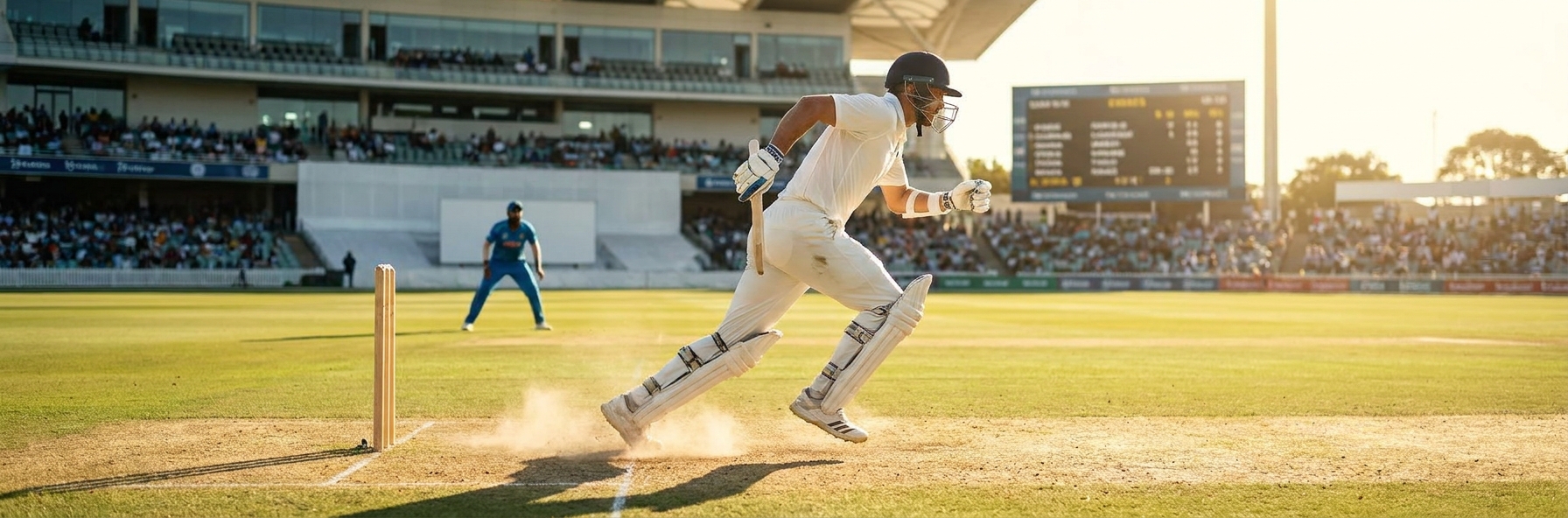
Why Dot Balls Win Matches
Modern T20 analysis keeps arriving at the same conclusion. Teams that bowl 40 or more dot balls in an innings win more than 65 per cent of matches, regardless of the total runs conceded. Dot balls do not simply slow the scoring rate. They build a psychological squeeze that drags the batter into the very shot the bowler wanted them to play. Two consecutive dots create urgency. Three create panic. Four are usually followed by a wicket or a mishit.
This pattern played out repeatedly during the 2026 ICC Men's T20 World Cup. Across the spin overs, the sides that converted dot balls into singles controlled the middle phase and built scoreboards their bowlers could defend. Sides that allowed long dot-ball sequences crumbled, even when their top order had hit big boundaries in the powerplay. Rotation is no longer a defensive skill. It is the strategic foundation of a competitive total.
For club and age-group coaches, the implication is clear. Boundary hitting is rehearsed at every net session, but the patient business of pushing into gaps for a single is rarely practised with the same intent. The result is batting line-ups that can score in bursts but cannot keep the scoreboard moving when bowlers settle into good areas. Strike rotation is the discipline that separates promising batters from consistent run scorers.
The Four Techniques of Elite Rotators
Players who rotate strike fluently use a small set of repeatable skills. Each can be coached deliberately and improved by every batter in your squad, regardless of age or ability.
1. Soft Hands
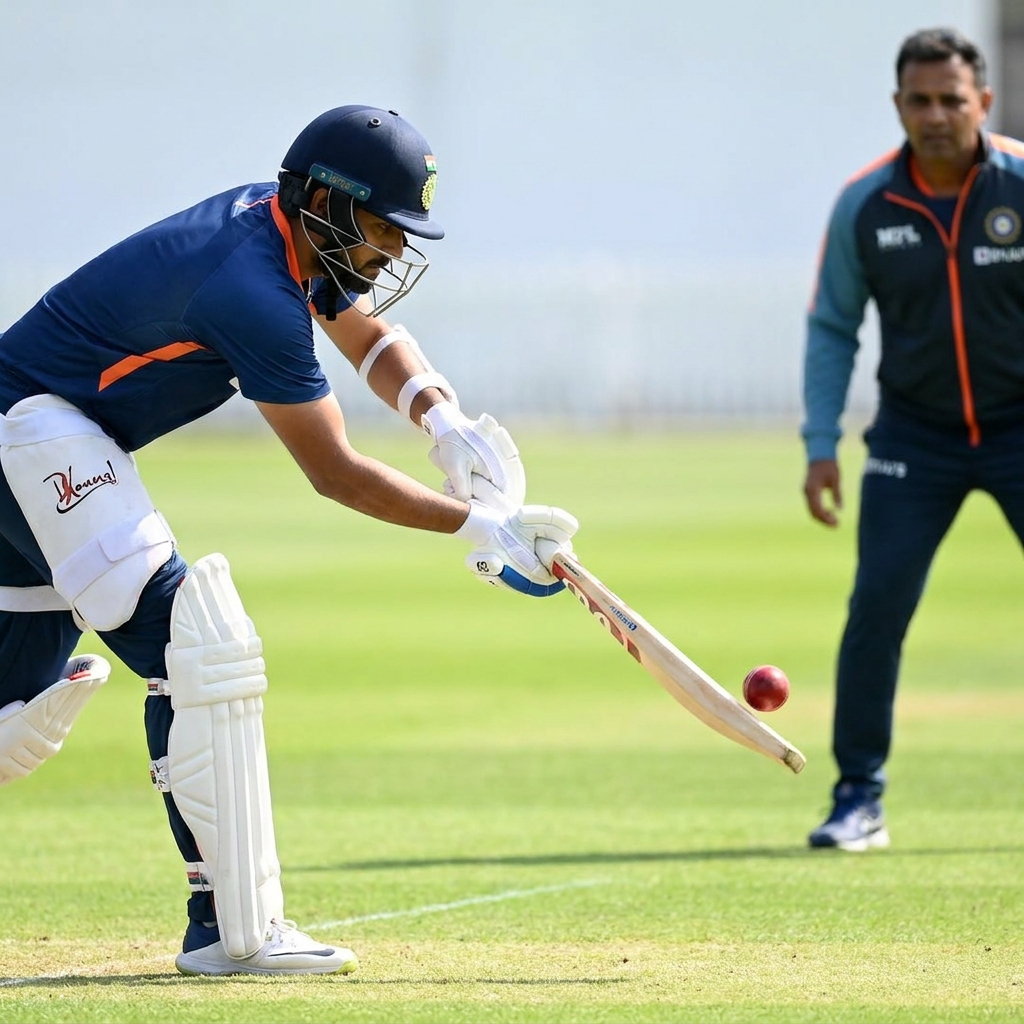
The grip relaxes just before contact, allowing the bat face to absorb pace and drop the ball gently into the gap. This is the single most important rotation skill. Tense hands hit straight to the fielder. Soft hands take the pace off and place the ball where there is no one. Coaches should drill this with feed-and-tap exercises where the batter is rewarded only for balls that die within five metres of contact.
2. Crease Depth and Width
Elite rotators rarely play from the same position twice in a row. They go deep in the crease to convert a length ball into a back foot push, or come forward to smother spin and dab into the on side. Some make small lateral movements to open up the off side or close down the leg side gap. Static batters are predictable. Mobile batters change the bowler's calculation with every delivery.
3. The Manipulated Angle
Top batters open the face to run the ball through point, or close it slightly to work the ball into mid-wicket. Both shots require minimal power. Both create runs from balls that lesser players would leave or block. Coaches should isolate these angles in throwdown drills using cones to mark target gaps.
4. The Called Single
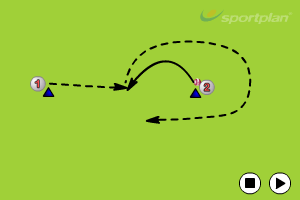
Rotation is a partnership. The best batting pairs call clearly and back themselves to convert the half-chance. They never refuse a sensible single, and they never run a poor one. Calling conventions need rehearsal: striker calls in front of the wicket, non-striker calls behind. Without this discipline, run-outs cancel out any benefit of running aggressively.
Reading the Field and Finding the Gap
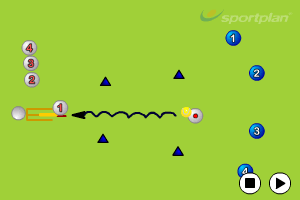
Strike rotation begins before the bowler delivers. Elite batters scan the field every ball, count the fielders in the ring and outside it, and identify the single-scoring zones for that delivery. With a deep mid-wicket and deep square leg, the leg-side gaps are short and the singles are in front of the wicket. With a sweeper cover, the off-side single is square of the wicket rather than straight.
Coaching this awareness takes deliberate practice. In net sessions, ask batters to call out the gap they will target before each ball. They do not need to hit every ball into that gap, but they must commit to a plan. This builds the habit of decision-making under pressure that translates directly to match scenarios.
The Coaching Framework: Five Sessions to Sharper Rotation
The following five-session block can be run consecutively or spaced through the season. Each session targets one element of strike rotation and builds on the previous one.
Session 1: Soft Hands Foundation
Batter stands in the crease with a coach feeding underarm at controlled pace. The batter must drop the ball into a circle of cones placed two to four metres in front. Scoring: one point for each ball stopped within the circle, minus one for any ball that travels past it or back to the feeder. Aim for 30 out of 40 deliveries by the end of the session.
Session 2: Targeted Gaps
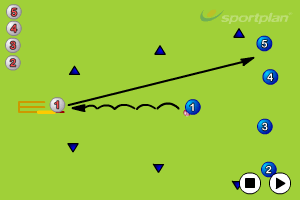
Place cones in four single-scoring zones: deep point, fine third, square leg, and straight mid-on. The batter must call out the target before each throwdown and play to that area. Mix up the deliveries so the batter learns to manipulate the same ball into different gaps using bat-face angle.
Session 3: Crease Movement
Throwdowns at one consistent length. The batter must score from every delivery using either a forward press, a deep back foot push, or a small lateral movement. Forbid straight blocks. This forces the batter out of static positions and into the active footwork that creates rotation chances.
Session 4: Called Singles in Pairs
Two batters at the crease. Coach feeds underarm. Every ball must be called and run, even if the run is risky. Use cones for stumps and place fielders at single-saving positions. Run-outs are penalised. The drill builds calling discipline and trust between batters.
Session 5: Middle-Over Scenario
Live bowling or bowling machine, set to the seventh to fifteenth over of a T20 innings. The batting pair must score 50 in 50 balls with no more than three boundaries. Every other run must come from rotation. This caps the boundary option and forces the discipline of singles and twos. Most pairs find it harder than they expect, and that is the point.
Common Coaching Mistakes
Several recurring habits undermine rotation work at club level. Watch for these in your own sessions:
- Praising boundaries above singles: If players hear "great shot" only for fours and sixes, they will chase boundaries and ignore the ones. Reward the well-placed single with the same enthusiasm.
- Net sessions without fielders: Empty nets remove all rotation cues. Use cones, mannequins, or rotating fielders so batters have to identify gaps rather than just hit the ball.
- Ignoring the non-striker: Rotation is a two-person skill. If only one batter is coached on calling and running, the partnership will misfire. Both batters in every drill need calling responsibility.
- Allowing dot streaks in practice: If a batter blocks three in a row in a net, intervene. The point of practice is to build the habit of finding the run. Treat dots in practice like dots in matches.
- Skipping the scoreboard: Run drills with a target. "Score 30 in 20 balls without a boundary" teaches more than ten minutes of unstructured batting.
Building the Habit in Match Play
Practice ground habits transfer only if they are reinforced in matches. Captains and coaches should set rotation targets for individual batters and partnerships. Examples include "no more than two dot balls in any over of the middle phase" or "at least eight singles in your first 20 balls." Review these numbers with the player after the innings and look for patterns. Did the dots cluster against a specific bowler? Did the player turn down sharp singles that were on?
Over a season, batters who hit these targets consistently lift their average significantly without changing their boundary count. The runs come from the gaps they used to leave on the table. The wickets they save come from the high-risk shots they no longer have to play when the scoreboard is moving.
Frequently Asked Questions
How many dot balls are acceptable in a T20 innings?
Modern analysis suggests anything above 40 dot balls in a T20 innings makes winning very difficult, regardless of how many boundaries you hit. Elite teams aim to keep dot balls below 35, and the best middle-order batters target no more than two dots in any individual over they face. Tracking this in club matches gives coaches an honest measure of rotation discipline.
Is strike rotation as important in longer formats?
Yes, but for different reasons. In Test and one-day cricket, strike rotation breaks bowlers' rhythm and allows partnerships to bat for longer without taking risks. The pace of accumulation matters less, but the principle of always looking for a single is the same. Many long-format collapses begin with a sequence of maidens that forces a batter into a poor shot. Rotation is the antidote.
How young can you start coaching strike rotation?
From the very first age-group sessions. Young players naturally swing for boundaries because that is what feels exciting. Introducing scenarios where boundaries are limited and singles are valued teaches game awareness from the start. Pairs cricket and Kwik Cricket formats are ideal because they reward partnership running and punish reckless hitting.
What is the single biggest technical fault that stops rotation?
Hard hands at contact. Players who grip the bat too tightly cannot drop the ball softly into the gap. The ball either flies straight to the ring fielder or pops up in the air. Coaching soft hands through controlled feed drills is the quickest way to turn a blocker into a rotator. The grip should feel like holding a small bird: firm enough not to drop it, gentle enough not to crush it.