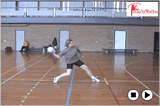
As players run up to where they are going to throw from they should bring the ball up to shoulder height.
The first step in the 1-2-3 pattern should be made with the foot they are going to jump with (so for right handed players this should be their left foot and for left-handed players vice versa).
The third step should be explosive and powerful.
In the air player's hip should go backward at the same time and in the same direction as the throwing arm.
Pull up other leg until upper leg is parallel with the other leg.
Screw back the hip and the arm should follow this movement explosively to the front.
After the shot:
Your arm should follow through and point where you were aiming at.
Land on the same leg as you jumped off.
Variation:
Try taking off on your weaker leg.
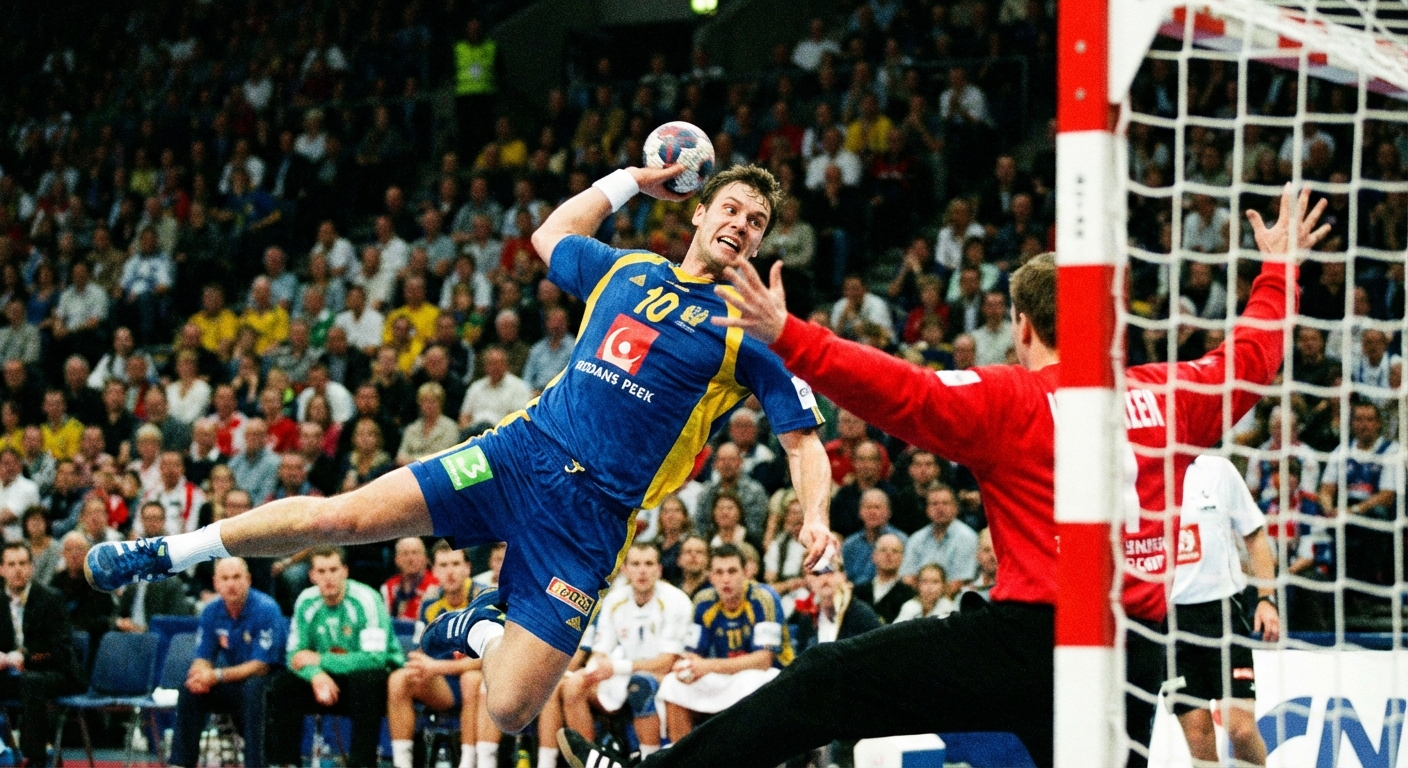
Wing players operate in the most demanding shooting position on a handball court, where acute angles and a close goalkeeper make finishing a specialist skill. This article breaks down the technique, decision-making, and training progressions that coaches need to develop elite wing finishing.
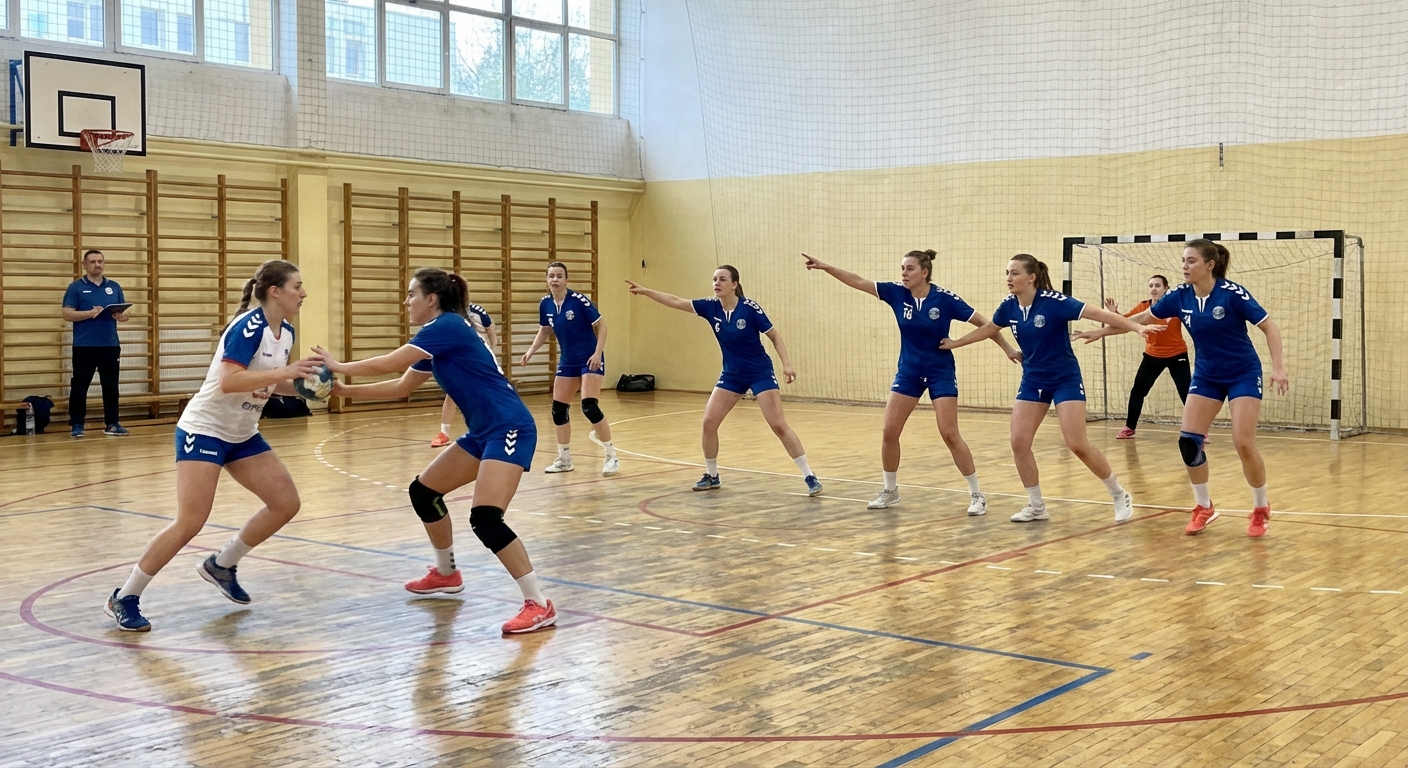
The transition from attack to defence is the most vulnerable moment in handball. This article examines the 3-second recovery principle, the specific roles players must adopt during transition, and the training scenarios that build a team's ability to recover defensive shape under pressure.
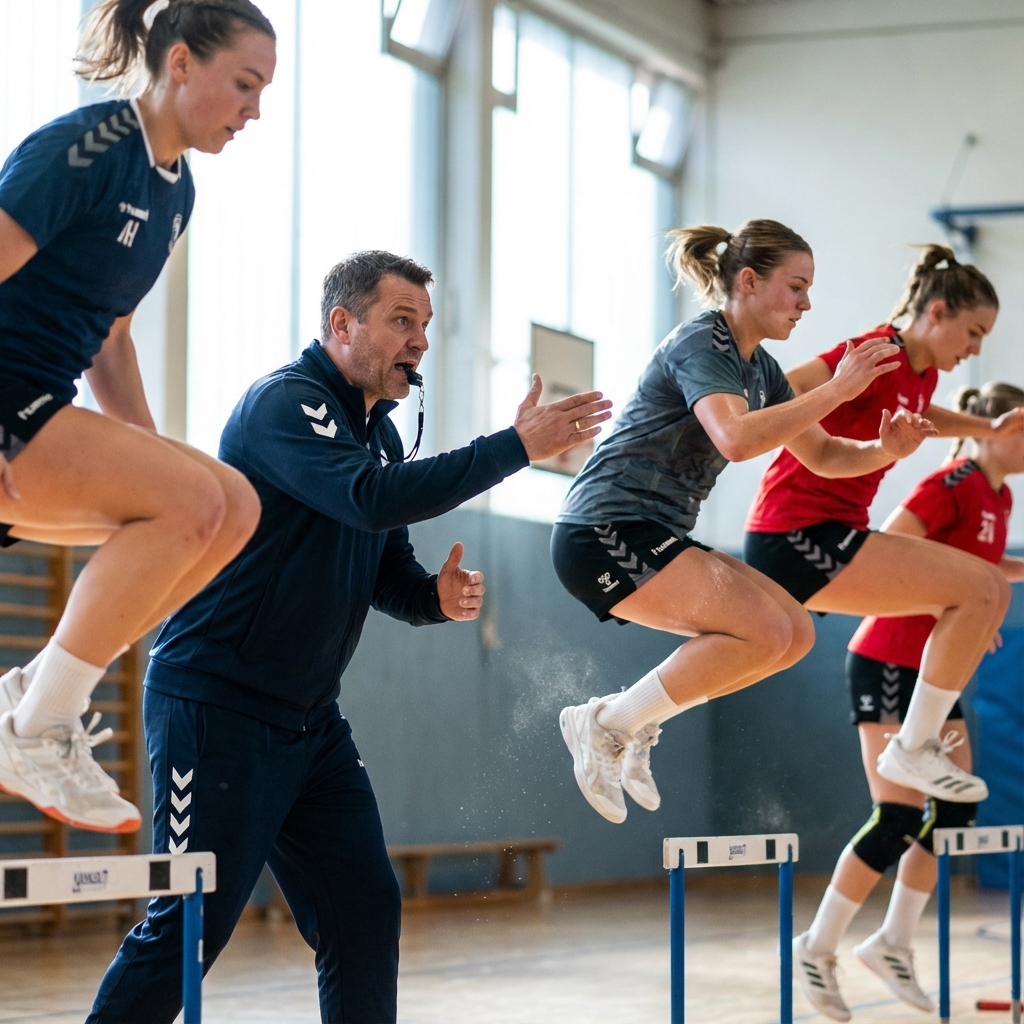
Handball demands explosive power, repeated sprint ability, and the strength to compete physically for 60 minutes. Sport-specific conditioning develops the athletic qualities that underpin elite performance.


Register for FREE and get coaching tips, top drills, session and more every week!