

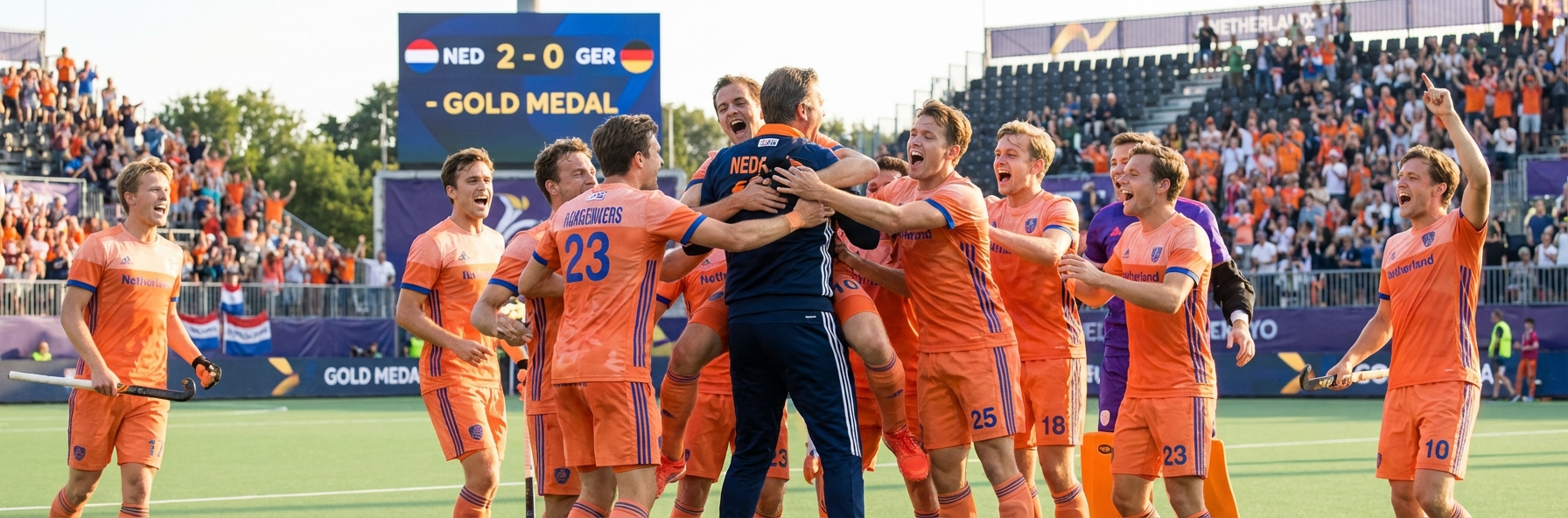
At Paris 2024, the Netherlands achieved something unprecedented in Olympic hockey history: gold medals in both the men's and women's tournaments. This "golden sweep" wasn't an accident. It was the product of decades of systematic development, elite coaching, and a national philosophy that every coach can learn from.
The System Behind the Success
Dutch hockey dominance starts long before players reach the national team. It begins in youth development programmes that prioritise skills over results, creativity over systems, and long-term development over short-term wins.
By the time players reach elite level, they have exceptional technical foundations, outstanding game intelligence, and the tactical flexibility to adapt to any situation. This is the product of a coherent pathway that maintains consistent principles from grassroots to Olympic finals.
Technical Excellence
Watch Dutch players and the technical quality is immediately apparent. Ball control under pressure, passing accuracy at speed, 3D skills that create options unavailable to less technical players. This isn't talent alone - it's the result of deliberate, systematic skills development over many years.
Coaching takeaway: Invest heavily in technical development, especially at younger ages. The time spent on fundamentals pays dividends throughout a player's career. Don't sacrifice skill work for tactical complexity too early.
Playing Style and Flexibility
The Dutch teams played with remarkable flexibility at Paris. They could dominate possession, counter-attack at speed, press high, or defend deep. This versatility made them incredibly difficult to prepare for - opponents couldn't simply focus on nullifying one strength.
This flexibility comes from players who understand the game deeply, not just their specific role within a system. Dutch players can adapt because they've developed broad understanding, not narrow specialisation.
Coaching takeaway: Develop players who understand multiple aspects of the game. Avoid early positional specialisation. Build game intelligence alongside technical skills.
Collective Mindset
Individual brilliance is abundant in Dutch hockey, but what separates them is how individuals function within the collective. Star players serve the team; they don't demand the team serves them. Defensive responsibilities are shared equally regardless of attacking reputation.
This collective mindset is cultural - it's how Dutch hockey is taught from the beginning. The team always comes first, and individual success is measured by team outcomes.
Coaching takeaway: Build team-first culture deliberately. Recognise and reward collective behaviours, not just individual achievements. Make defensive effort as valued as attacking flair.
Tournament Management
Both Dutch teams managed their Olympic campaigns expertly. They peaked at the right moment, managed player loads across the tournament, and produced their best performances when it mattered most. This is coaching craft at the highest level.
Key to this was the willingness to accept less than perfect performances in pool stages in order to be at their best for knockout matches. Short-term thinking might have demanded maximum effort throughout; tournament wisdom demanded load management.
Coaching takeaway: Think strategically about competition cycles. When does peak performance matter most? How can you manage the journey to arrive at key moments in optimal condition?
Handling Pressure
Olympic finals are the highest-pressure environment in hockey. The Dutch players performed under this pressure because they were prepared for it. Mental preparation is integrated into their development - visualisation, pressure training, competition simulation.
The culture also helps. Players who've grown up winning at every level have confidence born of experience. They've been in big moments before and succeeded.
Coaching takeaway: Integrate mental preparation into your coaching. Create pressure scenarios in training. Help players develop coping strategies for high-stakes moments.
Depth and Competition
The Dutch squads had genuine depth. Every player could contribute meaningfully. This created healthy internal competition that raised standards, and tactical options that gave coaches flexibility.
This depth is a product of the development system. Multiple players emerge at each position because the pathway consistently produces quality.
Coaching takeaway: Build depth, not just a first XI. Develop all your players seriously. Internal competition improves everyone.
Applying the Lessons
You don't need Dutch resources to apply Dutch principles. Focus on what you can control:
- Prioritise technical development in youth coaching
- Build game understanding through varied experiences
- Create team-first culture
- Think strategically about competition management
- Integrate mental preparation
- Develop depth throughout your squad
The golden sweep was decades in the making. Your own journey starts with the next training session.
 sportplan_hockey