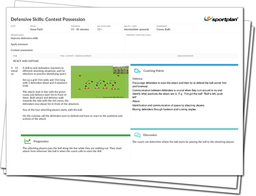
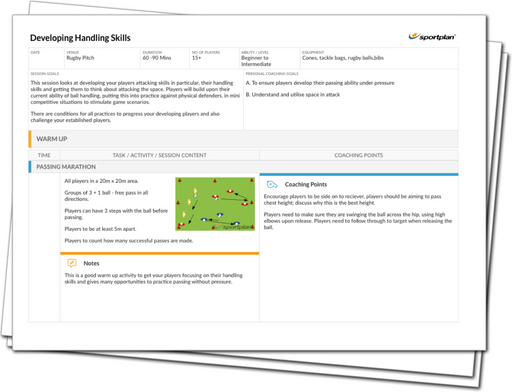
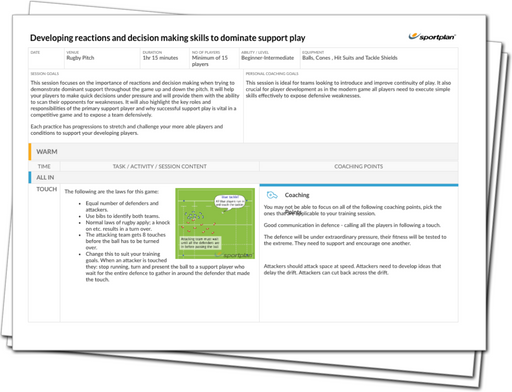
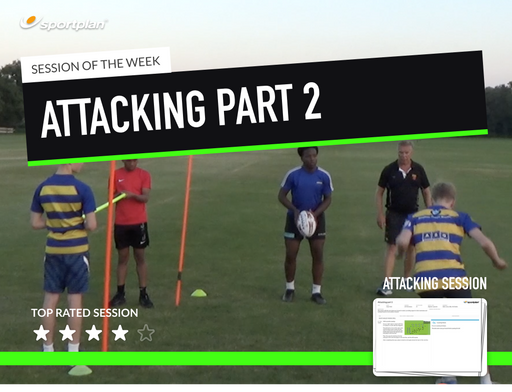
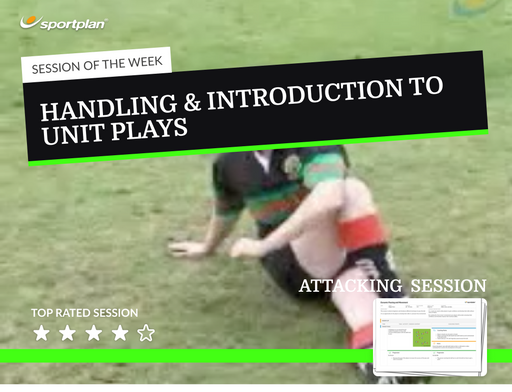
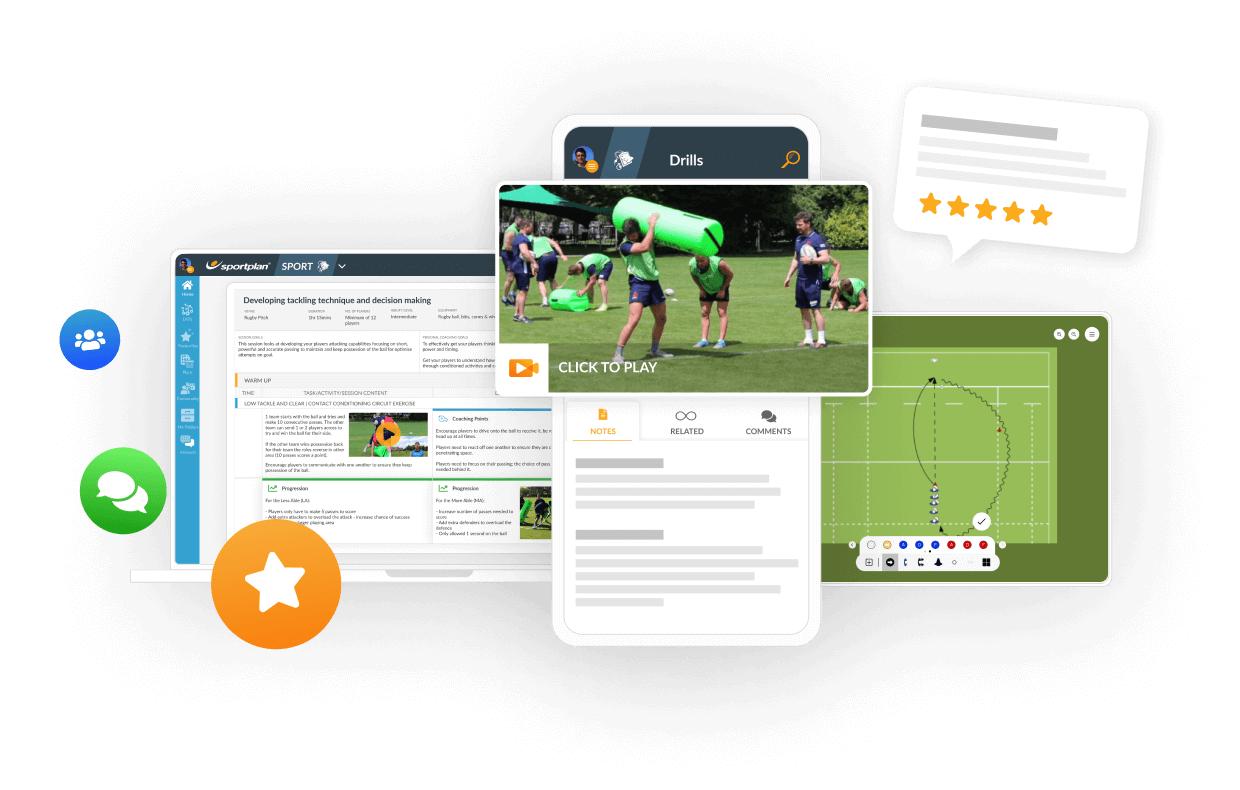
All the games in this session have been designed to favour the attacking team and develop your players' quick thinking and key decision making skills. By coaching this session with your team you'll improve how they exploit a mis-match in the opposition's defence and create more try-scoring opportunities.
What's in the session?
Players learn best when they're having fun so this session is made up entirely of conditioned games. We kick off with a warm up game of Mind the overlap. Following on from this we then set up a larger game which works specifically on getting your team to attack quickly and not allow the opposition time to set up their defence.
To keep up the high intensity it's then time for another small-sided game where your forwards have two separate try lines which they can score on (to stretch the defence and create gaps) before bringing everyone back together for a final full pitch game.
Additional session note:
Allow your players the freedom to explore different attacking methods and ways to expose a defence. This is crucial because in games over 80% of tries are scored due to a turnover and exposing a weakness in defence.
in more ways than one
 sportplan_netball
in more ways than one
sportplan_rugby

Tacklers are aiming lower, so carriers who dip late put heads at risk. Teach footwork, a strong early body height and leg drive to win the collision safely.

The hooker's brake foot moved from trial into full law in July 2026. Here is how to coach it so your front row stays stable, legal and safe.

Your players can pass beautifully in a warm-up grid. Then a defender closes, their lungs are burning, and the ball goes to ground. Here is how to build catch-pass skills that hold up when it matters.