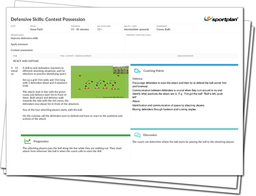
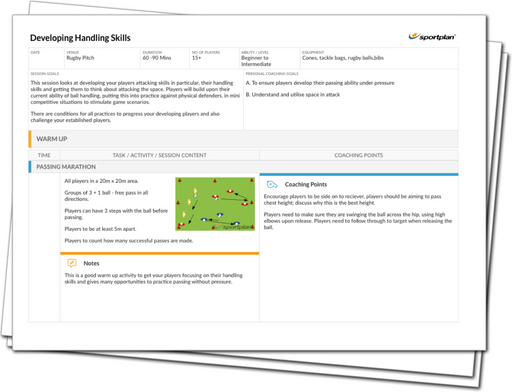
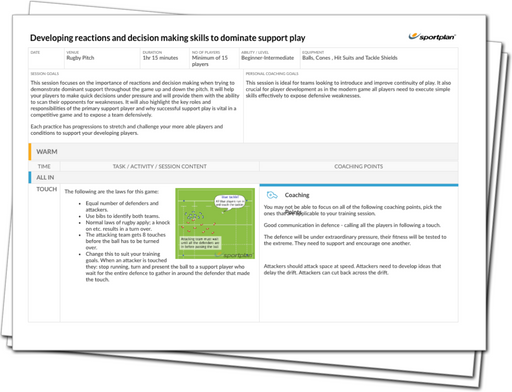
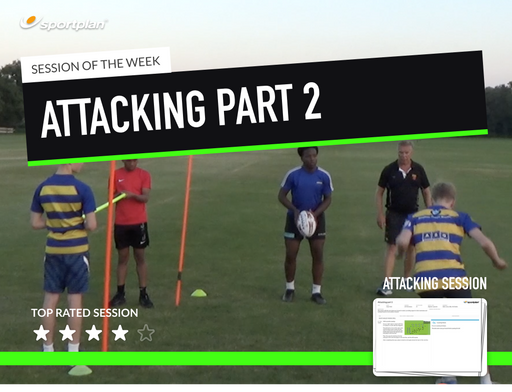
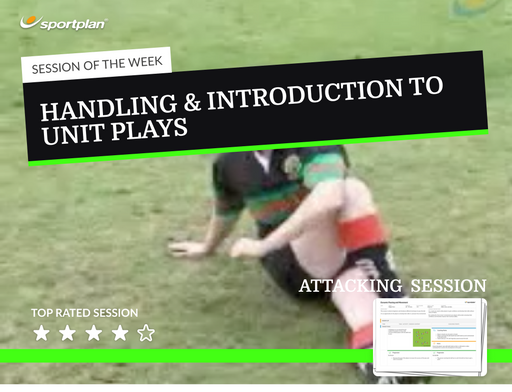
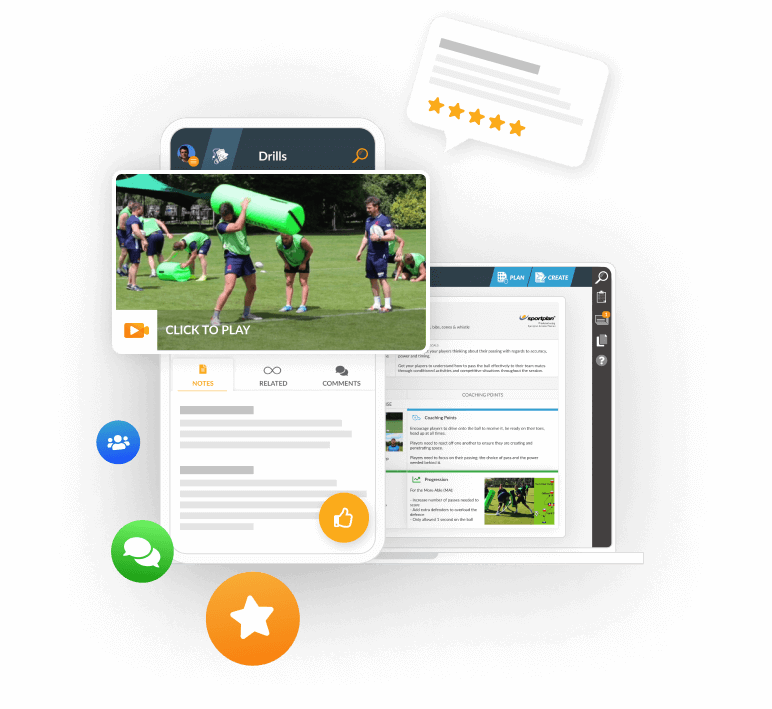
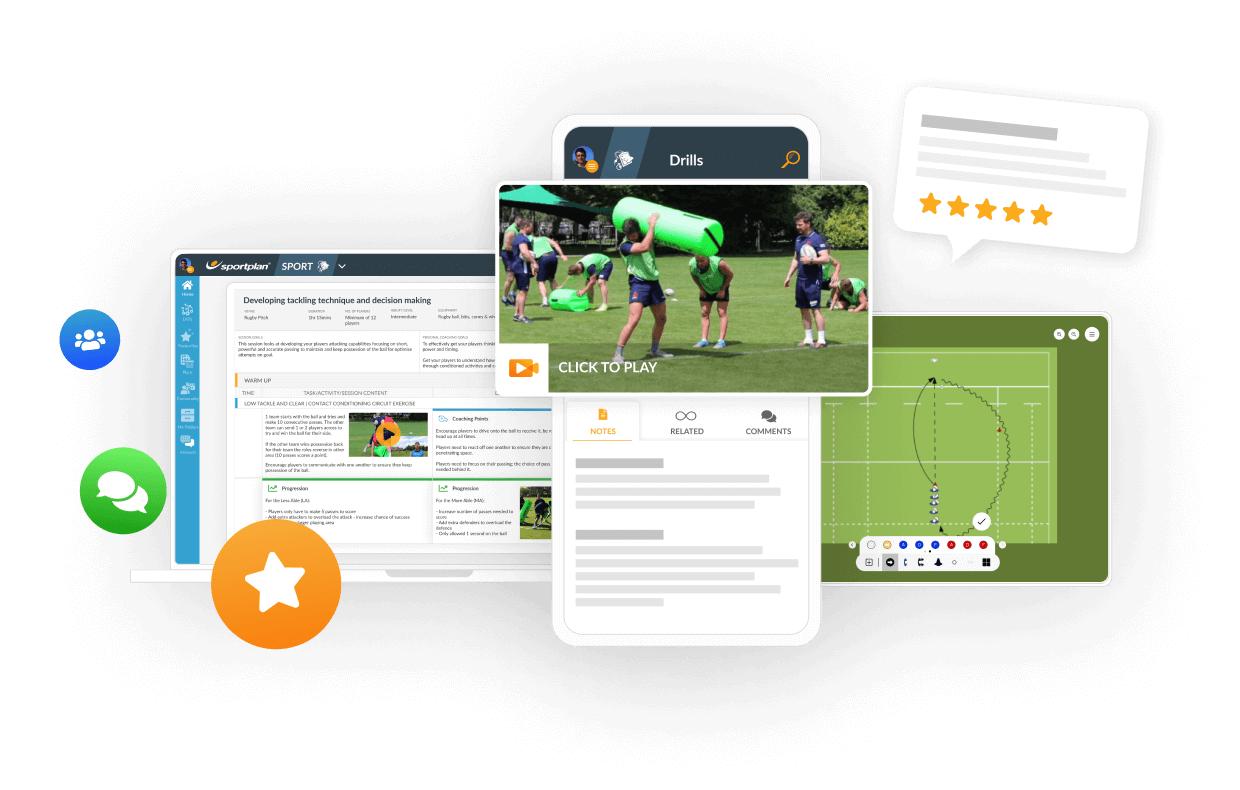
Don't let your team succumb to static mode rugby! Instead use this plan to teach them to look up and play against what's in front of them, making intelligent decisions on the move and using the support.
Even at the highest levels you can see (as a spectator) that often there's an easy advantage to be made with overlaps or a pass to the side but instead, the player ploughs senselessly into a wall of defence - losing the momentum of the attack.
What's in the Session?
To prevent this sort of heads down rugby, this plan has been designed to speed up your players' scanning skills by introducing them to random defence patterns, often after starting them off with their backs to the opposition to reduce their sight time and getting them to react quickly to the unknown!
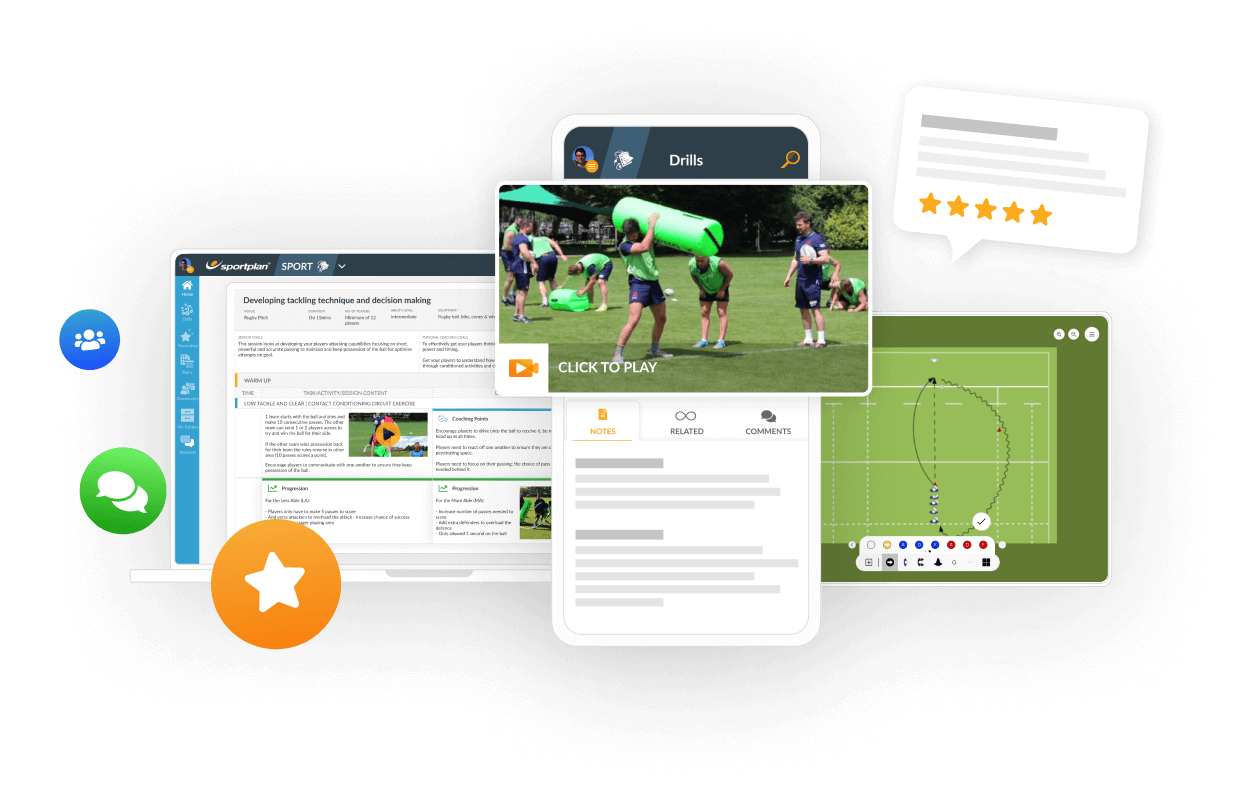
in more ways than one
 sportplan_netball
in more ways than one
sportplan_rugby
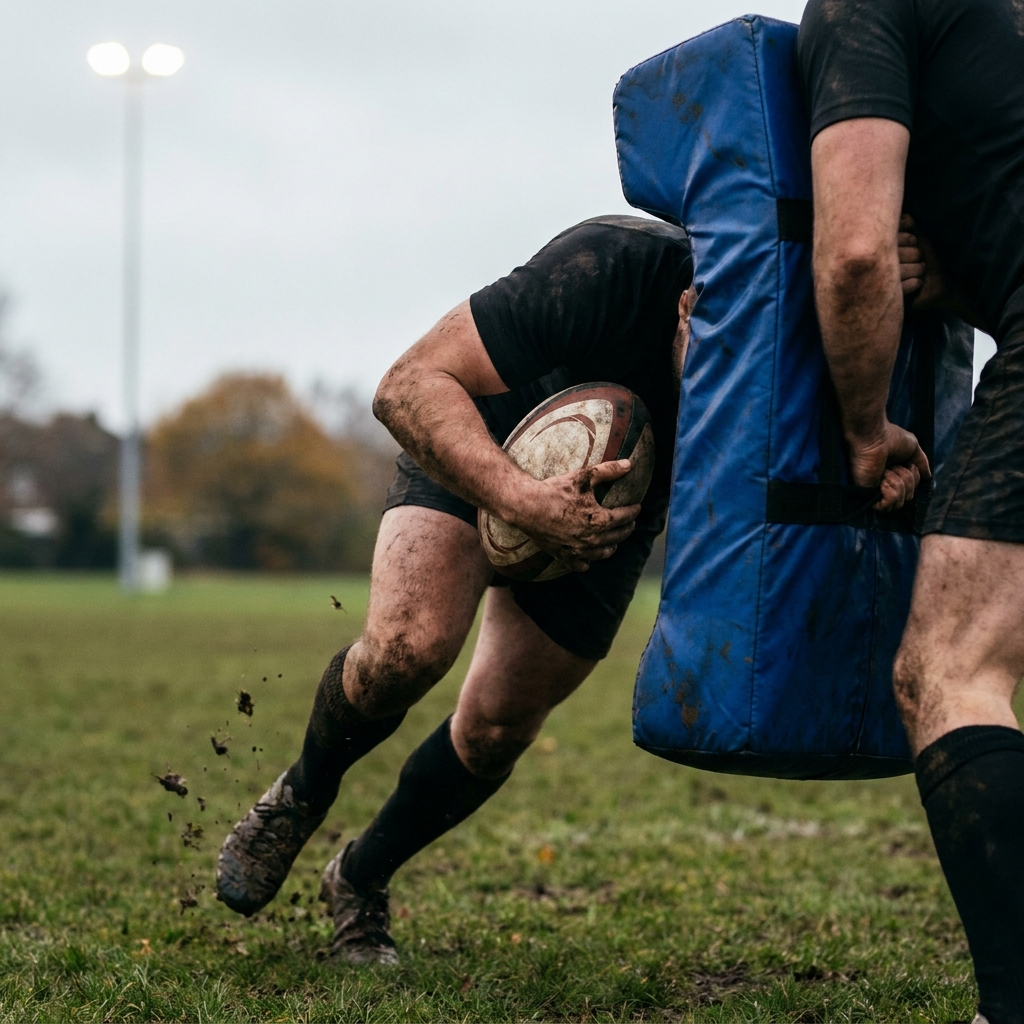
Tacklers are aiming lower, so carriers who dip late put heads at risk. Teach footwork, a strong early body height and leg drive to win the collision safely.
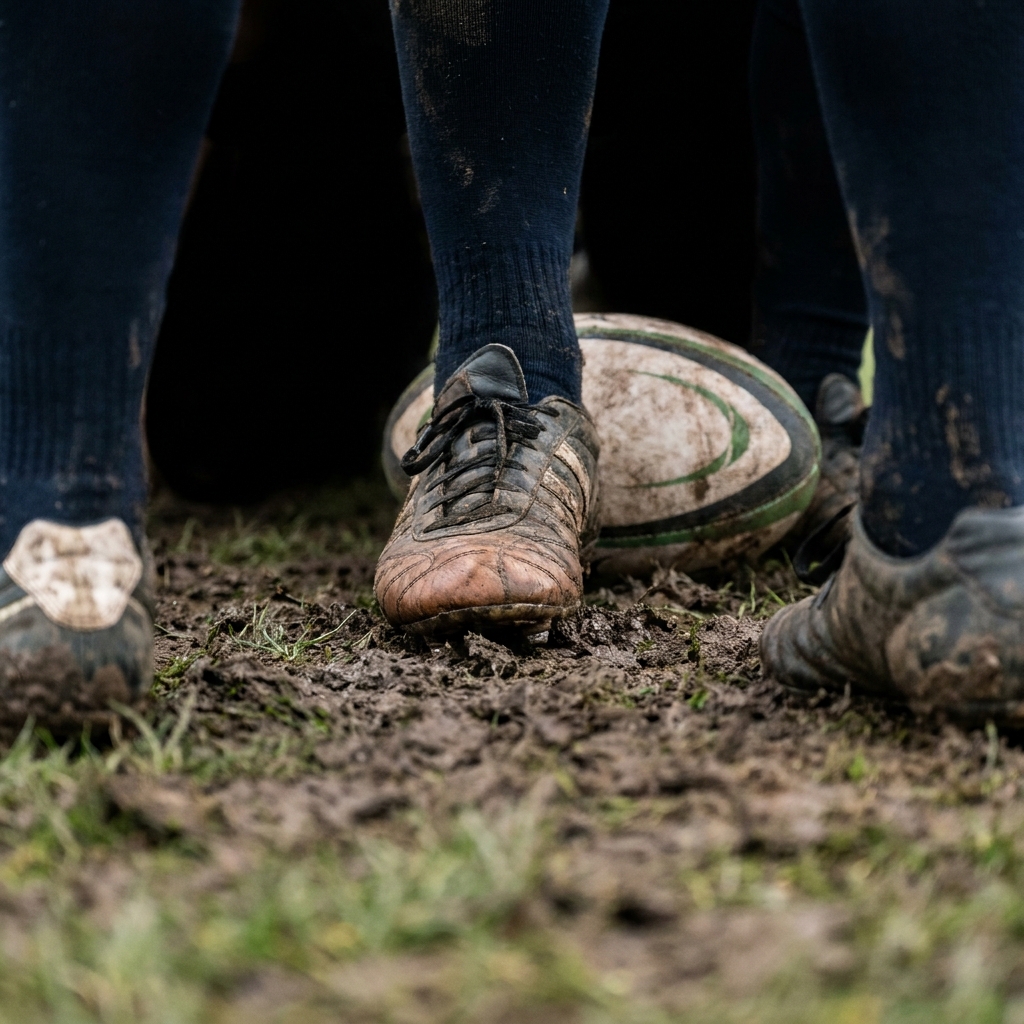
The hooker's brake foot moved from trial into full law in July 2026. Here is how to coach it so your front row stays stable, legal and safe.
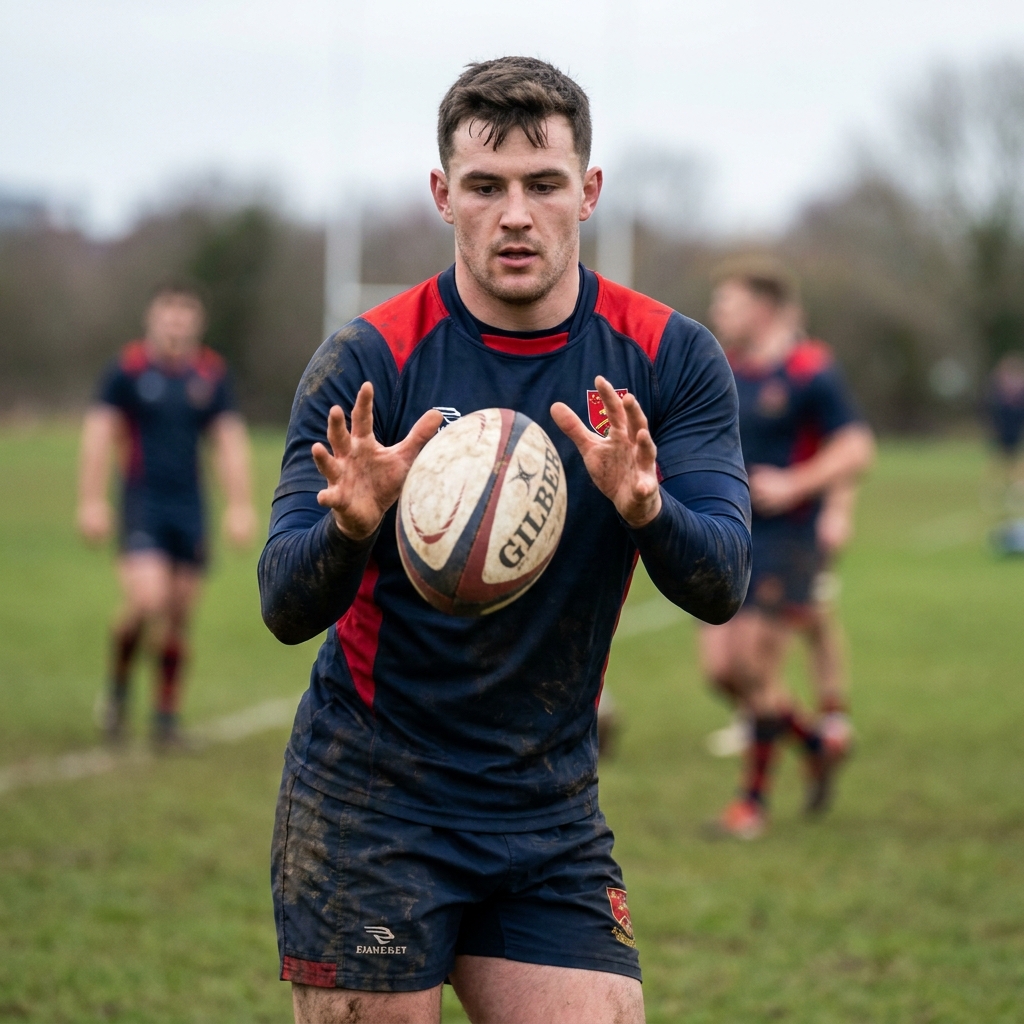
Your players can pass beautifully in a warm-up grid. Then a defender closes, their lungs are burning, and the ball goes to ground. Here is how to build catch-pass skills that hold up when it matters.