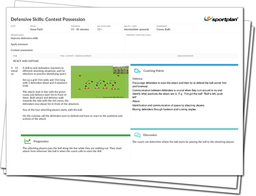
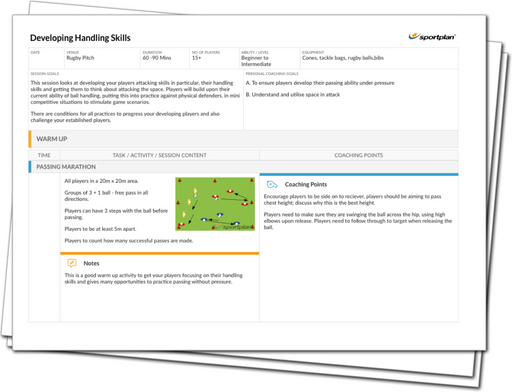
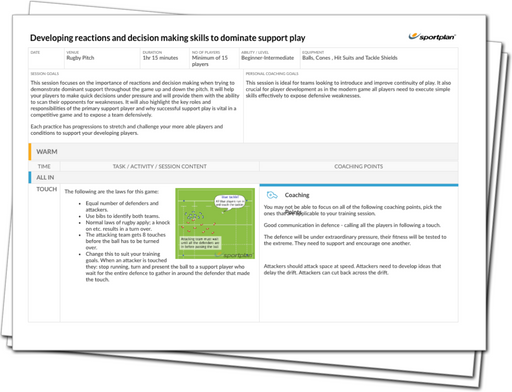
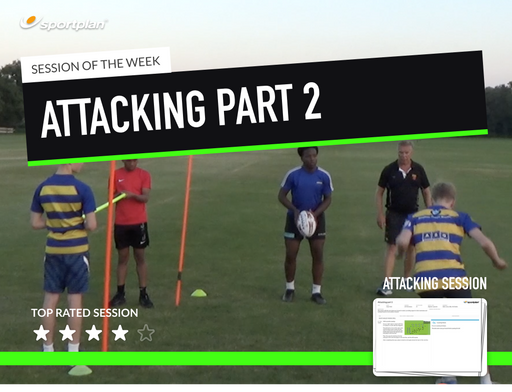
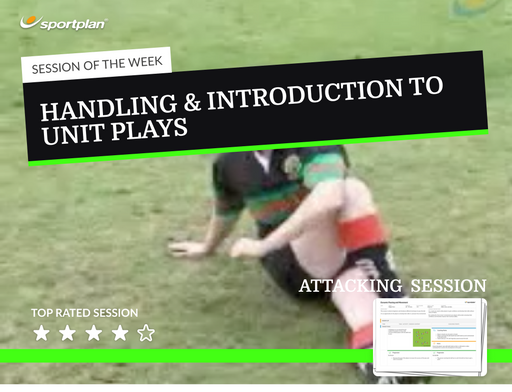
Recognising space is a key skill at any level in rugby. To bring this message home this week we've created a session highlighting the importance of exploiting space.
What we're working on:
By using this decision making session you will be able to demonstrate to your players that they don't always need to look for contact but can instead attack space on the pitch. This multi-level session can be used with varying abilities, as a game of touch or contact depending on the level of your players.
As well as encouraging your players to look for space this session also focuses on realignment of your line, looking to avoid flatness, as well as passing and defending. The added bonus with the defensive drill in this session is that it allows you to assess your attacking players and immediately share the results with your players. Starting with a six versus six game defenders will slowly drop out of play, gradually making more space for your attackers to exploit.
Session outcomes:
See the changes in your next game, with your players making a greater effort to change the point of attack depending on the positioning of their opponents. An essential skill if you want to to exploit the space.

in more ways than one
 sportplan_netball

in more ways than one
sportplan_rugby

Tacklers are aiming lower, so carriers who dip late put heads at risk. Teach footwork, a strong early body height and leg drive to win the collision safely.

The hooker's brake foot moved from trial into full law in July 2026. Here is how to coach it so your front row stays stable, legal and safe.

Your players can pass beautifully in a warm-up grid. Then a defender closes, their lungs are burning, and the ball goes to ground. Here is how to build catch-pass skills that hold up when it matters.