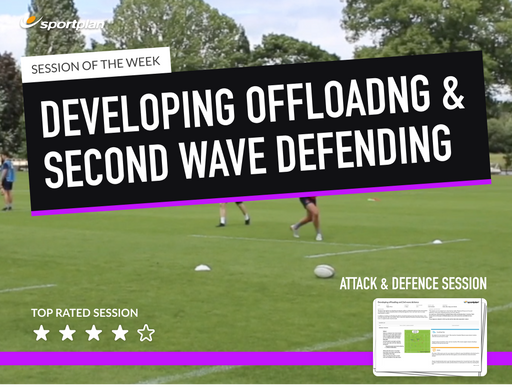
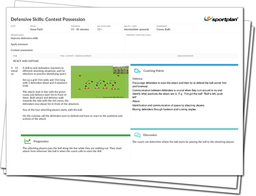
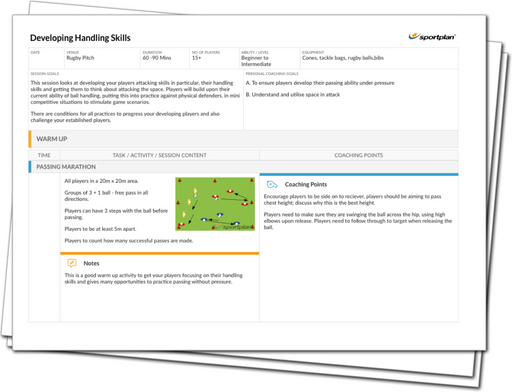
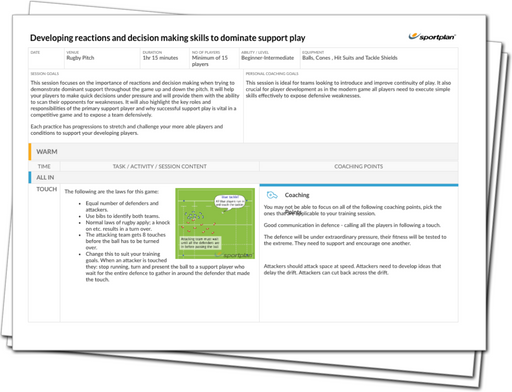
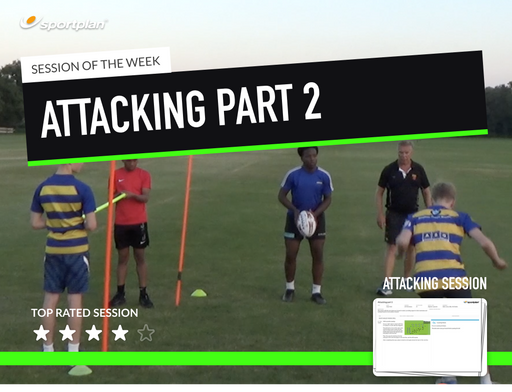
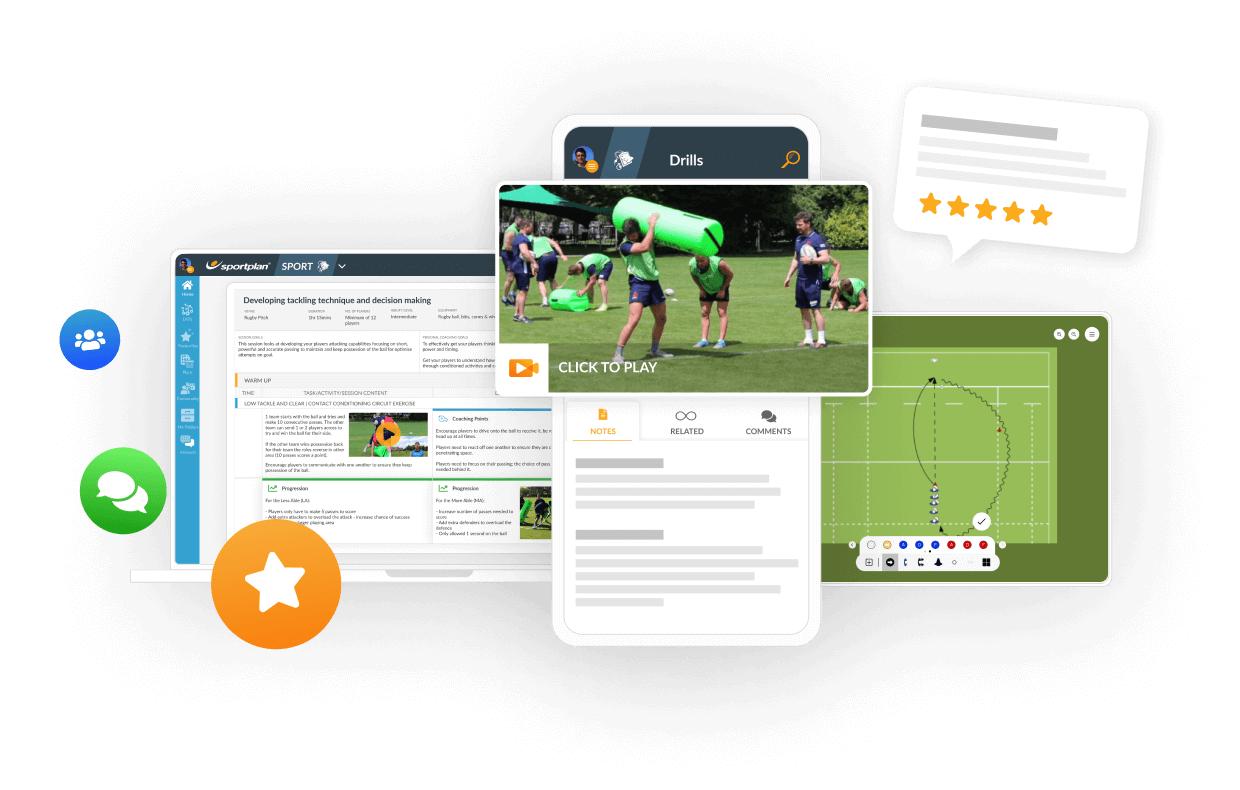
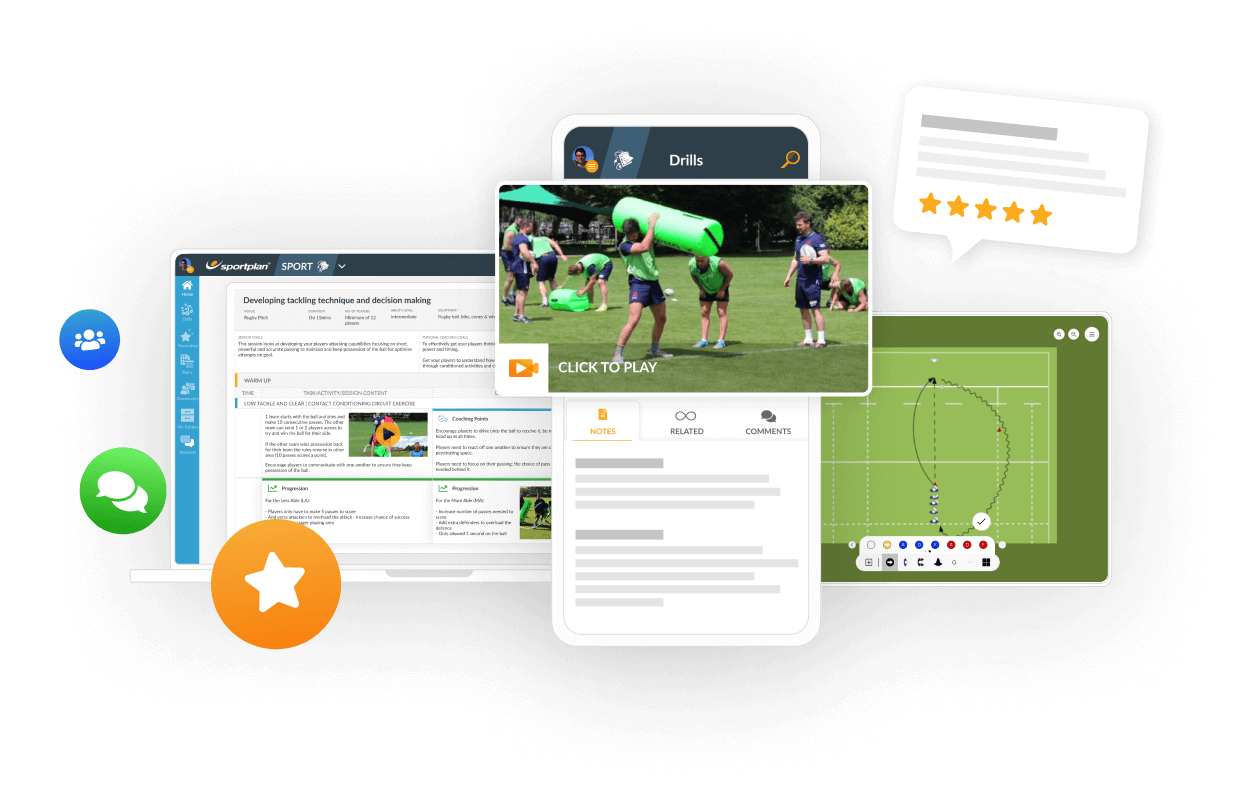
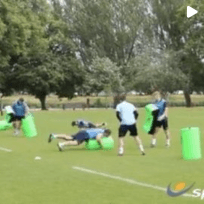
Here's a bumper session for you that can easily be spread over a few training nights. This plan is dedicated to get your players to focus on two crucial elements of the game offloading and the 2nd wave defence.
I used it last week and it went down a storm.
John Nurse, Editor of Sportplan
I hope you like it too!
Offloading:
The aim of the session is to develop your players' ability to offload the ball once they have broken an initial tackle. Players should be able to offload through the 'front' and 'back' door to create more opportunities in attack.
Second wave attack:
In addition to looking at offloading the defence should be looking at how they slow down / turn over ball using the '2nd' wave attack. This is when the initial line of defence has been broken and a cover or support tackle must be made.
Try this plan and see your team performance improve!
in more ways than one
 sportplan_netball
in more ways than one
sportplan_rugby
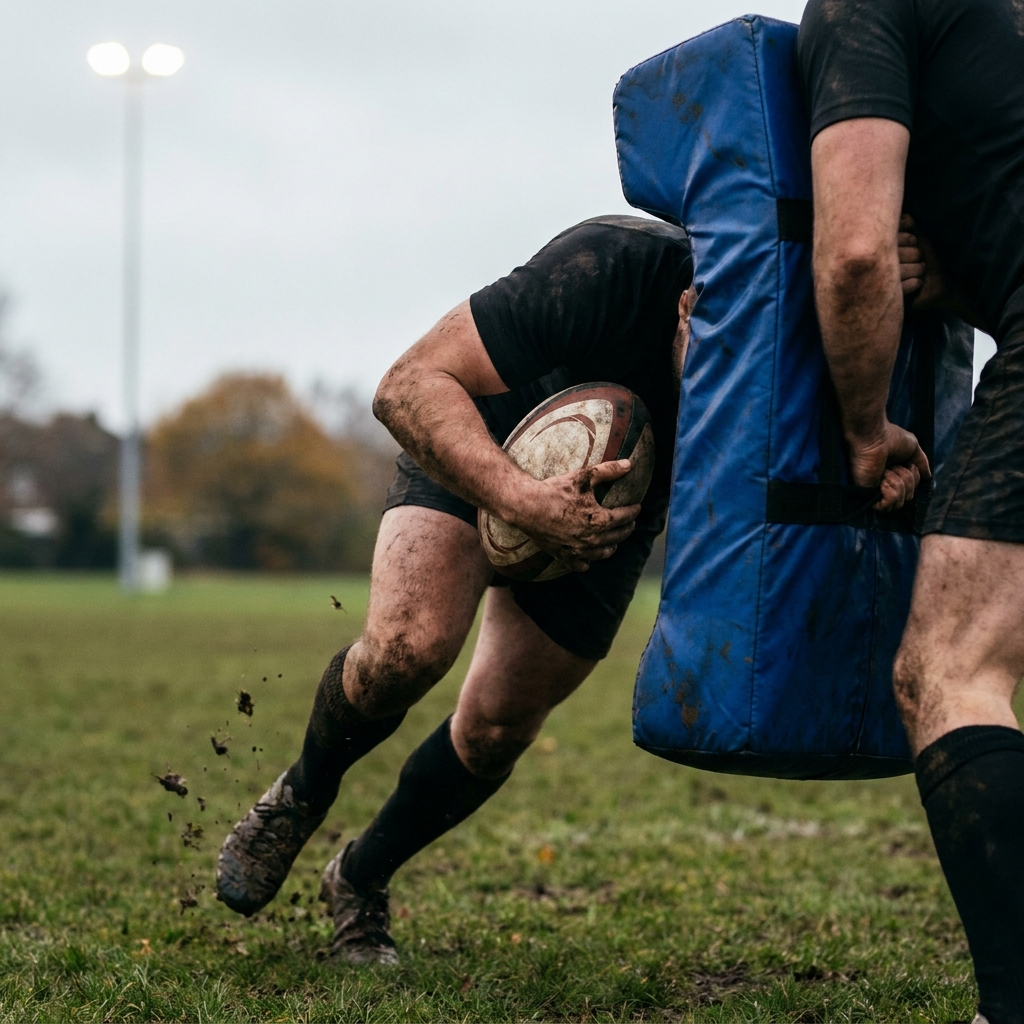
Tacklers are aiming lower, so carriers who dip late put heads at risk. Teach footwork, a strong early body height and leg drive to win the collision safely.
The hooker's brake foot moved from trial into full law in July 2026. Here is how to coach it so your front row stays stable, legal and safe.
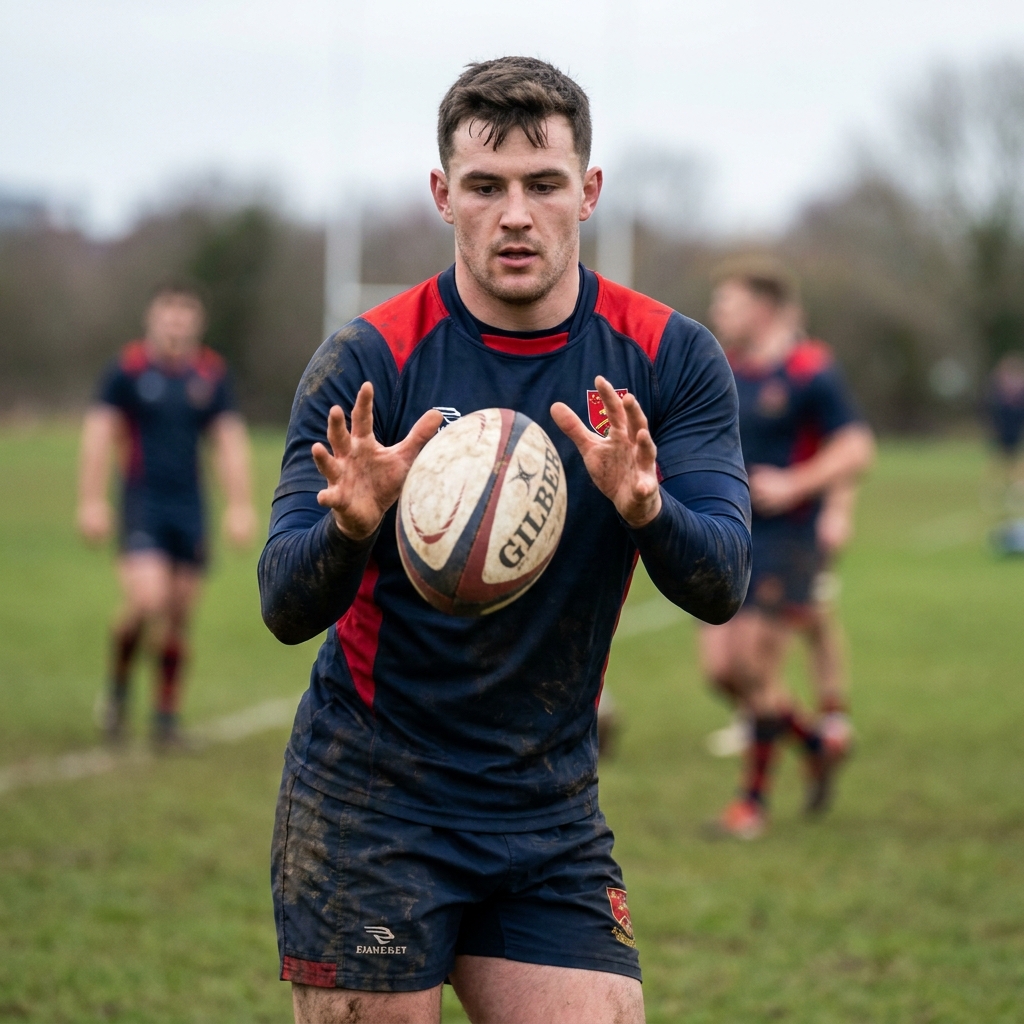
Your players can pass beautifully in a warm-up grid. Then a defender closes, their lungs are burning, and the ball goes to ground. Here is how to build catch-pass skills that hold up when it matters.