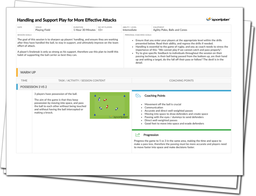
This session looks at testing and improving your players' ability to think on their feet. By deliberately creating holes in your own defence your attackers will need to react quickly if they are going to exploit the space in this fun games based session!
Your defenders will also need to make quick 'heads up' decisions, trying to cope with the overload situations, recover and prevent your attackers from running riot!
We hear the phrase "Heads up Rugby" time and time again, but what does it really mean? Well, it refers to teaching your players to be alert, reacting to live situations and not simply running endless pre-meditated backs moves. Ideally heads up rugby means your players will have the right instincts, knowing what to do at the right time and not simply relying on repeating the rigid strategies they have practised in training.
The aim of this session is to get your attacking players reacting quickly to what is in front of them, making fast decisions based on where the space is and moving accordingly to exploit it.
There is still clearly room in the modern games for well rehearsed back moves, but with rule changes making the game faster with play often going on for longer in many phases it's important that your players are able to react quickly and play intelligently.

in more ways than one
 sportplan_netball


in more ways than one
sportplan_rugby

Greasy balls and soft pitches turn tidy handling into a lottery. Here is how to coach your players to keep hold of the ball when November conditions bite.

Most line breaks are made by support runners, not ball carriers. Teach the angles, depth and timing that get them there.

The isolated ball carrier is rugby's spookiest turnover. Here is the five-step fix, plus drills that rebuild support lines fast.