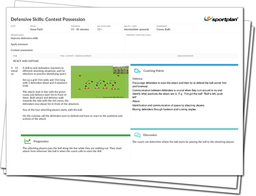
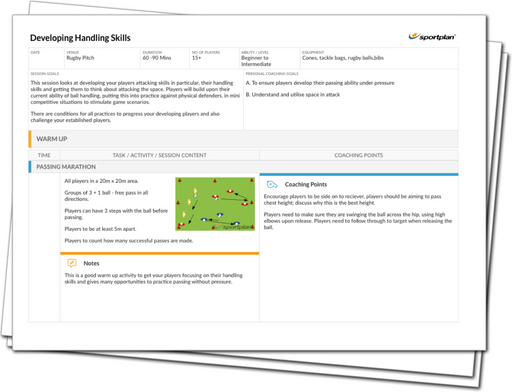
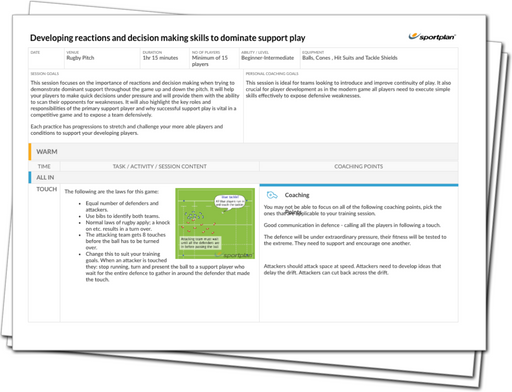
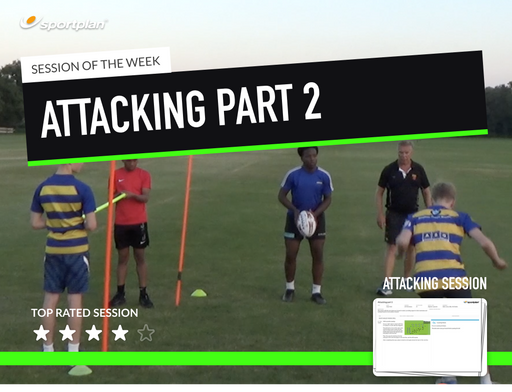
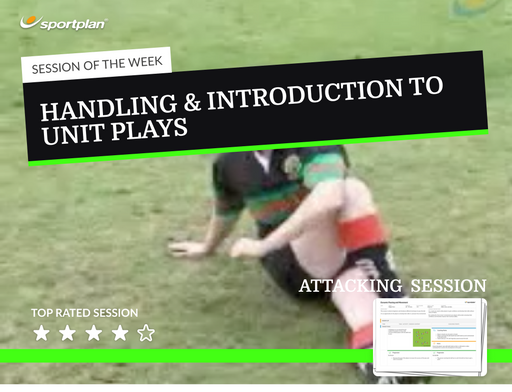
We hear the phrase "Heads up Rugby" time and time again but what does it really mean? Well, it refers to teaching your players to be alert, reacting to live situations and not simply running pre-practised backs moves. Ideally heads up rugby means your players will have the right instincts, knowing what to do at the right time.
To get your attacking players to react to different live situations and scan for space we open this session with a heads up passing exercise, before then giving you the power! In the following drills you control the difficulty, the more defenders you call out the more holes there will be in the defence for your attackers to exploit!
Test your players, create gaps in the defence and see how well your players make heads up decisions!

in more ways than one
 sportplan_netball


in more ways than one
sportplan_rugby

Tacklers are aiming lower, so carriers who dip late put heads at risk. Teach footwork, a strong early body height and leg drive to win the collision safely.

The hooker's brake foot moved from trial into full law in July 2026. Here is how to coach it so your front row stays stable, legal and safe.

Your players can pass beautifully in a warm-up grid. Then a defender closes, their lungs are burning, and the ball goes to ground. Here is how to build catch-pass skills that hold up when it matters.