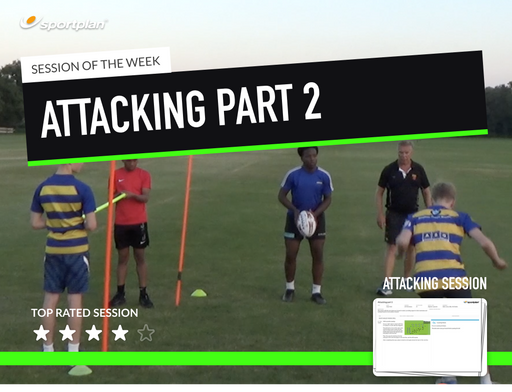
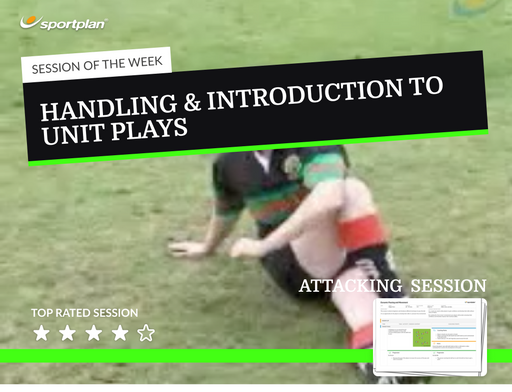
Ideally you always want your ball carrier to have options when running with the ball, after all it's a team game and regardless of how big, fast and strong your players are, they won't be able to get through the opposition's defence on their own.
To ensure your players have always got support on both sides you will need to get your players continuously moving to support the ball carrier and be in the right place at the right time, ready to receive the ball and exploit the space.
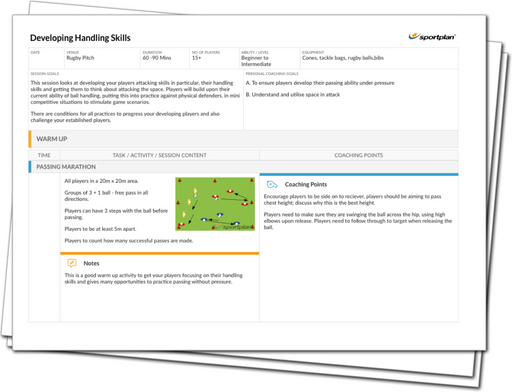
Starting with a couple of handling drills to warm your players hands we then progress onto working on your players' lines of support, initially with static defenders but gradually giving your defenders greater freedom to try and stop the attackers - making things a lot tougher for your attacking players!

in more ways than one
 sportplan_netball

in more ways than one
sportplan_rugby

Tacklers are aiming lower, so carriers who dip late put heads at risk. Teach footwork, a strong early body height and leg drive to win the collision safely.

The hooker's brake foot moved from trial into full law in July 2026. Here is how to coach it so your front row stays stable, legal and safe.
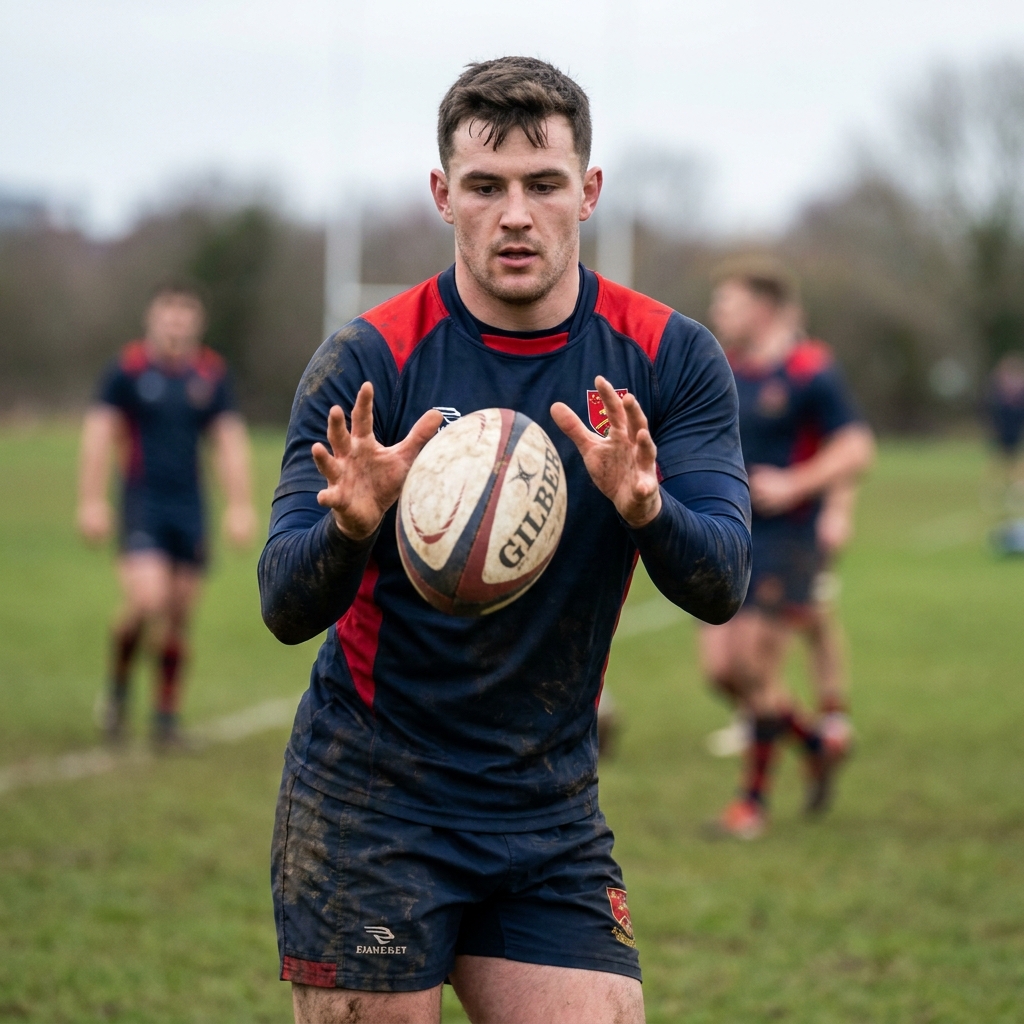
Your players can pass beautifully in a warm-up grid. Then a defender closes, their lungs are burning, and the ball goes to ground. Here is how to build catch-pass skills that hold up when it matters.