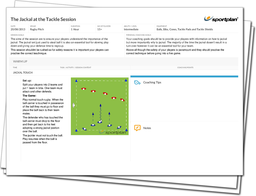
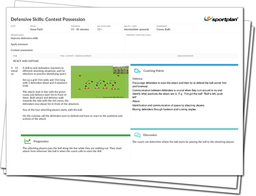
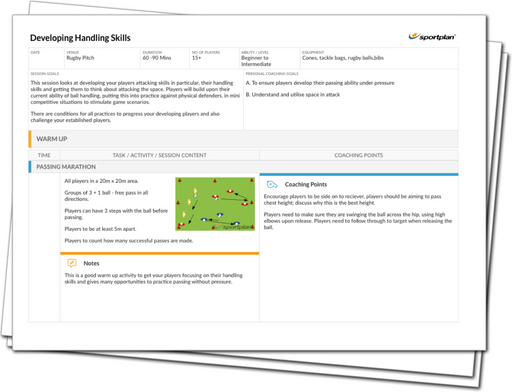
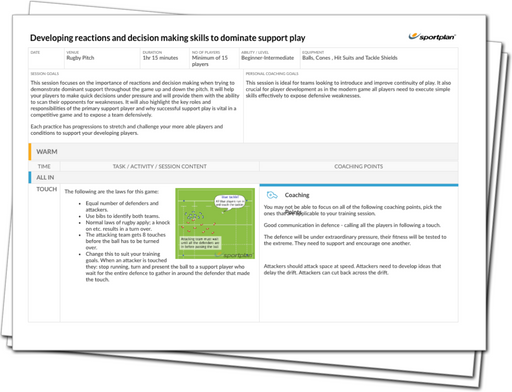
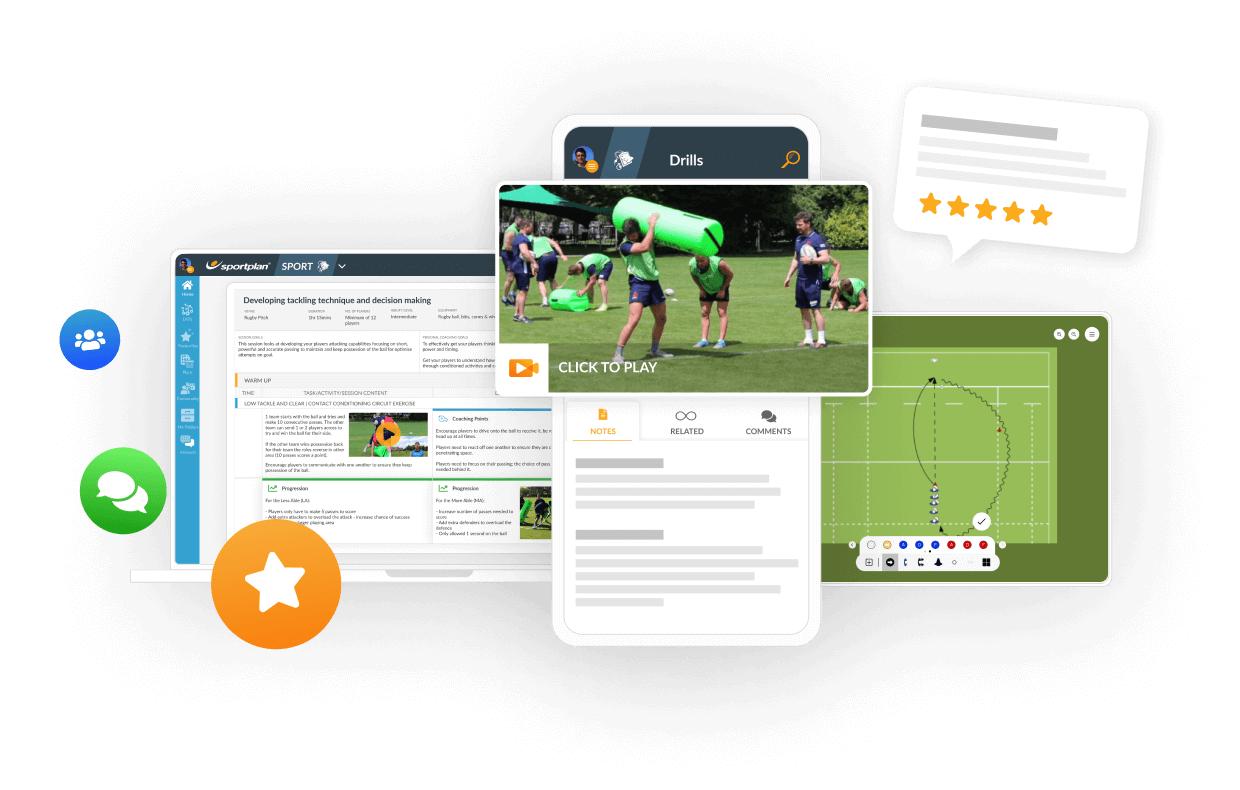
The aim of this session is to ensure your players understand the importance of the jackal. The jackal isn't just used to steal the ball it is also an essential tool for slowing play down and giving your defence time to regroup.
|
Jackal definition When a player contests for the ball at the tackle situation; on their feet but contesting the ball with their hands. |
What's in the Session?
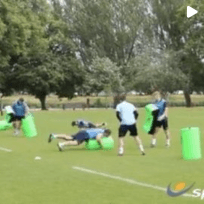
To give your players the confidence to adopt the jackal position under pressure (using the correct technique) we start with a non-contact warm up. Introducing the jackal in a non contact setting allows players time to perfect the correct technique.
Following this we then test your players' ability to compete for the ball in a 1v1 and a 2v1 jackal and build towards the final game - focusing on your players' ability to tackle and jackal.
 Additional Session Notes:
This session has progressions for you more able players and conditions to develop your less able players.
In the interest of safety this session should not be rushed. The safety of your players is paramount and they should practise the correct technique before going into a live game.
in more ways than one
 sportplan_netball
in more ways than one
sportplan_rugby
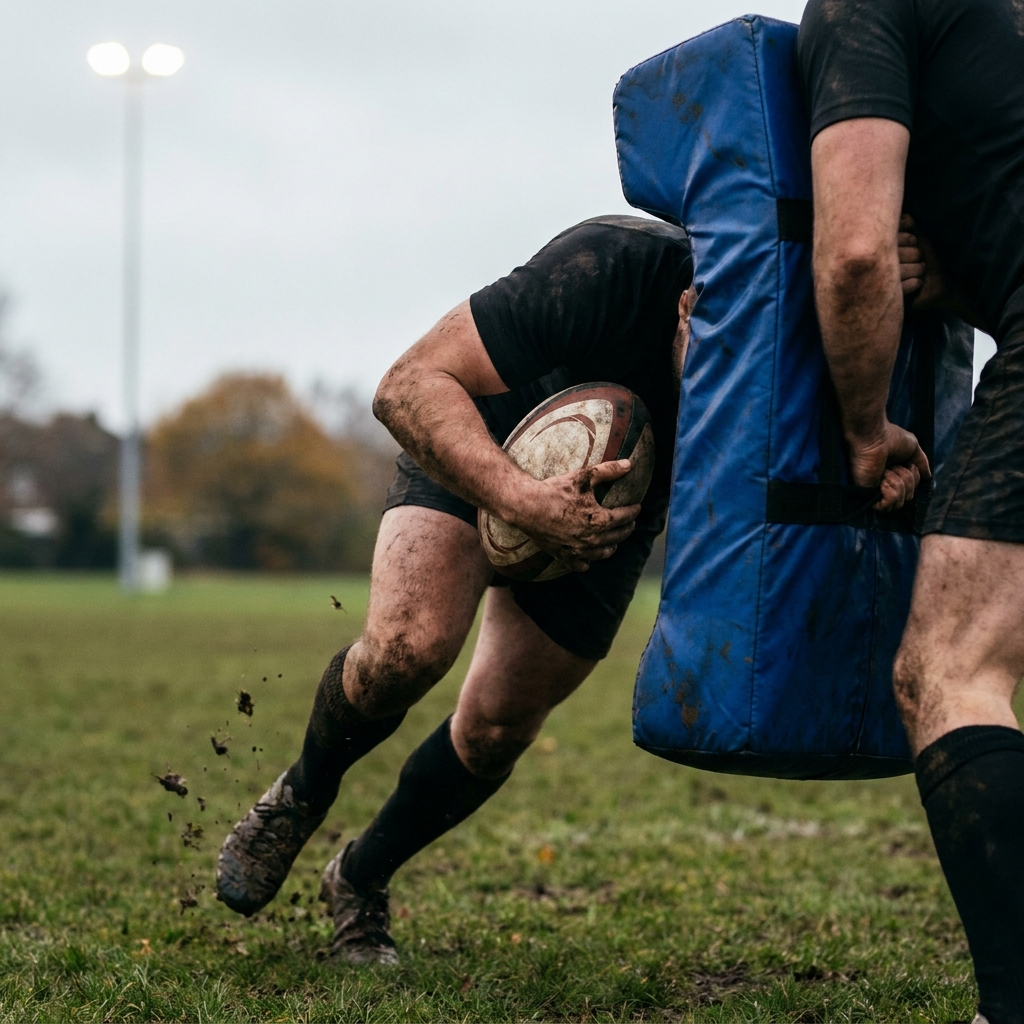
Tacklers are aiming lower, so carriers who dip late put heads at risk. Teach footwork, a strong early body height and leg drive to win the collision safely.
The hooker's brake foot moved from trial into full law in July 2026. Here is how to coach it so your front row stays stable, legal and safe.
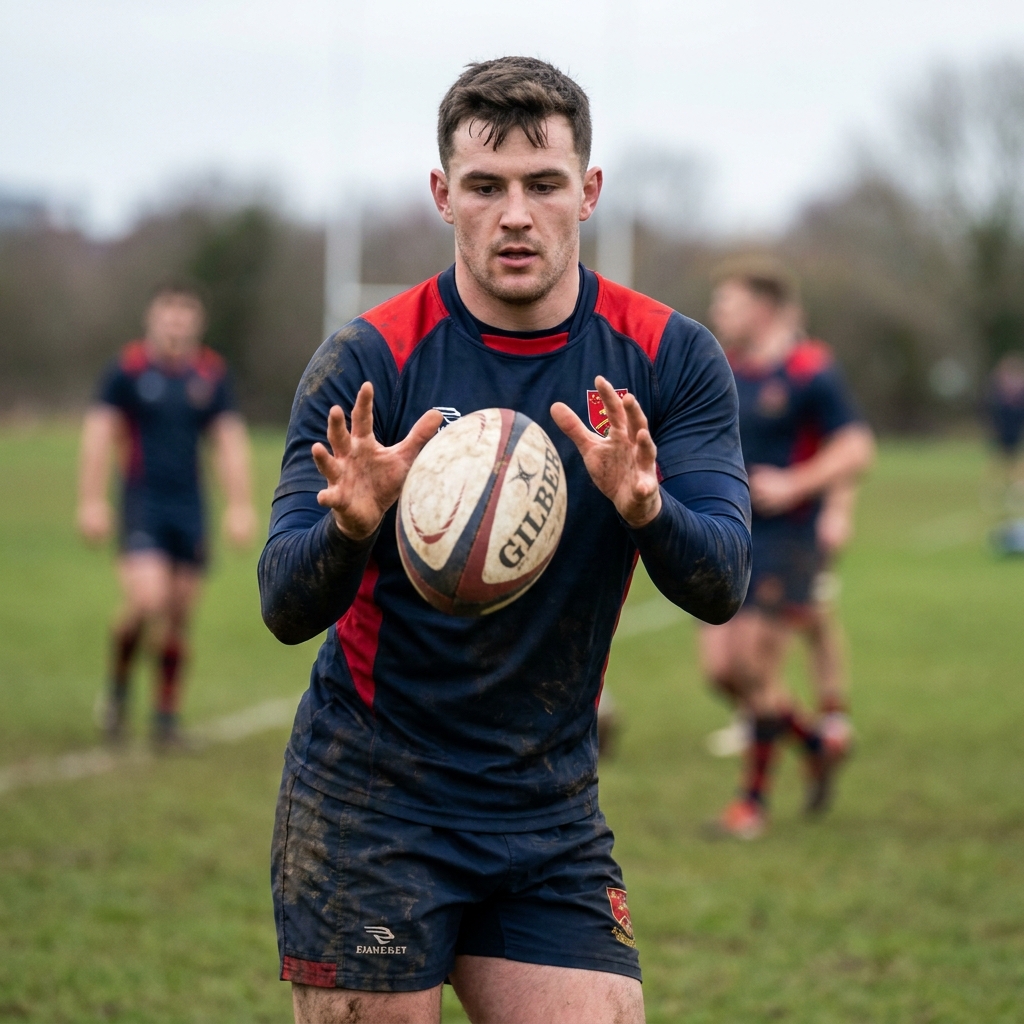
Your players can pass beautifully in a warm-up grid. Then a defender closes, their lungs are burning, and the ball goes to ground. Here is how to build catch-pass skills that hold up when it matters.