


September is when club hockey changes shape. Juniors step up into the lower adult teams, returning players dust off their sticks and new members turn up having not played since school. For a captain or coach, those first few Saturdays are some of the most important of the whole season.
Get it right and you gain players who will be in your first team in three years' time. Get it wrong, and a nervous fifteen-year-old who spent the game chasing shadows quietly stops coming. The difference is rarely about talent. It is about how well the team welcomes them.
What New Players Are Actually Worried About
Most juniors are not worried about skill. They are worried about the pace, the physicality, getting shouted at and letting the team down. New adult players often share the same fears, plus the awkwardness of not knowing anyone.
Safety comes first. Make sure every junior has a mouthguard and shin pads, and that your club's welfare officer and captains know the current England Hockey regulations and club policy on juniors playing adult matches. Once the basics are covered, confidence becomes the thing you are really coaching.
A Five-Step Framework for the First Month
Step One: Give them one clear job. "Play left half" is not a job. "Stay goal-side of their right forward and give the ball to our centre-back when you win it" is. A single, simple responsibility lets a new player contribute without needing to understand the whole system on day one.
Step Two: Pair them with a buddy. Pick an experienced, calm player who plays near them on the pitch. The buddy talks them through restarts, reminds them of their job and is the first voice of encouragement after a mistake.
Step Three: Keep team principles short. Three is plenty: get goal-side when we lose the ball, give an option when we have it, and talk. Adults benefit from this as much as juniors, and it stops mixed-experience teams pulling in different directions.
Step Four: Manage minutes deliberately. Use rolling substitutions to give newcomers short, regular spells rather than one long, exhausting block. Try to bring them on at calmer moments, not in the last five minutes of a tight game while defending a penalty corner.
Step Five: Talk to parents early. A quick message before the first match explaining who the captain is, what position their child might play and how substitutions work removes a lot of anxiety on the sideline. Keep feedback to parents positive and specific.
How to Train It
If your club trains mixed groups midweek, use small-sided games where juniors and adults play together in the same units they will play in on Saturday. A newcomer who has practised tracking back alongside their buddy on Tuesday will do it far more naturally at the weekend.
Build in short positional sessions too. Walk through where a defender or midfielder stands when the ball is in different areas, then play it at half pace before adding full pressure. Understanding where to be is the fastest route to confidence.
Key Coaching Points
- Check kit, mouthguards and club policy before anything else; safety is not negotiable.
- Give each new player one specific, achievable job rather than a position name.
- Buddy them with a calm, experienced teammate who plays nearby on the pitch.
- Keep team principles to three simple, repeatable ideas everyone can follow.
- Use short, regular substitution spells and choose calmer moments to bring newcomers on.
- Praise effort and good decisions loudly, and keep corrections quiet and private.
Recommended Drills



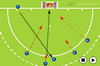
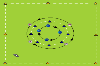
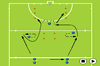
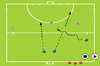
VIEW ALL ROLES AND RESPONSIBILITIES DRILLS
Frequently Asked Questions
Where should I play a junior in their first adult match?
Somewhere with clear reference points and support around them. A wide midfield or wing role with a buddy close by often works well, as the job is easy to explain. Avoid putting a nervous newcomer at centre-back, where one mistake is very visible and very costly.
How do I stop experienced players shouting at newcomers?
Set the standard before the first game. Tell the team that instructions are welcome but criticism is not, and that the captain handles any corrections. If one player keeps doing it, have a quiet word afterwards. The culture of a lower team is set by its senior players.
Should juniors get the same minutes as adults?
Not necessarily the same, but they should get meaningful time every week. Short, regular spells are better than a full game one week and ten minutes the next. Consistency helps them settle, and it shows them they are a real part of the team.

 sportplan_hockey