Field Hockey: first to score

September 2026

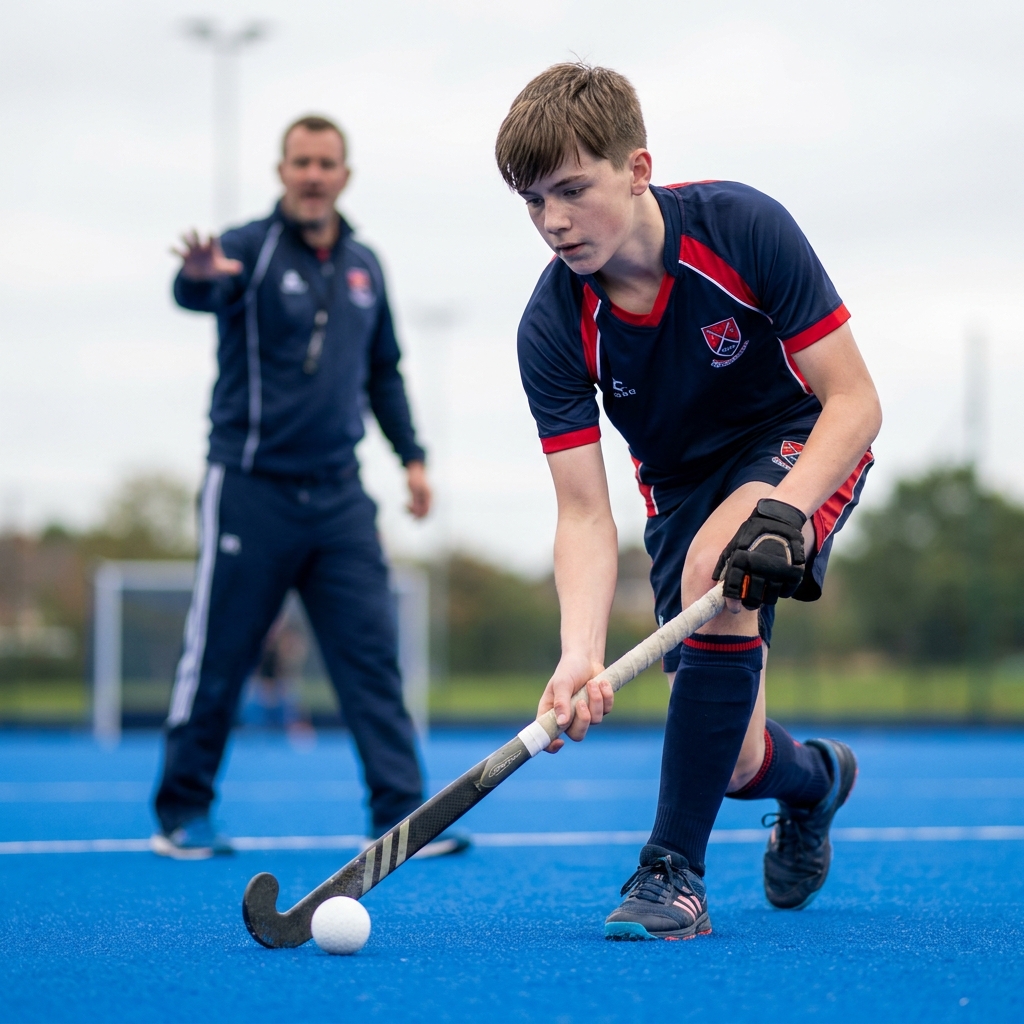
September is when club hockey changes shape. Juniors step up into the lower adult teams, returning players dust off their sticks and new members turn up having not played since school. For a captain or coach, those first few Saturdays are some of the most important of the whole season.

Get it right and you gain players who will be in your first team in three years' time. Get it wrong, and a nervous fifteen-year-old who spent the game chasing shadows quietly stops coming. The difference is rarely about talent. It is about how well the team welcomes them.

What New Players Are Actually Worried About

Most juniors are not worried about skill. They are worried about the pace, the physicality, getting shouted at and letting the team down. New adult players often share the same fears, plus the awkwardness of not knowing anyone.

Safety comes first. Make sure every junior has a mouthguard and shin pads, and that your club's welfare officer and captains know the current England Hockey regulations and club policy on juniors playing adult matches. Once the basics are covered, confidence becomes the thing you are really coaching.

A Five-Step Framework for the First Month

Step One: Give them one clear job. "Play left half" is not a job. "Stay goal-side of their right forward and give the ball to our centre-back when you win it" is. A single, simple responsibility lets a new player contribute without needing to understand the whole system on day one.

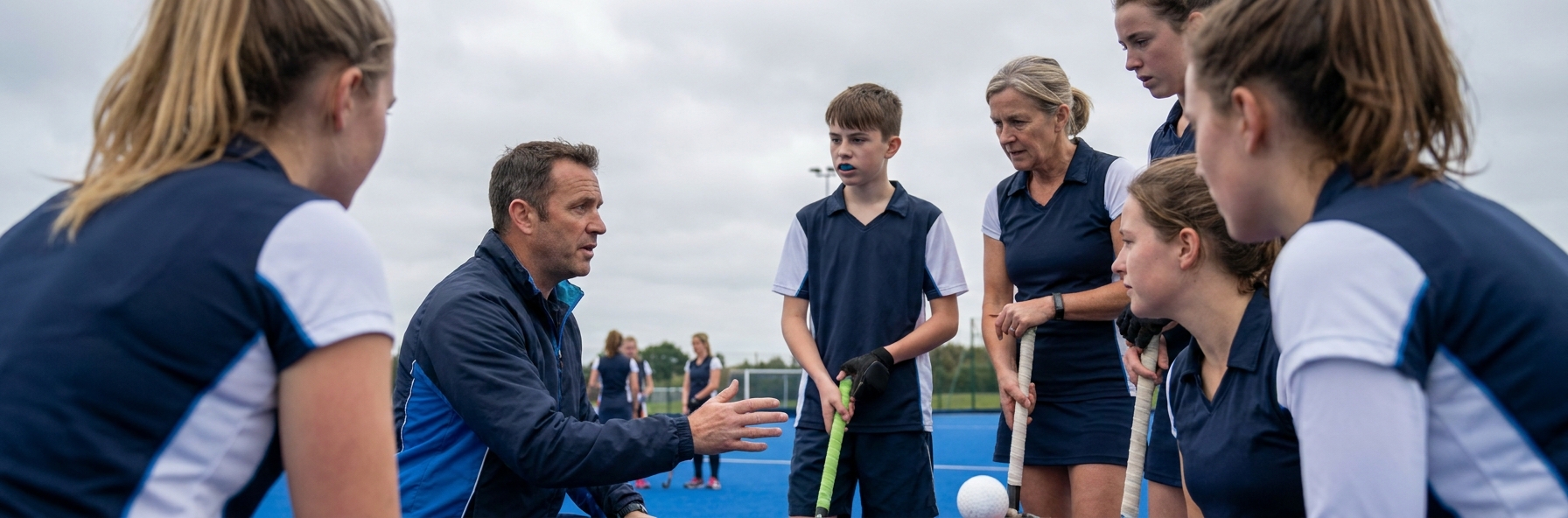
Step Two: Pair them with a buddy. Pick an experienced, calm player who plays near them on the pitch. The buddy talks them through restarts, reminds them of their job and is the first voice of encouragement after a mistake.

Step Three: Keep team principles short. Three is plenty: get goal-side when we lose the ball, give an option when we have it, and talk. Adults benefit from this as much as juniors, and it stops mixed-experience teams pulling in different directions.

Step Four: Manage minutes deliberately. Use rolling substitutions to give newcomers short, regular spells rather than one long, exhausting block. Try to bring them on at calmer moments, not in the last five minutes of a tight game while defending a penalty corner.

Step Five: Talk to parents early. A quick message before the first match explaining who the captain is, what position their child might play and how substitutions work removes a lot of anxiety on the sideline. Keep feedback to parents positive and specific.

How to Train It

If your club trains mixed groups midweek, use small-sided games where juniors and adults play together in the same units they will play in on Saturday. A newcomer who has practised tracking back alongside their buddy on Tuesday will do it far more naturally at the weekend.

Build in short positional sessions too. Walk through where a defender or midfielder stands when the ball is in different areas, then play it at half pace before adding full pressure. Understanding where to be is the fastest route to confidence.

Key Coaching Points

  • Check kit, mouthguards and club policy before anything else; safety is not negotiable.
  • Give each new player one specific, achievable job rather than a position name.
  • Buddy them with a calm, experienced teammate who plays nearby on the pitch.
  • Keep team principles to three simple, repeatable ideas everyone can follow.
  • Use short, regular substitution spells and choose calmer moments to bring newcomers on.
  • Praise effort and good decisions loudly, and keep corrections quiet and private.

Recommended Drills

VIEW ALL ROLES AND RESPONSIBILITIES DRILLS

Frequently Asked Questions

Where should I play a junior in their first adult match?

Somewhere with clear reference points and support around them. A wide midfield or wing role with a buddy close by often works well, as the job is easy to explain. Avoid putting a nervous newcomer at centre-back, where one mistake is very visible and very costly.

How do I stop experienced players shouting at newcomers?

Set the standard before the first game. Tell the team that instructions are welcome but criticism is not, and that the captain handles any corrections. If one player keeps doing it, have a quiet word afterwards. The culture of a lower team is set by its senior players.

Should juniors get the same minutes as adults?

Not necessarily the same, but they should get meaningful time every week. Short, regular spells are better than a full game one week and ten minutes the next. Consistency helps them settle, and it shows them they are a real part of the team.
first to score DRILLS
View All
Unfortunately there were no results for your search! Please try again
first to score ANSWERS
View All

Do you have a good drill for Long Corners ? Difficult?

Do you have a good drill for Long Corners ? Difficult to coach on a cold night - without people standing around too long...

Grant Hunt Coach, United Kingdom

How do I get my center forward to see pass options in the circle and not just shoot when she has no angle?

Ask a question and have it answered by Coaches from around the world and Sportplan's team of Experts.

Archived User Coach

what are good penalty corner plays?

what are good penalty corner plays?

Archived User Coach

Can some explain the Steal the Bacon drill?

Can some explain how the Steal the Bacon drill works. I don't see it in the list of drills

Archived User Coach

My team are constantly allowing oppositions to score?

My team are constantly allowing oppositions to score from penalty corners we do 1st runner 2nd runner amp; 2 players on the post, what can I do.

Leanne Johnston Coach, Ireland

finishing

I have done numerous exercises on goalscoring but my girls cant seem to finish. Any suggestions?

Archived User Coach

How to run fair club trials with my U13s (using point system etc)?

I have a u/13 hockey team. Is there another way to have fair traiils with e.g. drills and a point system ather than just playing a game?

Archived User Coach

How do you keep your team motivated - drill ideas?

we started the season 5-1 and now mid-way it seems we are fading? we have lost our last 3 games - what are some good drills to get them focused again and pumped for the rest of the season and to get them over the hump -to the next level. thanks

Brenda Strohmer Coach, United States of America

How can I help my U12 girls to attack?

How can I help my u/12 girls to attack? At the moment they are running beside the opponent but not attacking the players.

carien Coach, South Africa

Question about a drill in the Sportplan session

Hi, in this week's session "My players lack the ability to pass accurately", there's a progressive exercise called "shoot and recover". Sorry if this is a dumb question but when a player is 'shooting' at their target goal, is the other player allowed to defend the goal?I ask because the diagram makes it look like you're pushing over around 12m and I'd have thought that unless you make the goals huge, with a player defending the goal, people just aren't going to score.Also, if you make the goals really big, it kinda defeats the person of the accuracy element to the exercise.Hope you can assist. Regards,Gary

Gary Thompson Coach, England

How to coach school team with novices and experienced players?

Hi,I perhaps naively, expected to have most of our team from last year carry over and only have a few new comers to integrate and get up to speed with the rest. However meeting the team at our first practice last night i find I have five players still at school from last year and the rest all new comers, most of whom had not held a hockey stick at all till practice.This being only my second season coaching (year 9 to year 13 boys) has left me feeling a little blindsided, and feeling quite unsure how to prepare practices that target both groups of boys. Do i lump them both groups together, keep them separate? What drills/exercises to best bring the new comers up to speed.I don't want to neglect either group, keep practice worthwhile for the experienced boys, but also bringing the new comers up to a level were they can mix in with the others and learn organically from them while practicing as a team. David

David Smith Coach, New Zealand

I am a new coach and need pointers!

I just became the head coach of a middle school field hockey team and would like some pointers on how to coach. I have experience with goal keeping and defensive drills, I was a keeper, so I would like to learn more about offense as well. Any help is appreciated!!

Amanda Emerich Coach, United States of America

explan about diving

explan about diving

REHEMA Coach, United Kingdom

My team are constantly allowin...

My team are constantly allowing oppositions to score from penalty corners we do 1st runner 2nd runner amp; 2 players on the post, what can I do.

Leanne Johnston Coach, Ireland

How to coach school team with ...

Hi,I perhaps naively, expected to have most of our team from last year carry over and only have a few new comers to integrate and get up to speed with the rest. However meeting the team at our first practice last night i find I have five players still at school from last year and the rest all new comers, most of whom had not held a hockey stick at all till practice.This being only my second season coaching (year 9 to year 13 boys) has left me feeling a little blindsided, and feeling quite unsure how to prepare practices that target both groups of boys. Do i lump them both groups together, keep them separate? What drills/exercises to best bring the new comers up to speed.I don't want to neglect either group, keep practice worthwhile for the experienced boys, but also bringing the new comers up to a level were they can mix in with the others and learn organically from them while practicing as a team. David

David Smith Coach, New Zealand

JOIN SPORTPLAN FOR FREE

  • search our library of 1000+ hockey drills
  • create your own professional coaching plans
  • or access our tried and tested plans

Sportplan App

Give it a try - it's better in the app

YOUR SESSION IS STARTING SOON... Join the worlds largest hockey coaching resource for 1000+ drills and pro tools to make coaching easy.
LET'S DO IT