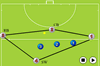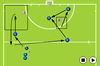
Field Hockey: left defender

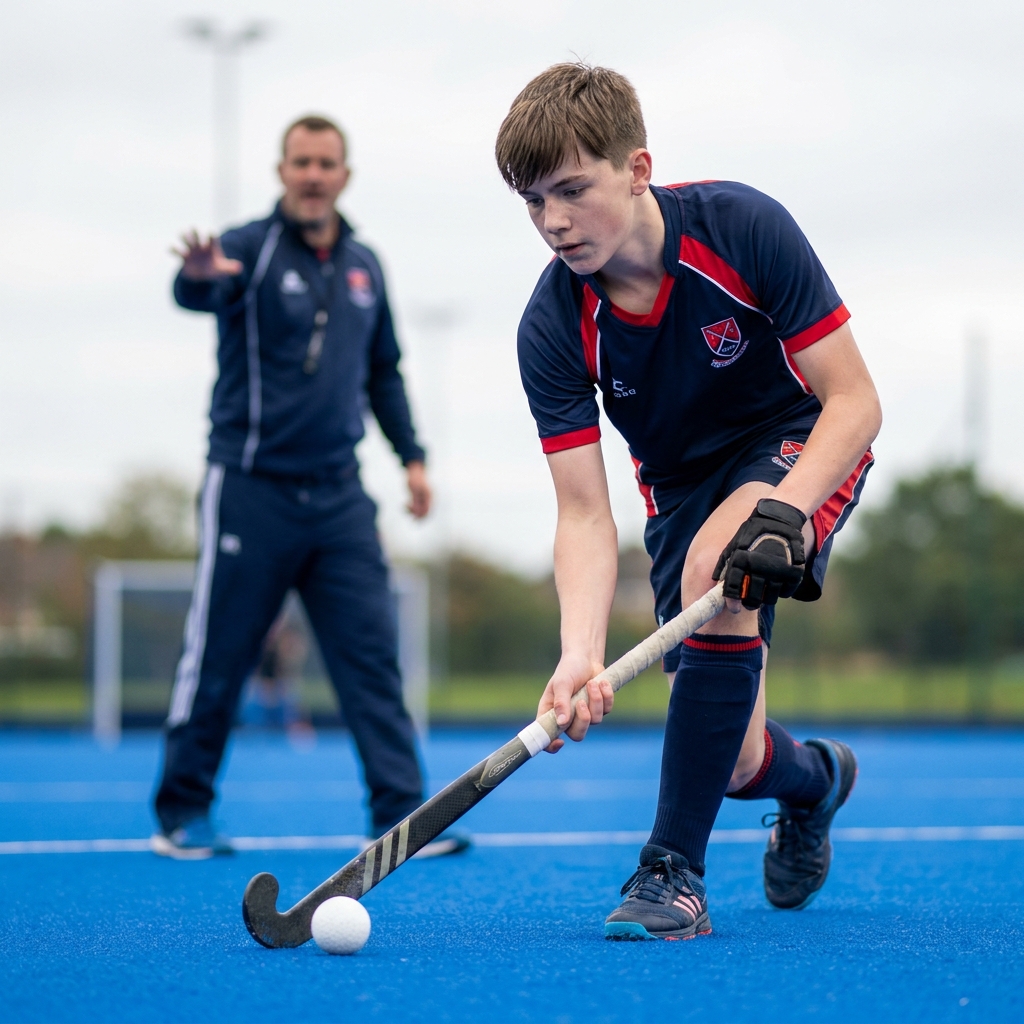
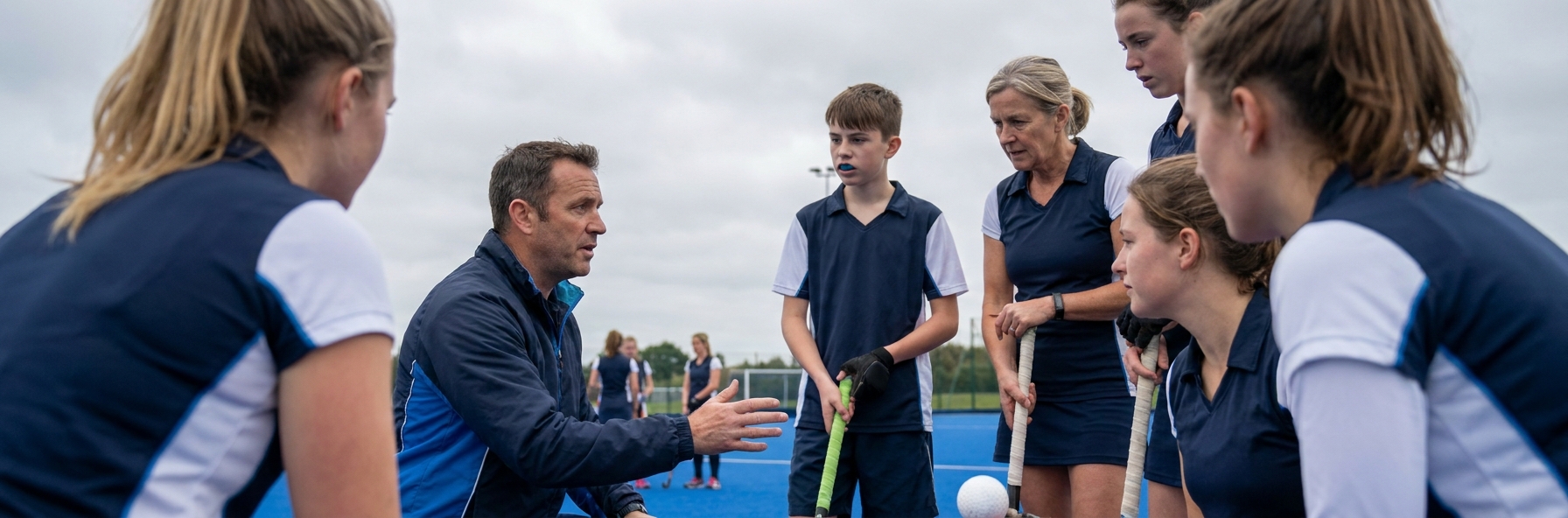
England Hockey's "25 in 2025" initiative has been touring the country, bringing two-hour on-pitch workshops to 25 locations. The focus: practical practice ideas that coaches can take straight back to their clubs. Here's a summary of the key concepts being shared.

The Philosophy

The workshops are designed for everyone involved in delivering hockey, from experienced coaches to volunteers just starting out. The emphasis is on fun, engaging sessions that keep players coming back - because player retention depends on the quality of the experience we create.

Each workshop covers arrival activities, carrying and passing progressions, and game-based learning. Participants leave with a bank of ideas they can implement immediately.

Arrival Activities That Work

The first few minutes of any session set the tone. Arrival activities should be:

Self-managing: Players can start without detailed instruction. This lets the coach focus on organisation while early arrivals get active.

Engaging: Not just standing in lines. Movement, decision-making, maybe a competitive element.

Scalable: Works with 2 players or 20. As more arrive, they join seamlessly.

Examples include: grid-based possession games where players can join any team, skill stations with clear visual instructions, and small-sided games that expand as numbers grow.

Carrying and Moving with Purpose

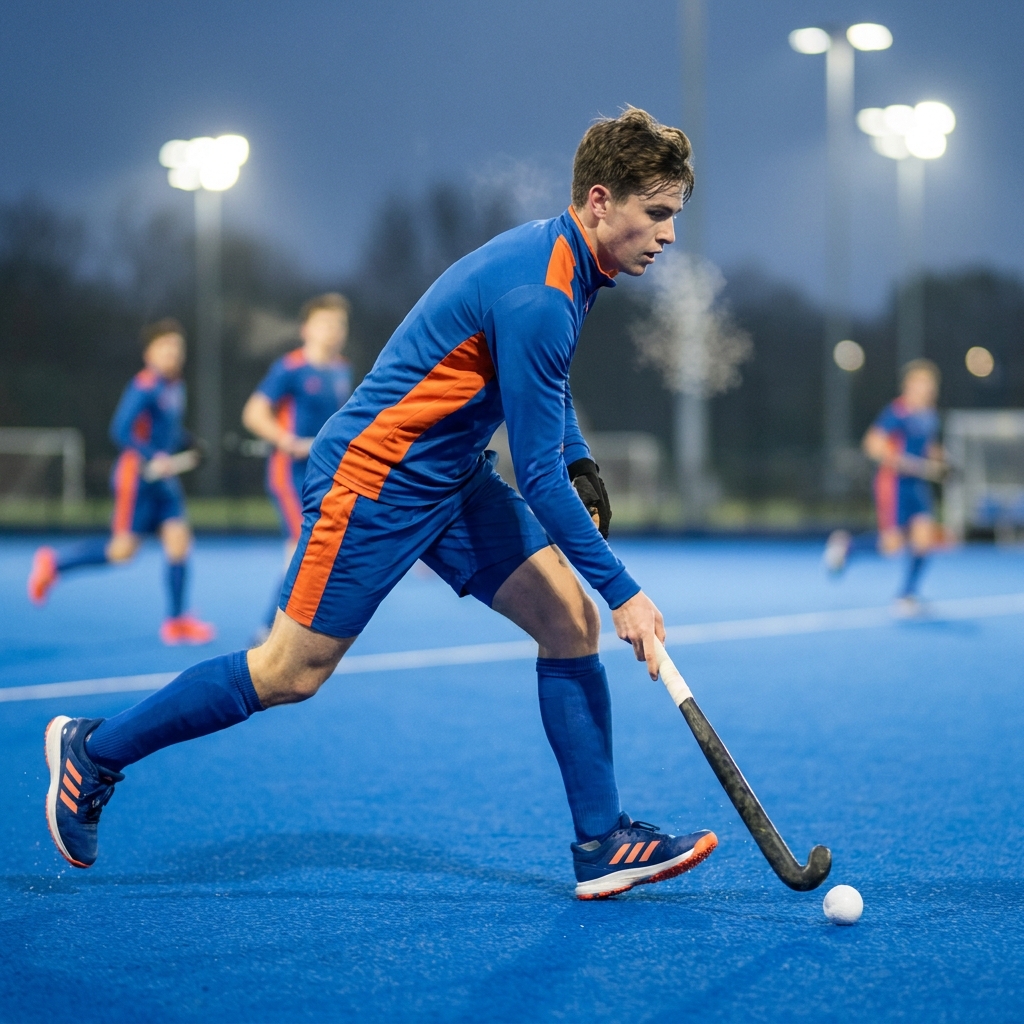
A significant portion of the workshops focuses on ball carrying. The key insight: carrying isn't just about technique, it's about purpose. Why are you carrying? Where are you taking the ball? What's your next action?

Practices progress from technique-focused (head up, ball position, change of pace) to decision-focused (when to carry vs pass, reading space, timing runs with teammates).

The workshops emphasise "game-realistic" carrying - not just running through cones, but carrying with pressure, carrying to eliminate, carrying to create passing angles.

Passing as Communication

The workshops reframe passing as communication between players. A good pass says "here's where I want you to receive." A great pass also says "here's what I want you to do next."

Practices focus on:

  • Weight of pass - firm enough to arrive quickly, soft enough to control
  • Timing - not too early (intercepted), not too late (receiver can't use it)
  • Receiver's next action - passing to the correct foot/side for what follows

Games-Based Learning

Perhaps the biggest takeaway from the workshops is the shift toward games-based learning. Instead of isolated drills, players learn through modified games that naturally develop the required skills.

The coach's role becomes designing games that create the learning outcomes, then facilitating rather than instructing. Questions replace commands: "What did you notice there?" "Why did that work?" "What could you try differently?"

This approach develops players who can problem-solve, adapt, and transfer learning to match situations.

Making Sessions Engaging

The workshops share specific techniques for keeping energy high:

Quick transitions: Minimise time between activities. Have the next game ready before the current one finishes.

Appropriate challenge: Too easy is boring, too hard is frustrating. Find the "just right" level for your group.

Variety within structure: Keep the same game framework but change small elements - scoring methods, playing areas, team compositions.

Player voice: Give players choices. "Do you want to play again or try something new?" This builds ownership.

Video Support

All workshop practices are available on YouTube, allowing coaches to revisit and refine after attending. This resource bank is growing as the roadshow continues.

Who Should Attend?

The workshops are pitched at all levels. Experienced coaches report learning new ideas and getting reinforcement of good practice. New coaches gain confidence and practical tools. The shared experience of learning together builds community within the sport.

If a workshop is coming to your area, it's worth attending. The time investment is small; the return in practical ideas is significant.

Key Coaching Points

  • Arrival activities set the tone - make them engaging
  • Carrying with purpose, not just technique
  • Passing is communication between players
  • Games-based learning develops problem-solvers
  • Keep sessions varied and appropriately challenging

Drills to Build Your Practice Bank

VIEW ALL WARM-UP DRILLS

JOIN SPORTPLAN FOR FREE

  • search our library of 1000+ field hockey drills
  • create your own professional coaching plans
  • or access our tried and tested plans
left defender DRILLS
View All
Unfortunately there were no results for your search! Please try again
left defender ANSWERS
View All

This is a question about channeling. Should a left?

This is a question about channeling. Should a left side defender channel the Left Inside or Left Outside player to the center of the field or channel her down the sideline?

Cindy Telenko Coach, United States of America

I'm looking for suggestions on set plays for free hits?

I'm looking for suggestions on set plays for free hits going into the circle. High school rules in the US now state that all players (attack/defense) must be 7 yards from the ball. What plans will work for drawing corners and goal scoring opportunities?

Ali Collins Coach, United States of America

Penalty corner plays for offense, any suggestions?

Penalty corner plays for offense, any suggestions?

Taryn Dinella Coach, United States of America

Drills for a crowded D. What drills or exercises would?

Drills for a crowded D. What drills or exercises would you recommend for a forward either passing or shooting in a crowded D - partic when you dont have a lot of players to use for the exercise.

Archived User Coach

what are good penalty corner plays?

what are good penalty corner plays?

Archived User Coach

Bram. I have a question on your answer about defending the left channel?

Bram. I have a question on your answer about defending the left channel. Over the years I've heard various different views on how to defend the left channel. You answer suggest forcing the attacker on to the strong side where an inside defender can provide a cover tackle if necessary. Fine. Other rhetoric suggests keeping the attacker wide and restricting the route to goal. For me, your suggestion offers the greatest risk. Can you provide some perspective of these two approaches.

whitlock Coach, England

Long corner variations

Please can you email me 3 or 4 long corner variations.

Archived User Coach

Playing 1,2,3,5 formation - connecting?

I am coaching 1,2,3,5 formation in an U16 Girls team but I am having trouble getting my Halfbacks connecting with my Inside Forwards - Any suggestions

Glenn Hutchinson Coach, Australia

Re involving GKs in junior coaching sessions.

I really struggle to make practice fun and useful for the GKs. My attention is naturally focussed on the outfield players, meaning most of the time I simply have drills finishing with a shot on goal to keep the GK involved. Pretty boring for them. Any ideas how I can involve them more? Thanks, Charlie

Carol Ridge Coach, England

What are the key skills in individual defending?

What are the key skills in individual defending and what are the best ways to practise them?

Jayson Hood Coach, England

How can we overcome a 1-4-4-2 formation?

I coach a women's team wide range in age 16 - 54 , when the stars align we are a very strong team hard to beat and very stingy when it comes to goals against, the games we do lose are usually 1-0 games,The exception comes when we play a team that plays a 1-4-4-2 ,what makes it worse is that we play a 4-4-2 and are very successful with it, but when it comes to defending against it my Defense and Mids become confused. I have not had any luck in figuring out a way to explain to my team how to defend against it. Any ideas on an easy way to fix this? Thanks

William Phillips Coach, Canada

How do you do a good hockey warm up with just ball and stick

hockey warm up basic equipment 5 mins

Ellie Coach, England

What is current trend in defensive assignments playing 3 4 3

Do the three backs pivot off the middle defender? Does anyone drop - just asking

Mia Coach, United States of America

defending fast dribblers

what would be advice of left wing or right wing defender defending fast dribbler because if one stays stationary defender will easily be dribbled what would advice defender to do

Maurice Coach, Uganda

6 a side without a goalie formation

Would you say switching it around to a 1-2-3 would make for better attacking formations?

Coach, United Kingdom

position of the covering defender

Why does the covering defender not stay off the left shoulder of the front defender?

Mary Hare Coach, United States of America

position of the covering defen...

Why does the covering defender not stay off the left shoulder of the front defender?

Mary Hare Coach, United States of America

Re involving GKs in junior coa...

I really struggle to make practice fun and useful for the GKs. My attention is naturally focussed on the outfield players, meaning most of the time I simply have drills finishing with a shot on goal to keep the GK involved. Pretty boring for them. Any ideas how I can involve them more? Thanks, Charlie

Carol Ridge Coach, England

What position should I play my...

Hi Im new to coaching hockey want to know what position do I play some of my weaker players without them losing interest and there confidence.

Archived User Coach

Outletting against a half cour...

overlapping outside halves ? or drop Midfield in hole?

Archived User Coach

JOIN SPORTPLAN FOR FREE

  • search our library of 1000+ field hockey drills
  • create your own professional coaching plans
  • or access our tried and tested plans

Sportplan App

Give it a try - it's better in the app

YOUR SESSION IS STARTING SOON... Join the growing community of field hockey coaches plus 1000+ drills and pro tools to make coaching easy.
LET'S DO IT