Man-marking has its place, but modern hockey increasingly relies on zone defence. The best defensive units operate as a coordinated system, shifting together, protecting space, and making it incredibly difficult for attackers to penetrate. Here's how to build that capability.
Why Zone Defence?
Pure man-marking has vulnerabilities. Attackers can drag defenders out of position, create overloads in specific areas, and exploit the gaps that individual marking creates. Zone defence addresses these issues by defending space rather than players.
In a zone system, defenders are responsible for areas of the pitch. As the ball moves, the zone shifts, but the structural integrity remains. Attackers entering your zone become your responsibility; when they leave, they become someone else's.
The Core Principles
1. Ball-Side Compression
The defensive unit compresses toward the ball. If the ball is on the right side of the pitch, the whole defensive structure shifts right. This creates numerical advantages near the ball and makes it harder to play through the defence.
The key is coordinated movement. If one defender shifts but others don't, gaps appear. The entire unit must move together, maintaining relationships and coverage.
2. Depth and Cover
Defenders should be staggered, not in a flat line. This creates cover - if one defender is beaten, another is positioned to deal with the threat. It also makes it harder for attackers to play penetrating passes through the defensive line.
The balance between depth and compactness is crucial. Too deep and there's too much space between midfield and defence. Too compact and there's space in behind.
3. Closing and Tackling Zones
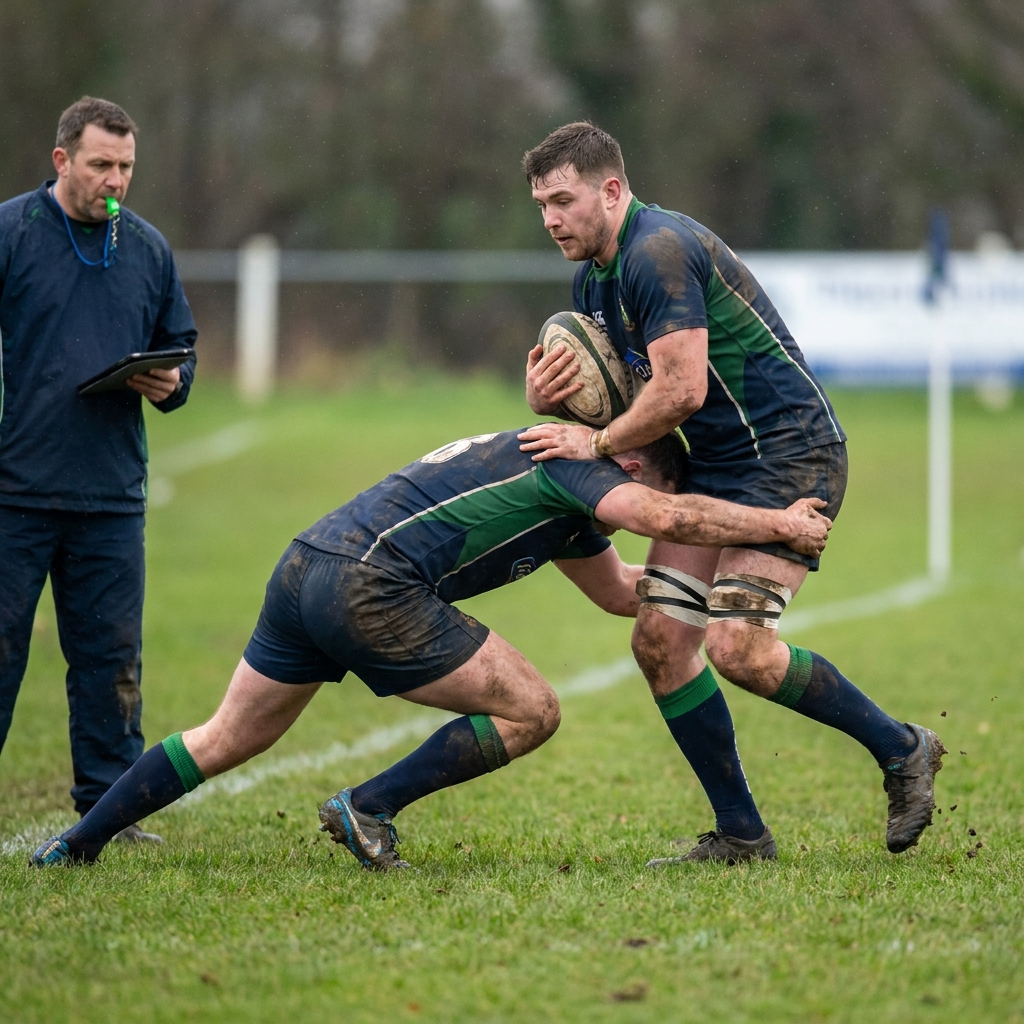
Zone defence doesn't mean passive defending. When the ball enters your zone, you must engage. The question is how - do you press aggressively or show the attacker in a certain direction?
Generally, defenders should guide attackers away from dangerous central areas toward the sidelines. This is "showing" or "channeling." Once the attacker is in a disadvantageous position, that's when to attempt the tackle.
4. Communication
Zone defence requires constant communication. Who has the ball? Who's covering behind? Where's the danger? Without this information flowing, defenders make conflicting decisions and structure breaks down.
Develop a common vocabulary. "Ball!" "Cover!" "Shift left!" These calls must be clear, consistent, and used by everyone.
Transitioning Responsibilities
The trickiest moment in zone defence is when attackers move between zones. If the handover isn't clean, attackers find space in the gaps.
The principle: Pass on, don't drop off. As an attacker enters your teammate's zone, maintain some attention on them until your teammate has clearly picked them up. Don't just let them go.
The communication: "Yours!" signals the handover. "Got it!" confirms receipt. Without this exchange, assumptions create errors.
Dealing with Overloads
Good attacking teams will try to overload zones, getting more attackers into a space than you have defenders. The response is collective adjustment:
Adjacent defenders shift to help, compressing into the overloaded area. The structure adjusts to deal with the threat, accepting that other areas will be temporarily less covered. Quick ball movement is needed to shift the overload before the attackers can exploit it.
Training Zone Defence
Shadow Work: Without opposition, practice the movements of the zone. Ball moves, defence shifts. Build the coordinated movement until it's automatic.
Walk-Through: Add passive attackers. The defence practices identifying threats, communicating, and maintaining structure against slow, predictable attacks.
Live Practice: Full-speed attacking. The defence must apply principles under realistic pressure. Review after each repetition - what worked, what broke down?
Game Integration: Play matches with defensive focus. Score systems might reward clean sheets or tackles won in the defensive zone.
When to Use Man-Marking
Zone defence isn't always the answer. Against teams with exceptional individual players, man-marking that specific threat might be necessary. In penalty corner defence, zone and man-marking elements combine. In the final minutes protecting a lead, tight man-marking can be effective.
The best teams can switch between systems as needed. Build zone defence as your foundation, but develop man-marking capabilities for situations that require it.
Key Coaching Points
- Defend space, not just players
- Move as a coordinated unit
- Maintain depth and cover
- Communicate constantly
- Clean handovers between zones
- Collective adjustment to overloads

 sportplan_rugby