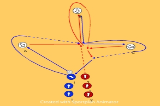
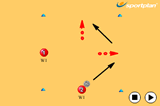
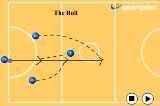
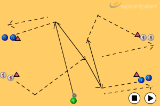
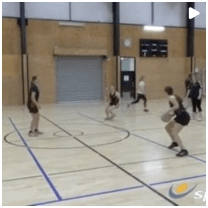
The aim of this drill is to get the players to think about passing and moving in variety of directions at speed.
The ball must always travel around the edge of the rectangle/flag. You can change this direction from clockwise to anticlockwise as an when you feel they are ready (or to try and catch them off-guard).
After making a pass players must swap positions with their opposite player.
You can add in as many players as you like along the edges but always leave one pair at either end.
players must be stood in a wide stance, hands ready to recieve.
Encourage players to call and signal for the ball to help the player know where to send the pass i.e. "I'm open".
If the standard of players and pace of the pass allows it, players should be encouraged to rotate 180° in the air as they reach the other side and recieve the ball.
Progression:
Add in more balls- up to 4 (you need at least 8 players for this to be successful.
Vary the distance between players (the further the distance the easier the pass, slower the reactions but further to run across the flag).
Determine which type of pass they must use (start with chest but develop to bounce and shoulder).
Work on one handed recieving and passing.
in more ways than one
 sportplan_netball
in more ways than one
sportplan_netball
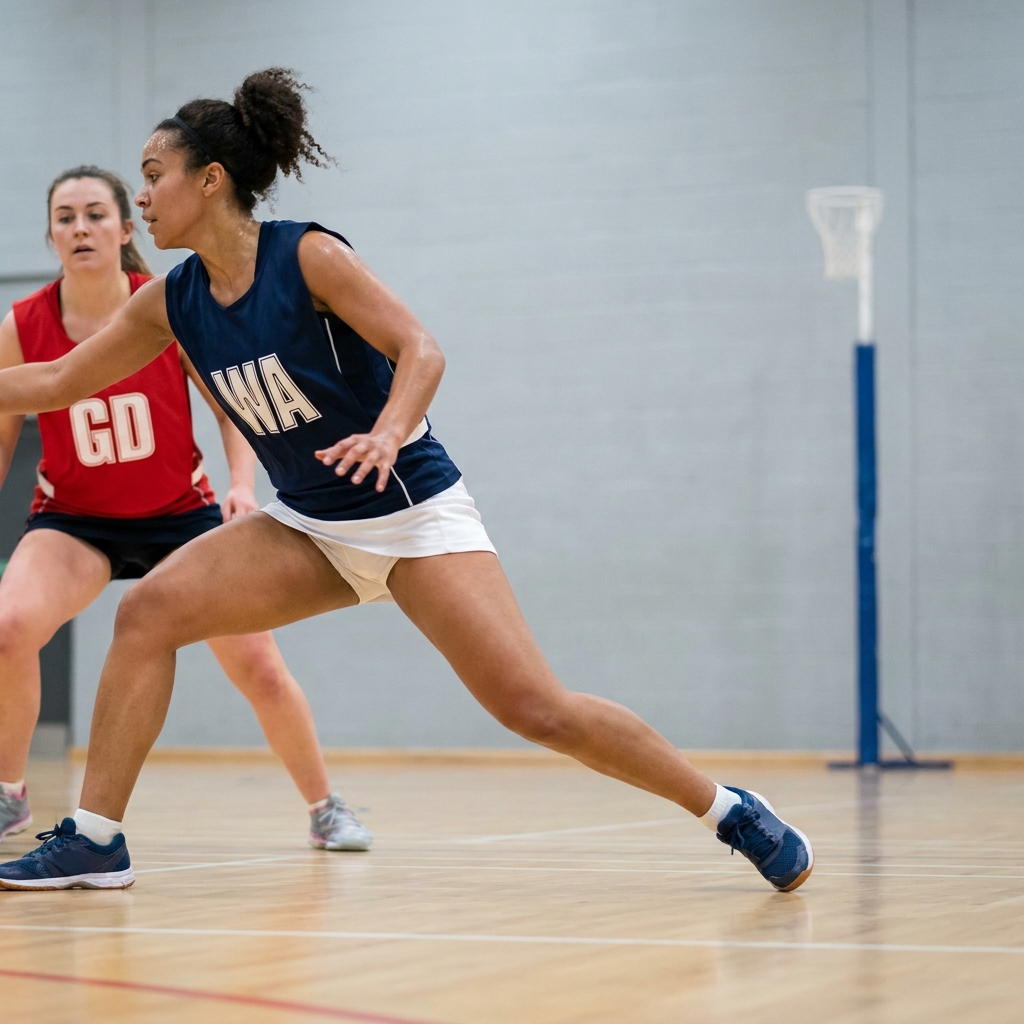
Tight markers win when attackers run in straight lines. Teach your players to dodge, change pace and time their drive so they get free when the ball is ready.
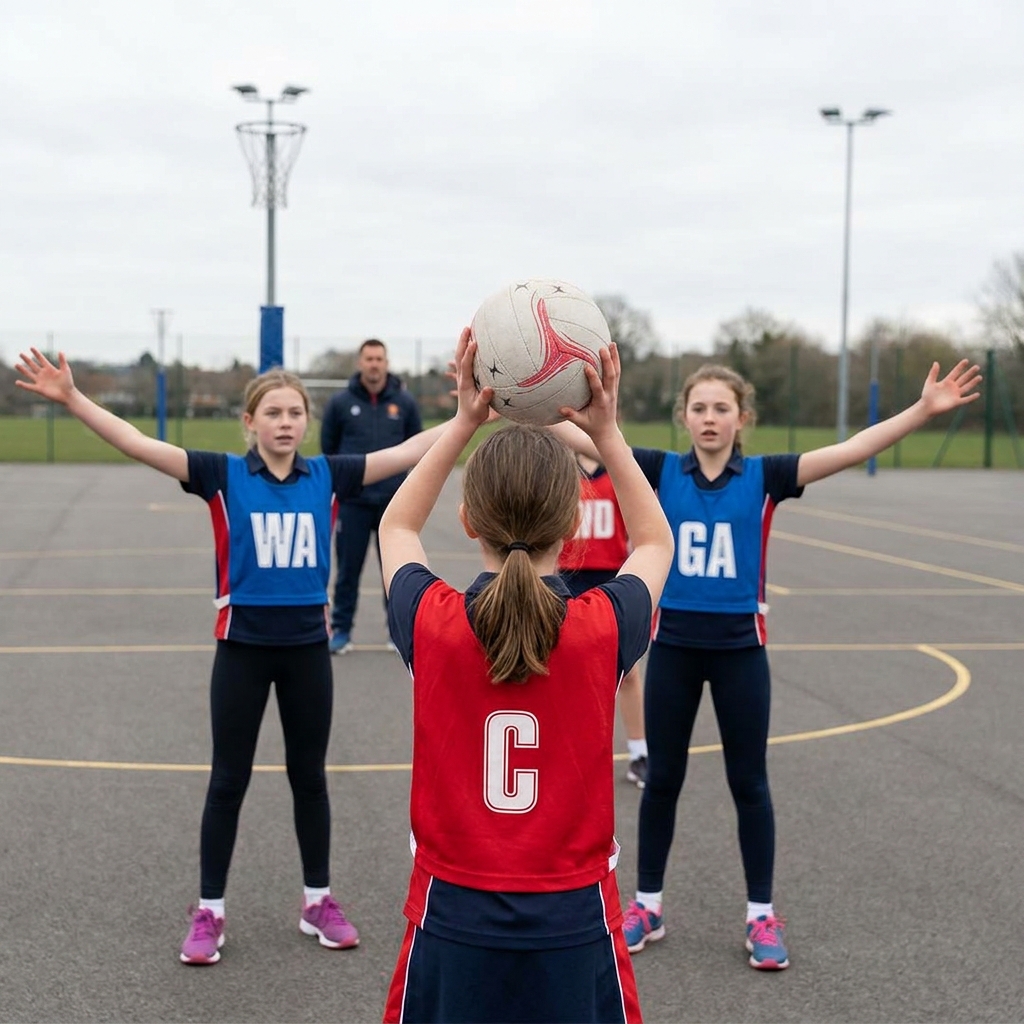
When everyone chases the ball, nobody is free. Teach your team to spread out, offer two options and clear space so the ball moves cleanly down court.
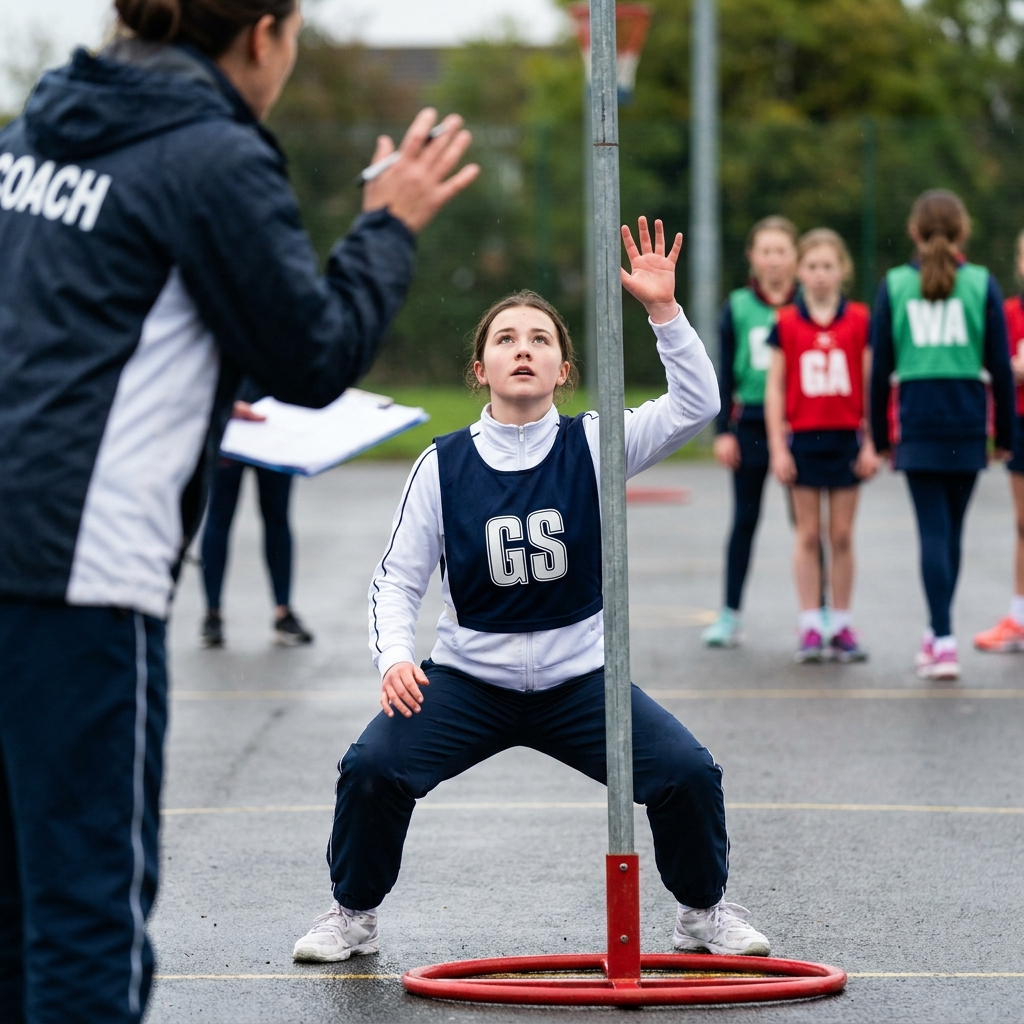
A shooter who can hold a strong position under the post is worth more than one who runs all over the circle. Here is how to coach body shape, a legal hold and a well-timed release, and how feeders make the most of it.