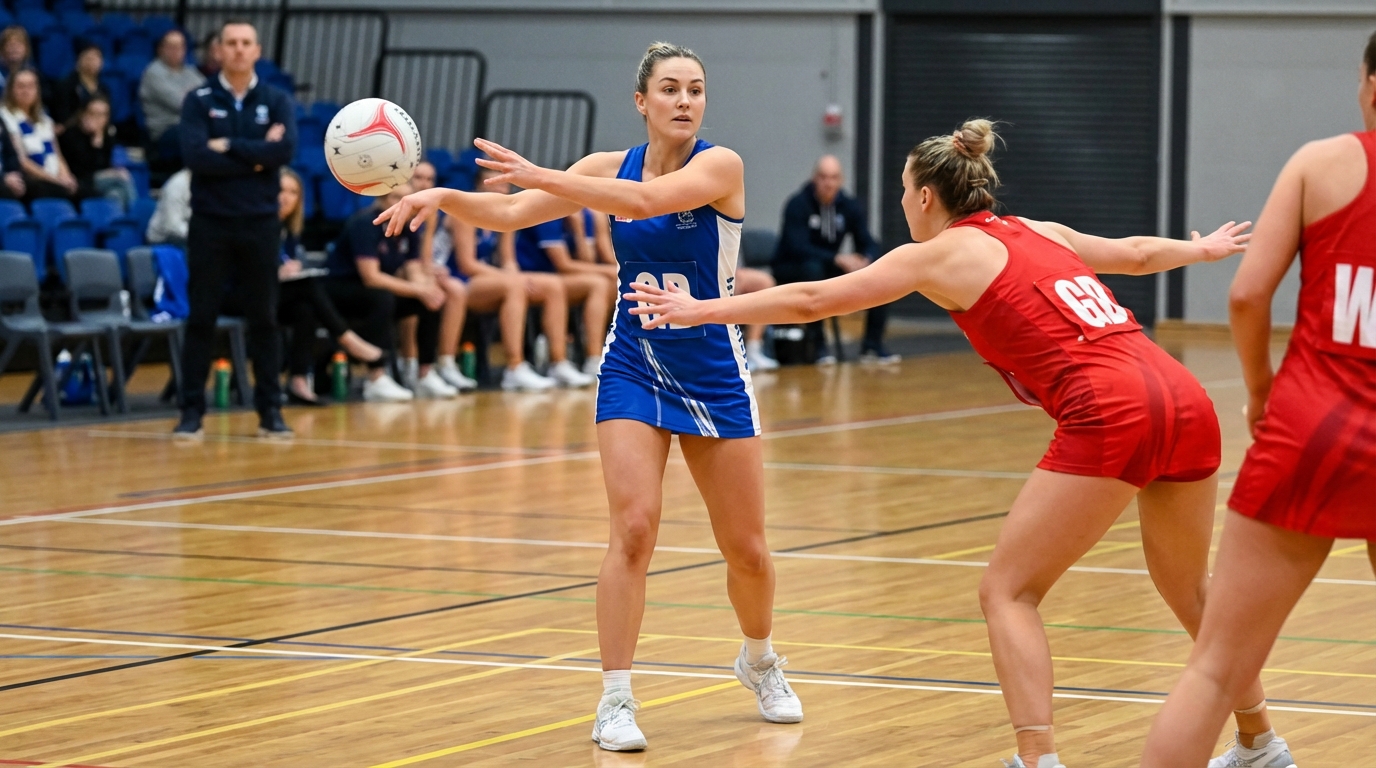
What the Short Pass Rule Means
The short pass rule in netball states that a pass must travel a visible distance through the air. A player cannot simply hand the ball to a teammate standing next to them. The ball must leave the passer's hands and travel through space before it is caught.
In 2026, umpires are penalising short passes more consistently than ever before. What used to be overlooked at grassroots and club level is now being called. The hand-off, the flick pass to an adjacent player, the quick exchange under the post - all are being penalised as short passes.
For coaches, this means training proper passing technique isn't optional. Players who rely on hand-offs under pressure are giving away possession at the worst possible moments.

Why Players Resort to Hand-Offs
Understanding why players default to short passes is the first step to fixing the problem. It almost always comes down to pressure. When a defender is tight, when the count is ticking, when options seem limited, players panic and push the ball to the nearest teammate.
The most common scenarios:
- Centre pass under pressure: The C receives and immediately hands off to WA standing alongside, rather than looking for a longer pass down court.
- Circle edge congestion: GA and GS standing close together exchange the ball in a hand-off rather than creating proper passing distance.
- Defensive press: When opponents press hard in the midcourt, players cluster together and resort to short exchanges to relieve pressure.
- After a turnover: A player who has just intercepted or recovered a loose ball passes immediately to the nearest teammate without composure.
The Cost of Getting It Wrong
A short pass infringement gives the opposition a free pass at the exact spot where your team was trying to move the ball. It's a turnover in a dangerous area, often in the attacking third or at centre pass. Worse, it kills momentum. Your team has worked hard to win the ball or create an opportunity, and a rushed hand-off gives it straight back.
At representative level, teams that concede multiple short pass penalties per game are handing their opponents easy possessions. In tight matches, these turnovers decide outcomes.

Training Proper Passing Under Pressure
1. The Separation Principle
Players must learn to create distance before offering for a pass. Drill the habit of moving away from the ball carrier before driving back to receive. If two players are standing shoulder to shoulder, one of them needs to move. This is a spacing problem as much as a passing one.
2. The Composure Count
When a player catches the ball under pressure, their instinct is to pass immediately. Train a one-second pause. Catch, land, look, then pass. That single moment of composure is often enough to find a proper passing option rather than handing off to the nearest body.
3. Centre Pass Scenarios
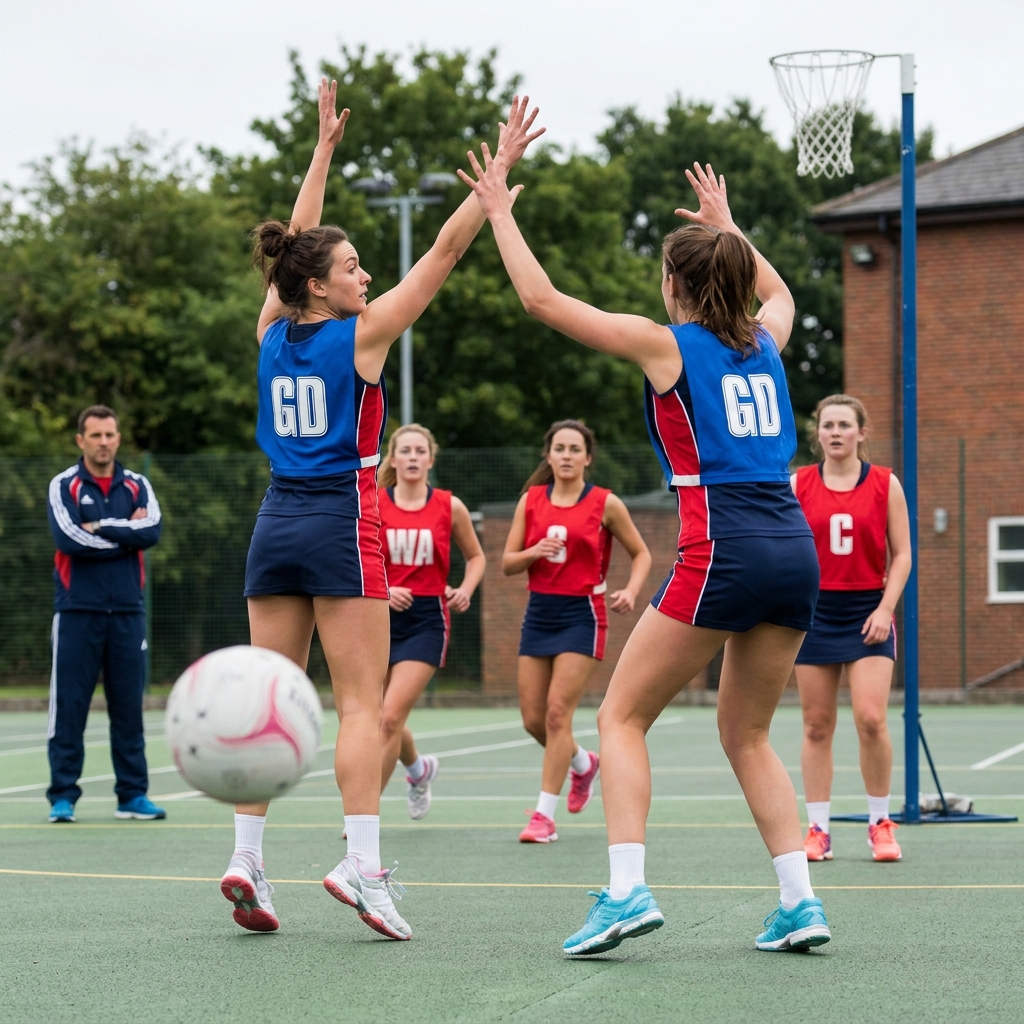
Centre passes are the most common short pass danger zone. Design centre pass plays where the first receiver always has at least two options that require a genuine pass. If the C catches on the transverse line, the WA and GA must offer at different distances and angles, not standing next to the C.
Practice centre passes with a "no pass within one metre" rule. If any pass travels less than a metre, the attacking team loses possession. This builds the habit quickly.
4. Circle Feeding Discipline
Inside the circle, GS and GA must maintain proper spacing. When both shooters crowd the same area, short passes become inevitable. Train your shooters to work different sides of the circle and create genuine passing distance between them.

Building Composure Through Practice Design
Composure under pressure isn't a personality trait. It's a trained response. The more often players experience pressure in training, the less it affects them in games.
Overload drills: Play 4v5 in the midcourt so the attacking team is always under numerical disadvantage. They must find proper passing options despite constant defensive pressure. Short passes are penalised immediately.
Timed possession: Give the attacking team 10 seconds to move the ball from the back line to the circle edge. The time pressure forces quick thinking, but any short pass resets the clock. Players learn to be fast and accurate, not fast and careless.
Pressure games: In small-sided games, award the defending team a bonus point for every short pass they force. This makes defenders actively hunt the short pass and teaches attackers to recognise when they're being funnelled into one.
Why Defenders Should Learn to Exploit the Rule
Smart defenders can manufacture short pass penalties. By pressing hard on the ball carrier and simultaneously blocking the nearest passing lane, you force the attacker into a corner. Their only option is the teammate standing right next to them, and that pass will be called short.
Train your defenders to recognise when an attacker is about to panic. Close the space, cut off the long option, and wait for the hand-off. It's one of the most efficient ways to win possession in the modern game.

The Coaching Takeaway
The tightening enforcement of the short pass rule in 2026 is a challenge, but it's also an opportunity. Teams that pass with composure and maintain proper spacing will concede fewer turnovers. Teams that learn to exploit the rule defensively will win more ball.
Build separation into every passing drill. Reward composure over speed. And remind your players: a deliberate, accurate pass to a teammate five metres away is always better than a panicked hand-off to someone standing right next to you.
Frequently Asked Questions
What exactly counts as a short pass?
A pass where the ball does not travel a visible distance through the air. The umpire uses judgement, but if the ball appears to be handed directly to a teammate without genuine flight, it will be penalised.
How far does a pass need to travel to be legal?
There is no specific distance stated in the rules. The requirement is that the ball must visibly travel through the air. In practice, passes of less than roughly 60 centimetres are at high risk of being called short.
Can I challenge a short pass call?
No. The umpire's decision on short passes is final and not subject to challenge or review. This is why training proper technique is essential rather than relying on umpire leniency.
At what age should I start coaching this?
From the very beginning. Young players who develop the habit of proper passing distance early will never struggle with the rule later. Build spacing and composure into every session from under-10s upwards.

 sportplan_netball