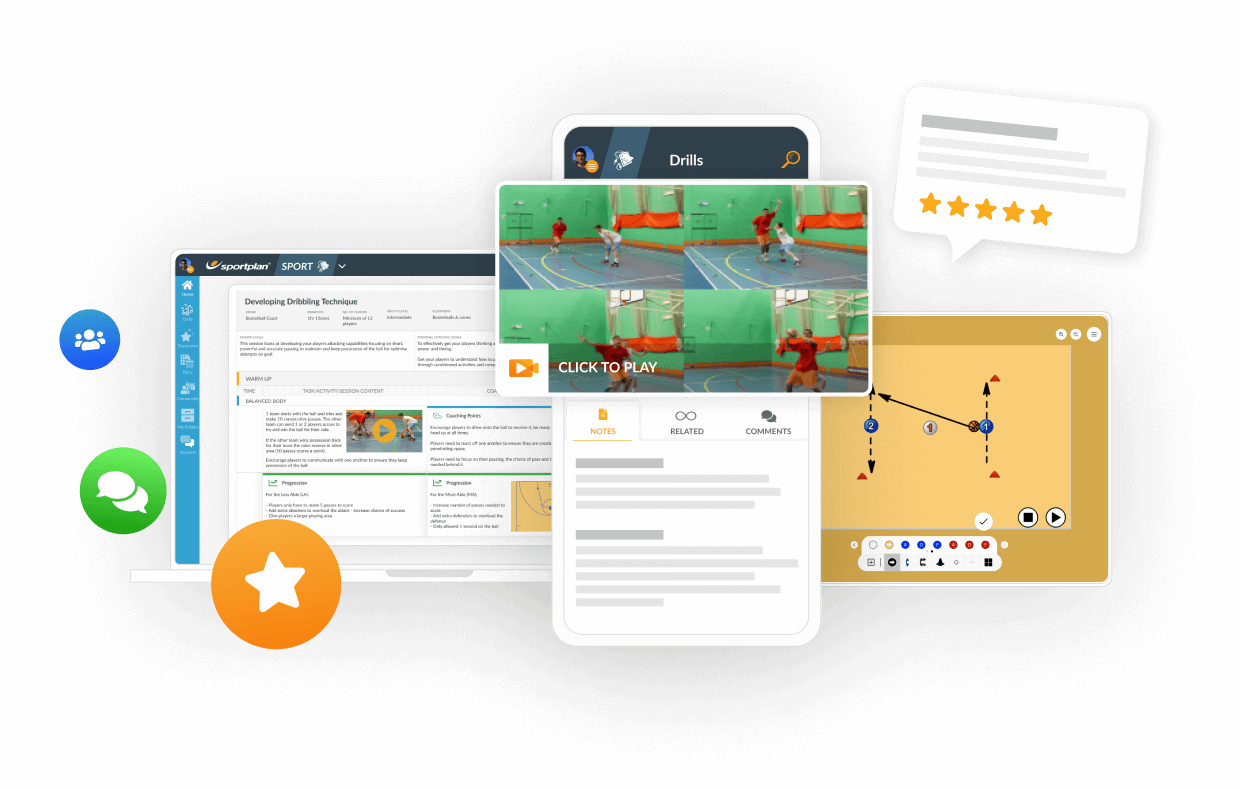
Players evenly distributed on sidelines at freethrow lines extended. Drill goes with two at a time (diagram showing only one player moving). BLUE shooter begins with a layup, getting his own rebound. BLUE dribbles toward YELLOW, passes and fills the lane, calling for the pass back. (YELLOW fills at next spot down the sideline). BLUE dribbles and passes to RED one the move, and gets pass back, then goes into the key as if for a layup. RED follows and goes inside the elbow in the key, ready for the pass and to shoot. BLUE stops "on a dime", performs a proper inside foot backward pivot and hits RED who is at the elbow. RED catches the ball landing on two feet and performs a proper jump shot, then follows their own shot for the rebound and the drill continues.
Go full speed. Dribble-pass on the move. Proper pivot to find the safety valve at the elbow (inside foot backward pivot). Proper jump shot on the fly (land on two feet square to the basket, catch and shoot with guide hand staying locked at the elbow, land on two feet on the same spot without a fade in any direction, follow immediately for rebound). Rebound before the ball hits the floor.
This practice has no coaching points
This practice has no progressions
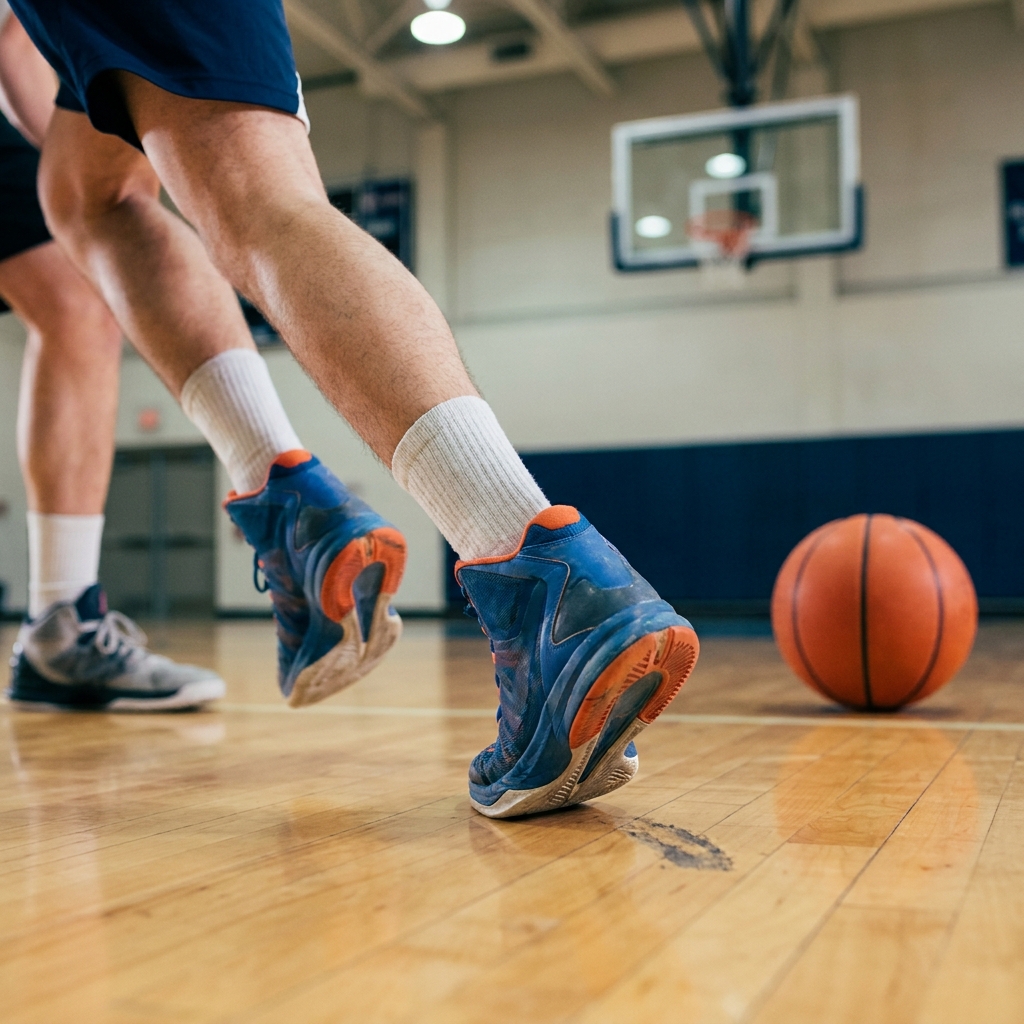
Four players standing still make every ball handler's job harder. Teach V-cuts, L-cuts and back cuts so your team gets open and punishes defenders who overplay.
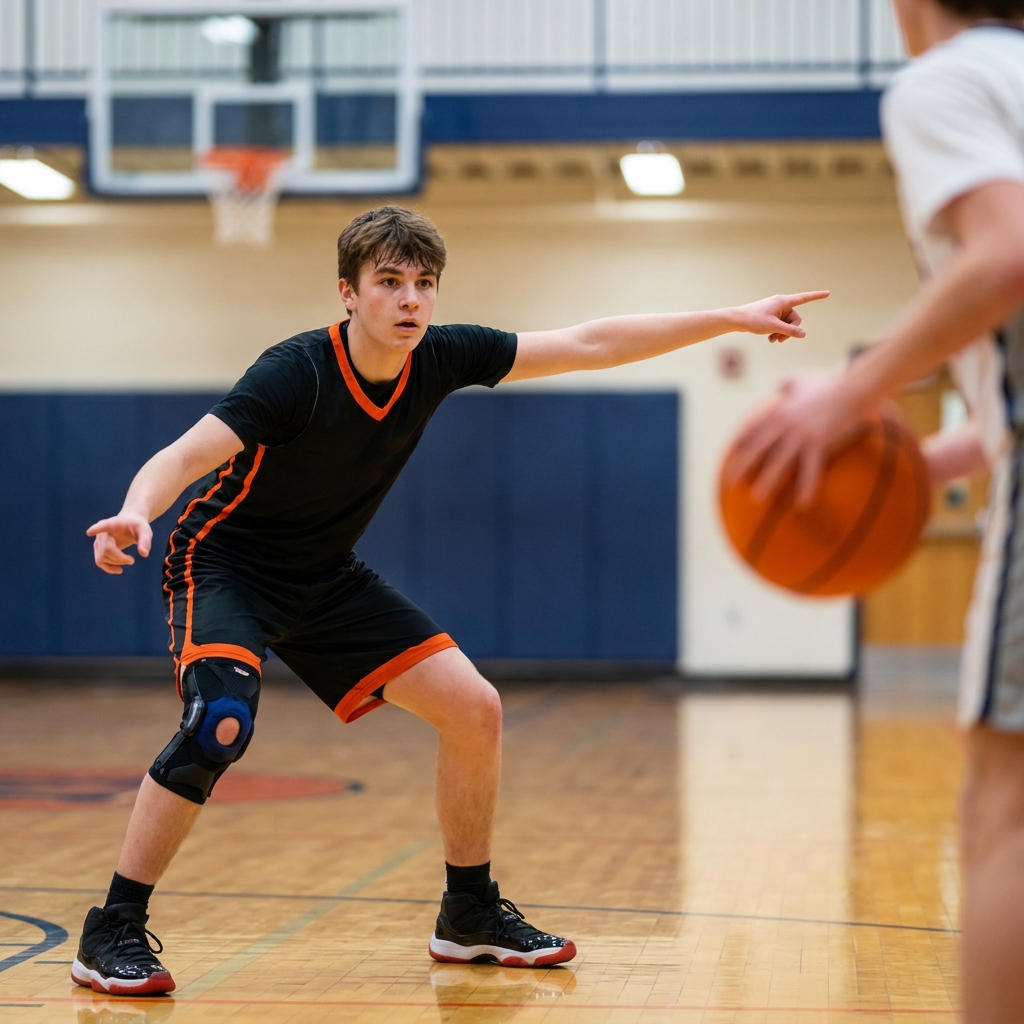
Good team defence is five players guarding the ball, not five separate one-on-ones. The shell drill is where that starts, so here is how to teach help-side positioning and rotations from the first week of the season.
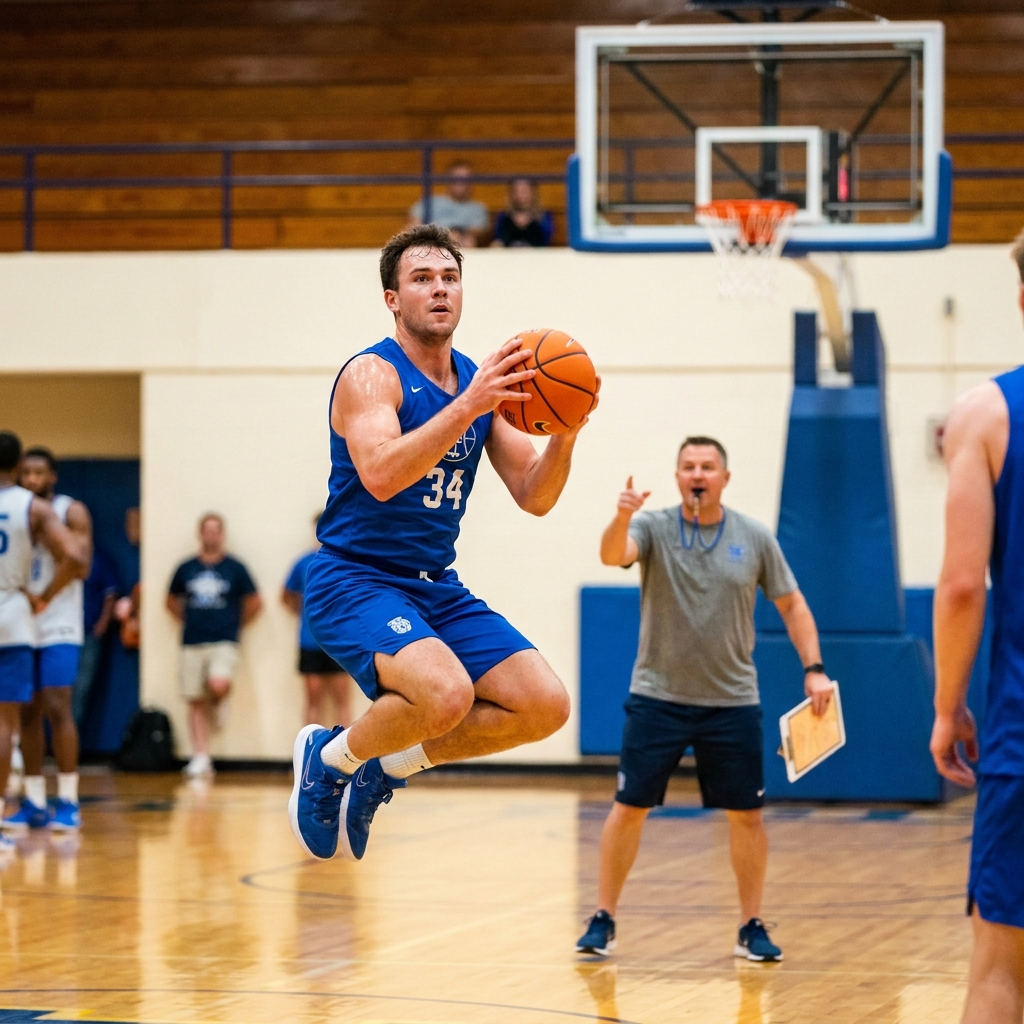
Rebounding is the least glamorous thing in basketball and one of the most decisive. It is also almost entirely a habit, which means it is entirely coachable.


Register for FREE and get coaching tips, top drills, session and more every week!