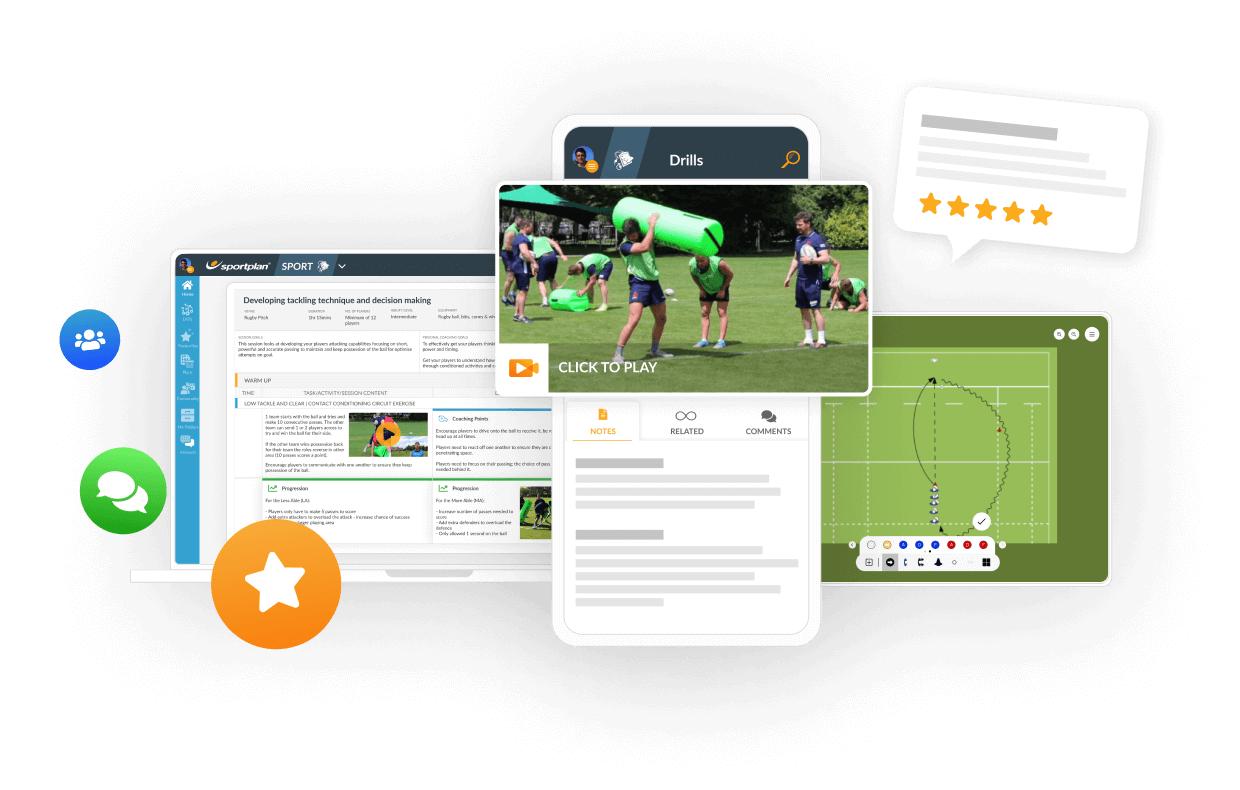
Two cone 3m apart with ball placed past second cone. Player one (blue)starts with fast feet through the cones, picks up ball, bust the first tackle, travels to next defender, draws and passes to player 2 (red). Player 2 puts on foot work to disrupt defenders and offloads to player 1 who has wrapped around in support.
Ensure comms are high in support play Player 2 has to act if player 1 is caught in defence Ensure footwork is used to disrupt defence lines Ensure hands are "up" waiting for the offload Players need to be balanced before they get the pass away
This practice has no coaching points
This practice has no progressions
in more ways than one
 sportplan_rugby


The offload is one of rugby's most devastating weapons when executed well, turning a defensive collision into a second-phase attacking opportunity. This article breaks down the technique, timing, and training progressions coaches need to develop confident offloaders at every level.
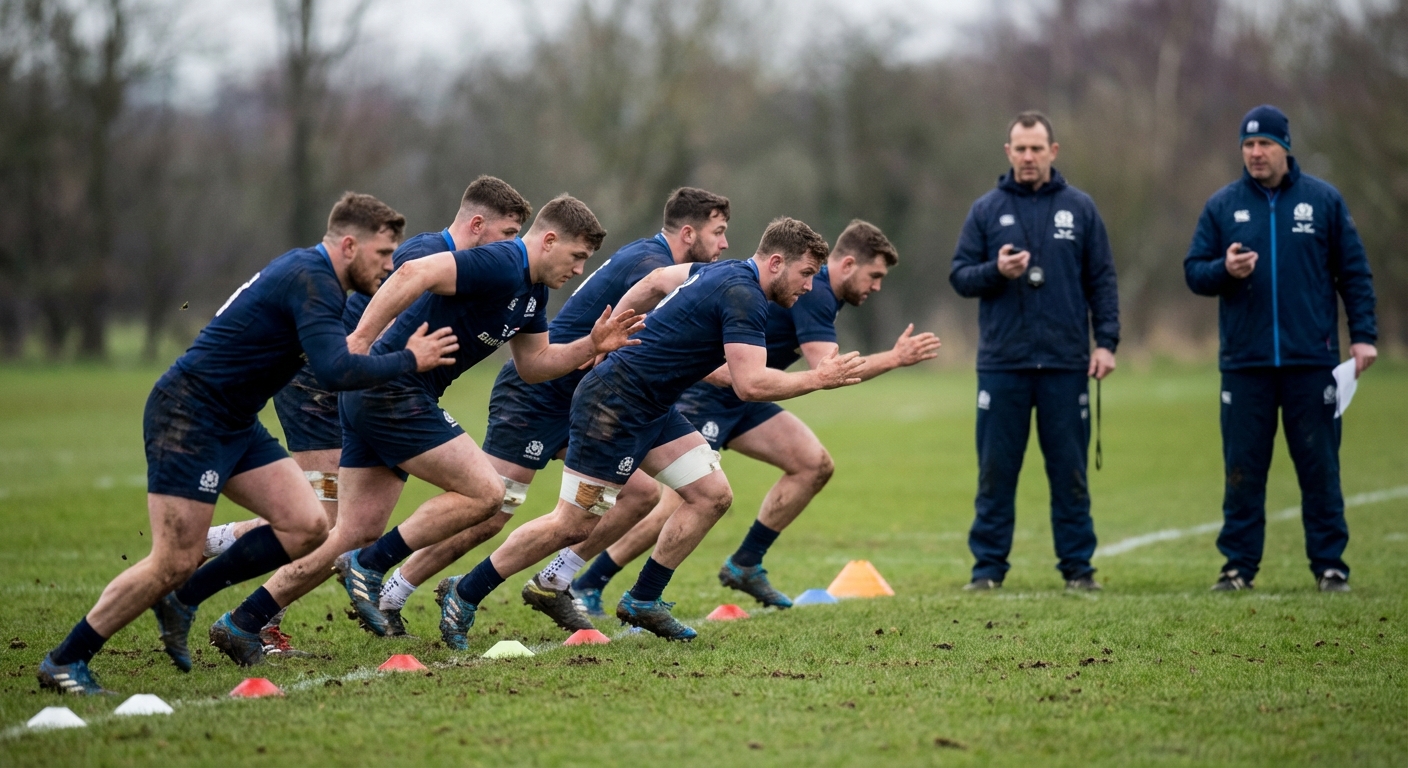
Defensive line speed is the single most important factor in shutting down attacking opportunities before they develop. This guide explores how to coach your defensive line to push up as a connected unit, communicate under pressure, and deny the opposition time and space.

The teams winning in 2026 aren't taking risks - they're grinding out territory with relentless pick-and-go phases. Here's how to coach it.