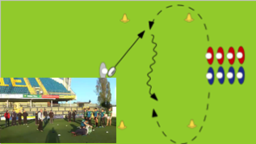
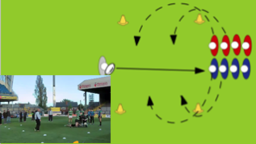
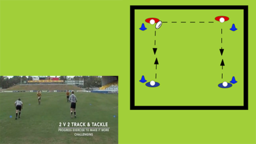
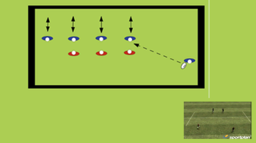
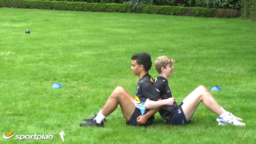
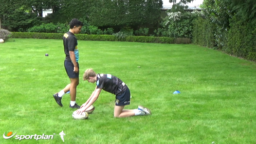
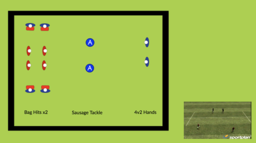
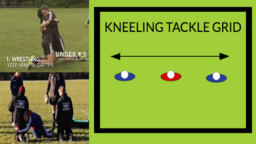
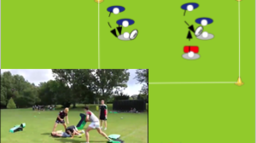
This category focuses on safe, effective tackling technique and progressive skill development.These drills help players develop correct tackle mechanics while minimising injury risk.Perfect for players from U12 through Senior level, with safety as the priority.Ideal for coaches building confident, effective tacklers who bring players down safely.
All players need to be able to tackle. Tackling is how a player physically stops an opponent from moving forward with the ball. It's a vital aspect of the game and a major reason many players come to rugby. For some players tackling can be scary so it's important you teach the correct, and safe, technique from an early age.
A successful tackle involves timing, technique (aim low - between the hip and knee) and correct body position (bend at the waist and the knees; arms raised around shoulder height). The tackling drills, games and videos on this page will help you improve your players' defending technique - with both junior and advanced players.
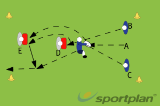
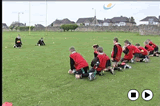
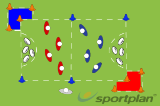
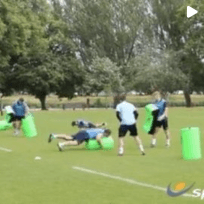
The tackling drills cover everything from introducing the tackle for juniors, walking tackles, tackle bag exercises and full contact tackling to get your players tackling with confidence and to prepare them for match conditions when the hits gets a lot harder.

in more ways than one
 sportplan_rugby

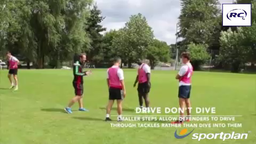
Tacklers are aiming lower, so carriers who dip late put heads at risk. Teach footwork, a strong early body height and leg drive to win the collision safely.

The hooker's brake foot moved from trial into full law in July 2026. Here is how to coach it so your front row stays stable, legal and safe.

Your players can pass beautifully in a warm-up grid. Then a defender closes, their lungs are burning, and the ball goes to ground. Here is how to build catch-pass skills that hold up when it matters.