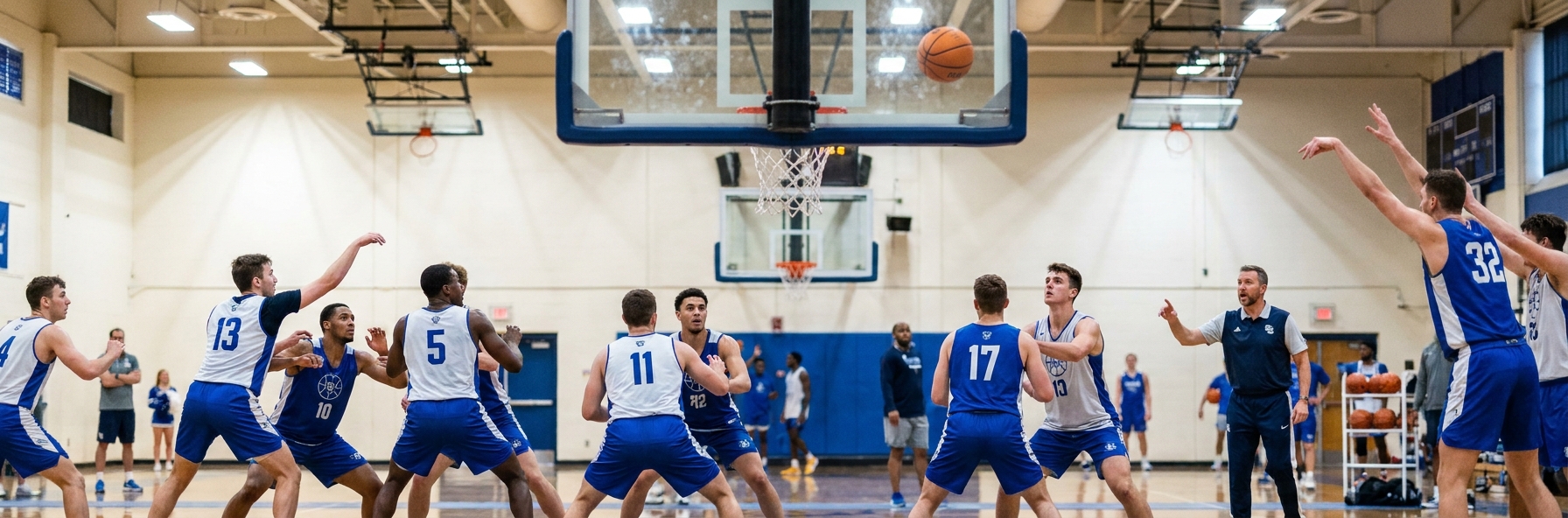
Form shooting

July 2026

Ask most coaches what good offence looks like and they will point at floor spacing - five players spread wide, corners filled, a clean driving lane. That is a fine starting point, but spacing on its own scores nothing. What actually breaks a defence down is what happens the instant one player gains an edge: the moment a driver beats their defender, the defence has to help, and for a split second the offence is playing five against four.

Advantage creation is the skill of recognising that moment and attacking it before the defence recovers. It is the fastest-growing idea in coaching conversations this summer, and the good news is that it does not require elite athletes or a complicated playbook. It requires players who can read a rotating defence and make the simple pass on time. Let us break down how to teach it.

What Advantage Creation Really Means

An advantage is any situation where the defence is out of position - even slightly. It is created three main ways: a live-ball drive that beats the first defender, a well-set screen that forces two defenders onto one ball-handler, or a quick swing pass that catches a closeout scrambling. Each of these tips the numbers in the offence's favour for a heartbeat.

The mistake is thinking the advantage lives with the ball-handler who created it. It does not. Once the defence rotates to stop the ball, the advantage has moved somewhere else on the floor - usually to the player one pass away from the helper. Great offences hunt that next open player. Average offences let the driver try to finish through the help and turn a 4-on-3 back into a contested 1-on-2.

Why the Advantage Gets Wasted

Players waste advantages for a handful of very human reasons. The most common is tunnel vision: a driver puts their head down, commits to the layup and never sees the help defender leaving a shooter open in the corner. Another is late decisions - the pass is there, but it arrives half a second after the defence has recovered, so the "open" teammate is now guarded.

There is also a coaching cause. If we only ever praise the finish, players learn that scoring the ball themselves is the goal. If we praise the read - the extra pass that leads to the better shot - players start hunting the advantage instead of the highlight. What you reward in training is what you get in games.

The final reason is spacing that collapses under pressure. When a drive happens, the other four players have to react - lift, fill behind, relocate - so the passing angles stay open. Static shooters who watch the drive are just as much to blame for a wasted advantage as the ball-handler who misses the read.

A Four-Step Framework for Attacking Rotations

Here is a simple sequence you can drill until it becomes instinct. Keep the language short so players can use it live.

Step One: Create the edge. Attack a closeout or set a screen with the clear intention of beating your defender to a spot, not just moving the ball. No edge, no advantage - so this first action has to be genuine and downhill.

Step Two: Get two on the ball. Drive with purpose into the gap so a second defender is forced to help. If nobody helps, finish - you have a clean 1-on-1. If they help, you have created your 4-on-3 and it is time to pass.

Step Three: Find the next pass. The open player is almost never the one you drove past - it is the teammate the helper just left. Hit them on time and on target, ideally before you pick up your dribble.

Step Four: Attack again, don't settle. The receiver should catch on the balance to shoot, drive or pass. One rotation rarely finishes a good defence, so a second quick attack out of the catch is what turns a decent look into a great one.

Key Coaching Points

  • Reward the pass that creates the best shot as loudly as you reward the shot itself.
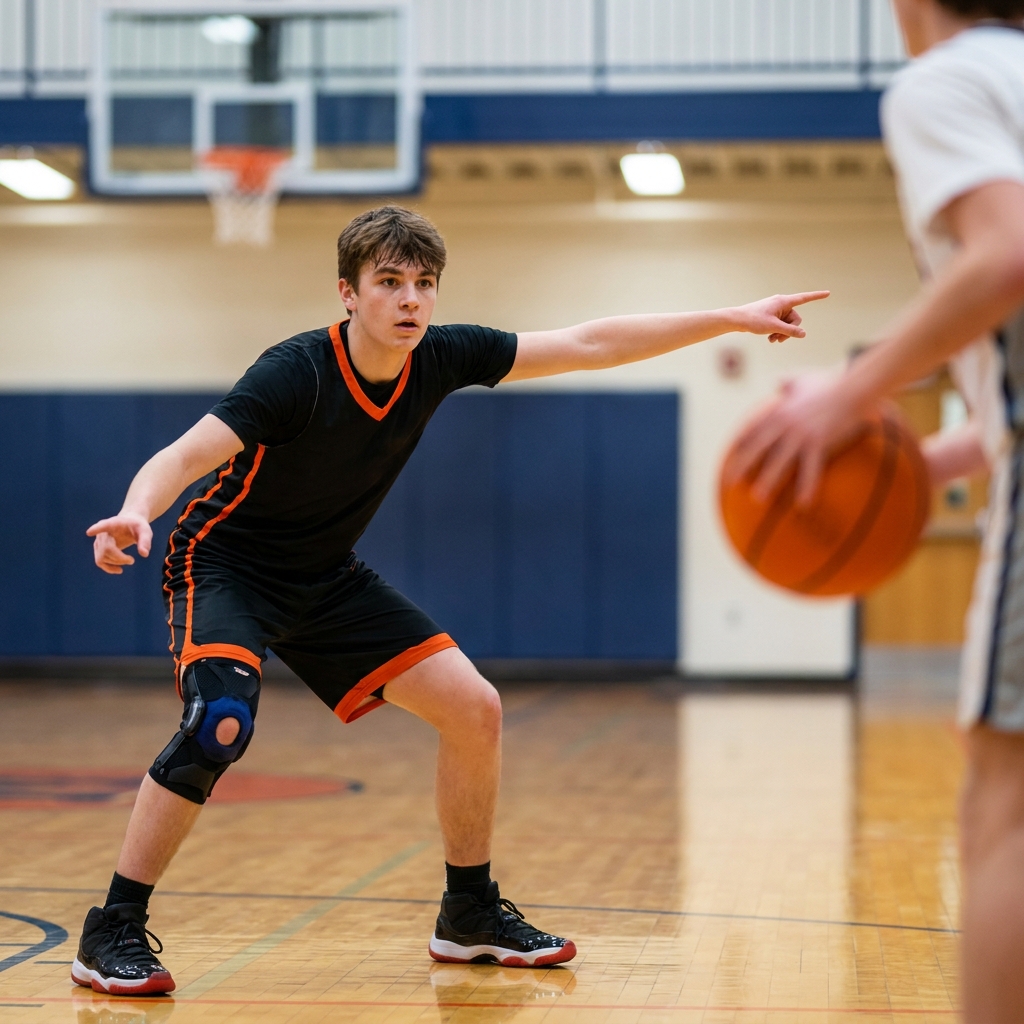
  • Teach drivers to keep their eyes up and read the help defender, not the rim.
  • Insist off-ball players relocate on every drive - lift to the wing, fill behind, or space to the corner.
  • Pass on time: the window closes in under a second, so a late "right" pass is a wrong pass.
  • Catch ready to attack - feet set, knees bent - so the advantage keeps moving.
  • Play small-sided games where an extra pass before the shot is worth an extra point.

Recommended Drills

VIEW ALL MOTION OFFENCE DRILLS

Frequently Asked Questions

What is advantage creation in basketball?

It is the skill of creating and then attacking a numerical edge - such as a 4-on-3 - by beating your defender, forcing help and passing to the open player before the defence recovers. It turns good spacing into actual scoring chances.

How do I stop my players driving into a crowd?

Coach them to read the help defender rather than the rim. In small-sided drills, praise the kick-out pass that leads to a better shot as much as the finish, so players learn to hunt the open teammate instead of forcing a contested layup.

What age can I start teaching this?

You can introduce the basics from around under-12s using simple 2-on-1 and 3-on-2 games. Young players grasp numbers advantages quickly - keep the cues short, like "two on the ball, find the free player", and let live play do the teaching.

Antonio Rodrigues Coach, Cape Verde

DESCRIPTION

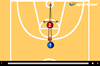
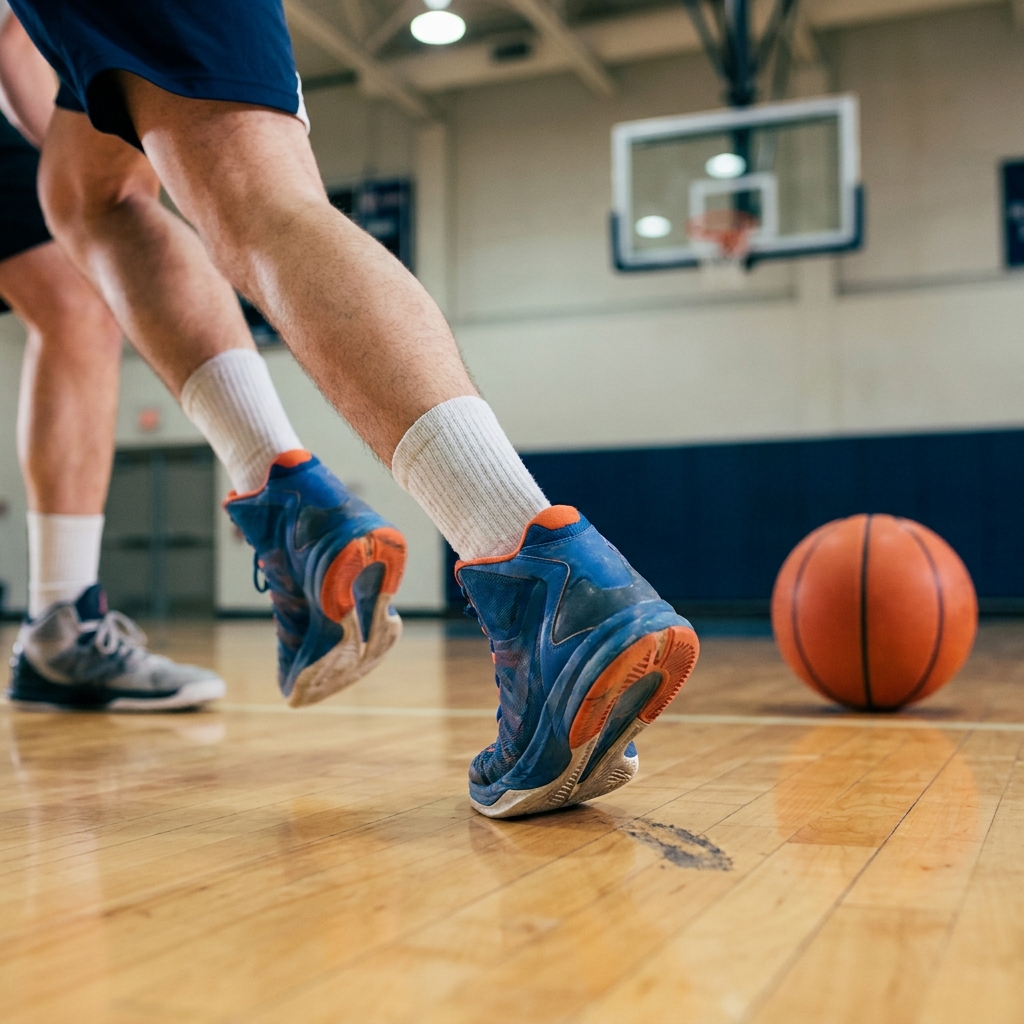
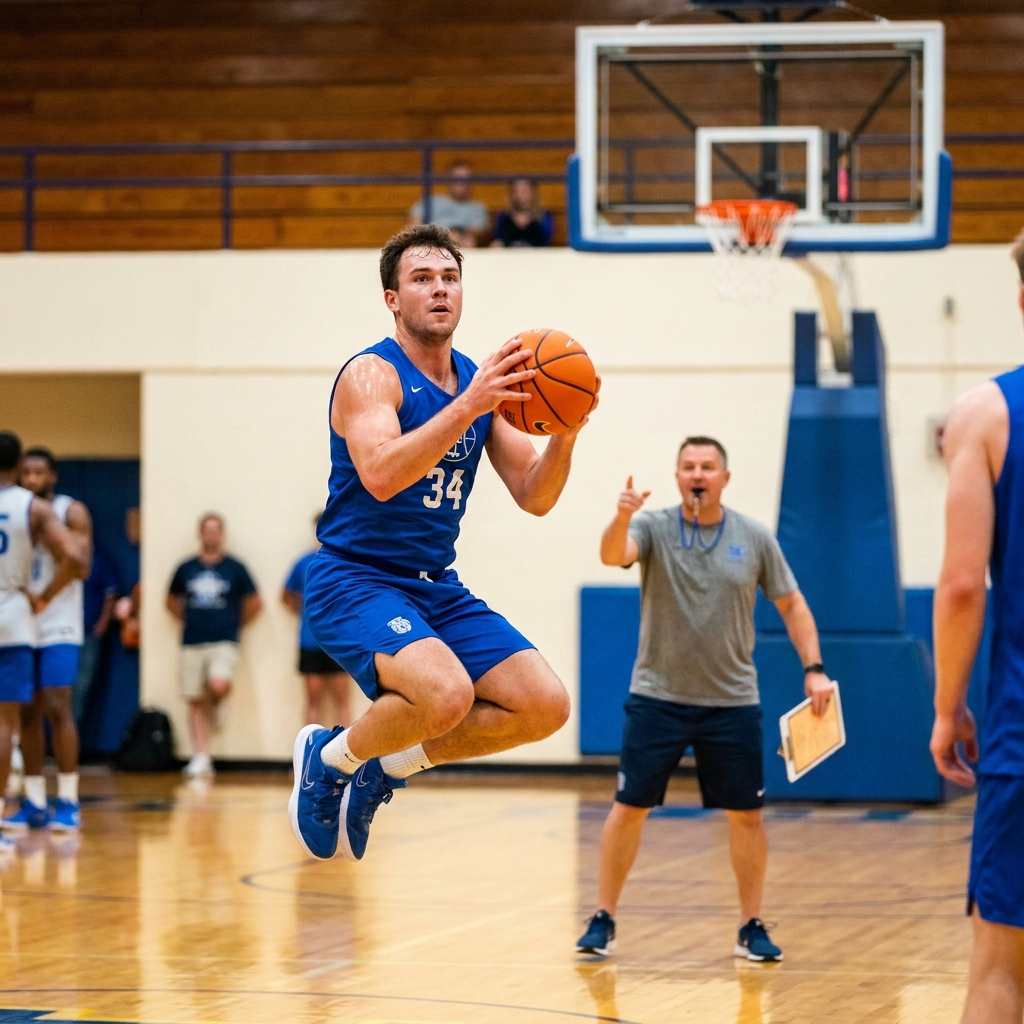
Each player needs to grab a basketball and find a basket. It works best to have three players (or less) at each basket. Two players on each side of the basket and one in front. Each player should stand about 2 feet from the basket. (Yes, it's only two feet. Do not stand farther back!) For right handed shooters, your right foot should be centered with the basket and pointing directly towards the middle of the basket. Your left foot should be positioned shoulder width apart in a comfortable position. Most players leave their left foot slightly behind the other foot. The left foot should be pointing in the relative area of the basket but probably should not be pointing directly at it. Most players feel the most comfortable with their left foot pointing just to the left of the basket. Bend your knees, at a comfortable angle somewhere around 45 degrees. Now if you're feet are aligned properly, the rest of your body should follow suit. Hold the ball in your hand, palm facing up. Your non-shooting hand can dangle to the side. Slowly bring the ball in and hold is as if you were shooting with one hand. Your arm should form a 90 degree angle. Your tricep should be parallel with the floor and directly above your right leg. Your wrist should be bent with fingers spread out. The ball should be sitting on your finger pads, NOT your finger tips. Your index finger should be in the center of the ball. Pause. This is when you make sure your arm, feet, and everything is in the correct form. Look at the front of the rim. Proceed to shoot with one hand, leaving your off hand to the side. The player should use his legs on every shot. At the end of the shot, the player should be up on his toes. This is very important, because players generate most of their strength from their legs to shoot the ball to the basket. Hold your follow through. Tell your players, "It's like reaching into a cookie jar." Grab the ball and repeat the process. Get the ball quickly but don't hurry your shot! Take your time. Each player should get a minimum of 20 repetitions, but 50 or 100 would be better. As players master this skill, you can progress to other variations: Use two hands instead of one. Just make sure the off hand is one the side of the ball and not used to propel the ball. Do a jump shot. You should still stay two feet from the basket. Flip the ball to yourself, pivot, and shoot a jump shot. Again, stay close to the basket and make sure you proper form, even though you are going slightly faster. Do not sacrifice form! For more advanced players, we commonly start with one-hand form shooting and progress all the way to pivots. We generally spend a few minutes on each progression and check all the players to make sure their form is not slipping.

COACHING POINTS

Points of Emphasis Continually tell your players... - Hold your follow through. - Take your time and always make sure your form is perfect. - Bend your knees. - Don't stand back too far! Stay just a couple feet from the basket. Motivation / Teaching Tips Tip #1 - Tell you players, "Once you get good at it, don't think you can stop. There are NBA players that do form shooting everyday!" Tip #2 - Assign a coach to each basket to make sure they are using proper form. Help them correct any problems. If they don't do it properly, this drill is a waste of time. Tip #3 - Make sure your players do NOT dip one shoulder or lean too far forward. When shooting, you want your players to have an erect torso. I like to use the phrase "shoot tall." Source: https://www.breakthroughbasketball.com/drills/formshooting.html

This practice has no coaching points

PROGRESSION

This practice has no progressions

READ MORE
READ LESS

JOIN SPORTPLAN FOR FREE

  • search our library of 650+ Basketball drills
  • create your own professional coaching plans
  • or access our tried and tested plans

JOIN SPORTPLAN FOR FREE

  • search our library of 650+ basketball drills
  • create your own professional coaching plans
  • or access our tried and tested plans
;

Sportplan App

Give it a try - it's better in the app

X
YOUR SESSION IS STARTING SOON... Join the growing community of basketball coaches plus 650+ drills and pro tools to make coaching easy.
LET'S DO IT