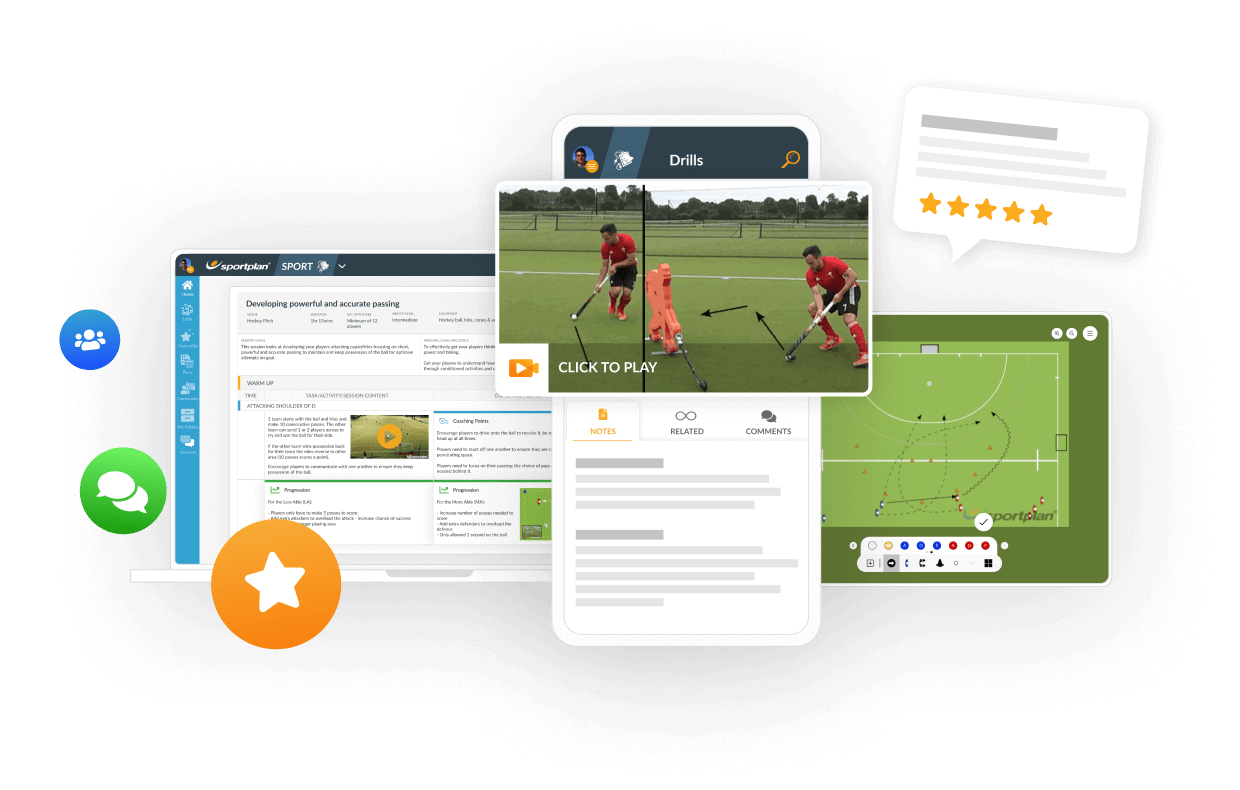
Two teams of 3 players compete against each other. Goals can only be scored using a push technique (forehand or backhand). Hitting or slapping is not allowed. Because there are two goals to attack, teams must look for the open space and switch the point of attack when blocked. Anti-Clustering Rule: To prevent crowding around the ball, players are not allowed to stand within 2 stick-lengths of their own teammate when that teammate has the ball. They must move away to create a passing option. The coach restarts play instantly by feeding a new ball whenever a goal is scored or the ball goes out of bounds, maintaining a high tempo. Extra challenge: If the game is going well, the coach throws a second and third ball into the pitch simultaneously to maximize engagement and scanning.
Spread out (Make the field big): When your teammate has the ball, sprint away toward one of the empty goals to create a passing lane. Look for the open goal: If three defenders crowd you on the left, use a forehand turn and push the ball to your teammate standing open on the right. Defensive zoning: Do not all run to the ball-carrier. One player pressures the ball, while the other two guard the two open goals.
This practice has no coaching points
This practice has no progressions
in more ways than one
 sportplan_hockey

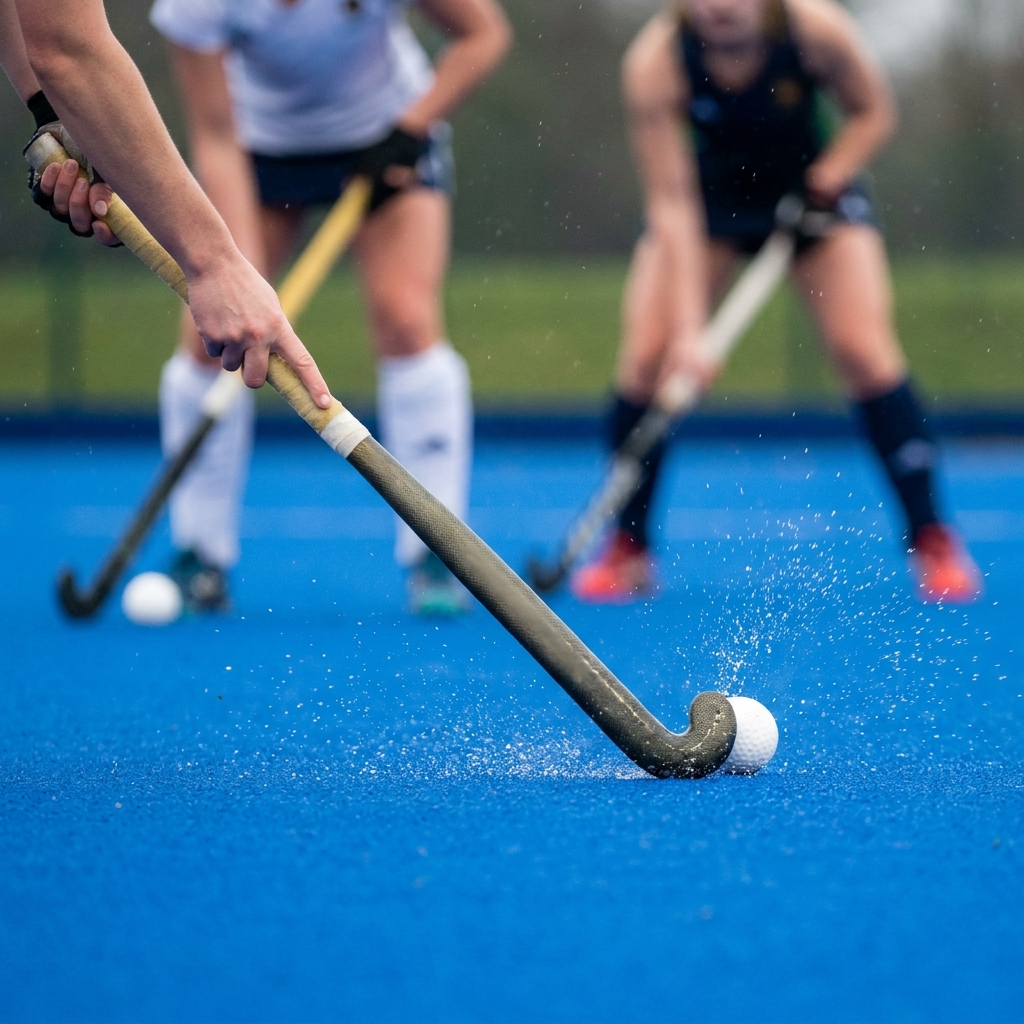
A few weeks into the league season, poor first touches are costing teams the ball. Coach body shape, scanning and receiving on the move to keep possession.
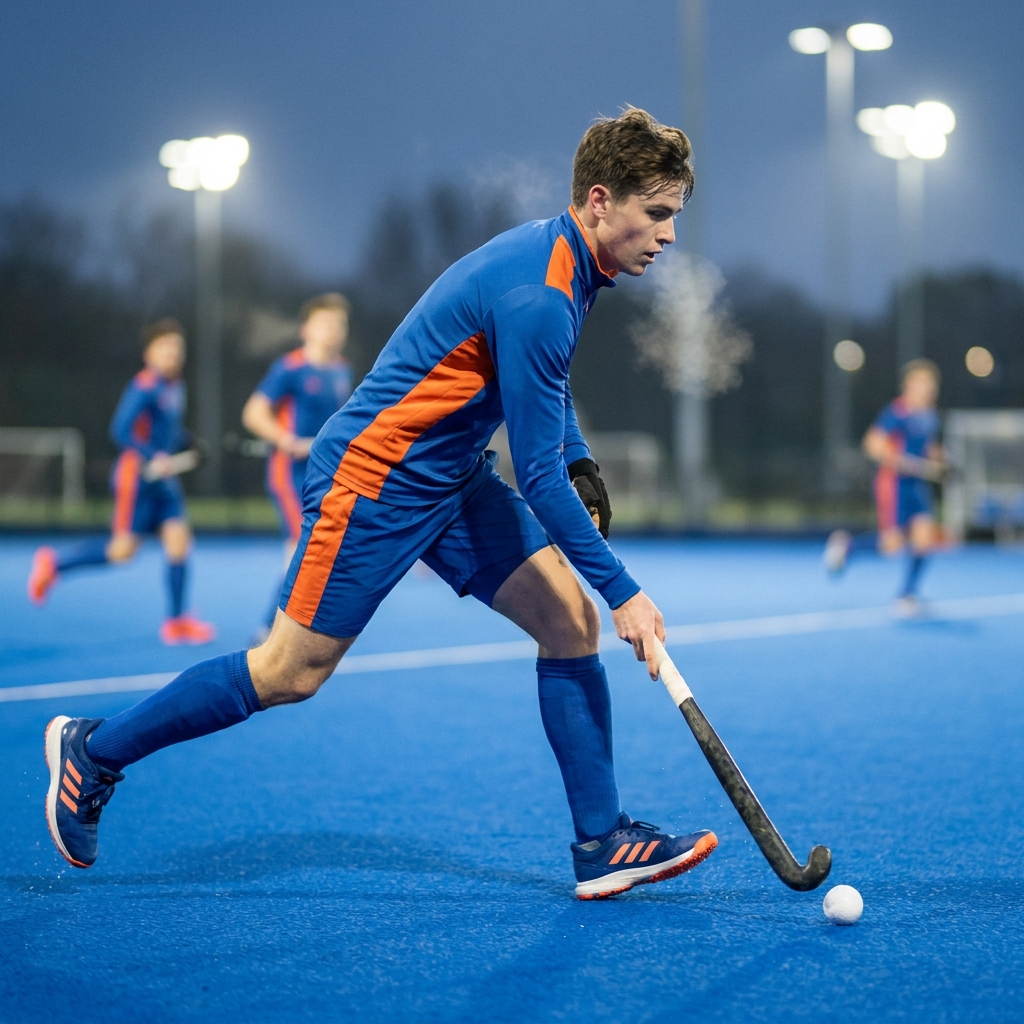
Pre-season fitness fades fast once the league starts. Build conditioning into ball work and use rolling subs well to keep your squad sharp all season.
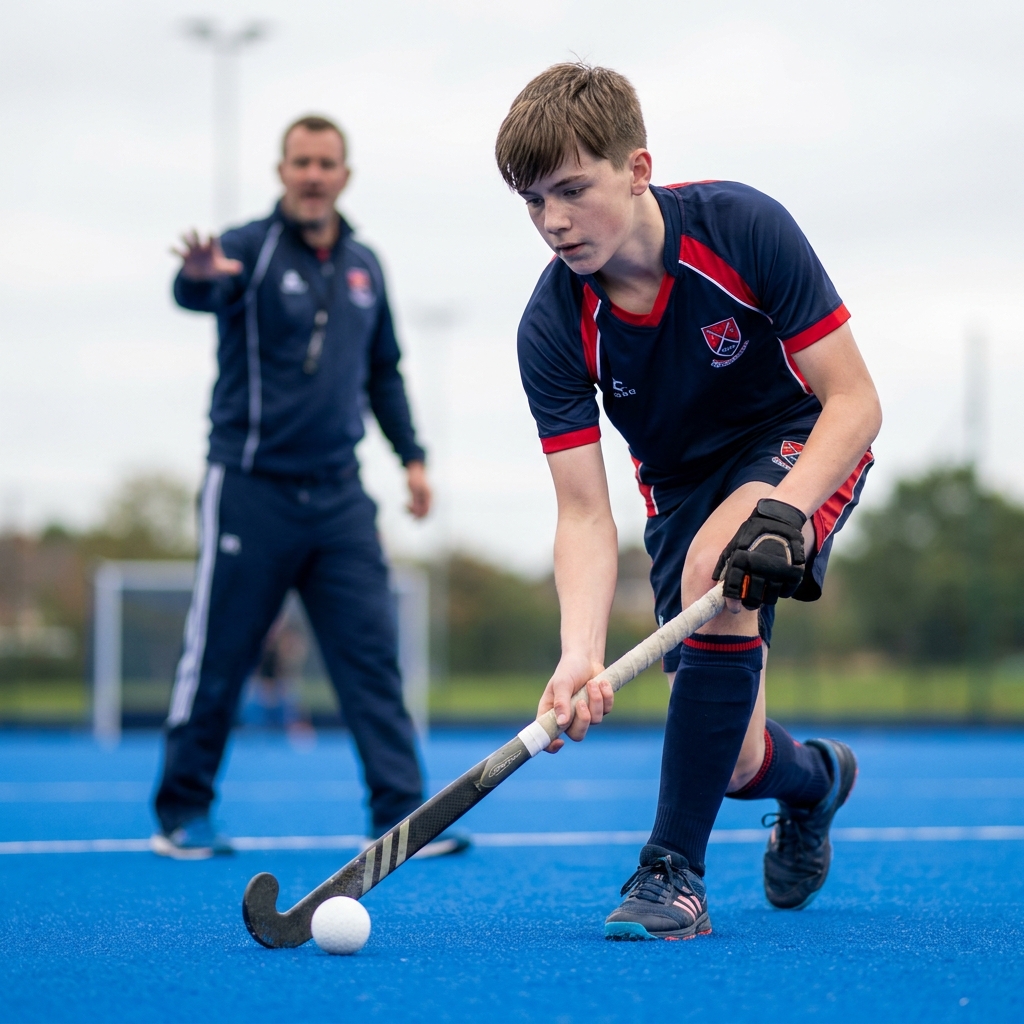
The first weeks of the season decide whether a junior or new player sticks with adult hockey. Here is how to keep them safe, give them a clear job and build their confidence from the very first bully.