Set up the pitch according to the image with a narrow channel, a starting cone for the row of attackers (red), a central defender (yellow), and a goal at the far end. Attackers take turns executing a fast forehand (FH) carry and run straight up the channel, attempting to beat the defender with a dummy to score. For the first 5 minutes, you (the trainer) act as the fixed defender to demonstrate the technique, after which players continuously rotate: the attacker becomes the defender after their turn, and the defender joins the back of the attacking line. During minutes 5-12 (Phase 1), the child defender is restricted to horizontal (lateral) movements only, while during minutes 12-20 (Phase 2), the defender is allowed free movement in all directions.
Maintain constant stick-to-ball contact on the forehand side, do not tap or hit the ball. Scan the field during the carry to time the drag just before the defender reaches you. Execute a smooth, continuous drag from left to right to deceive the defender with the dummy. Use the body: move your body to make the defender fall for the dummy. Coaching Points Defending Lay the stick horizontally flat on the turf by lowering your knees and center of gravity. Hold your position and let the attacker run into the block; do not swing at the ball. Keep both hands low to the ground to ensure a solid and maximum stopping surface.
This practice has no coaching points
This practice has no progressions

in more ways than one
 sportplan_hockey




Rain, standing water and a slick pitch change everything. Here is how to adjust your technique and game plan for wet winter hockey.
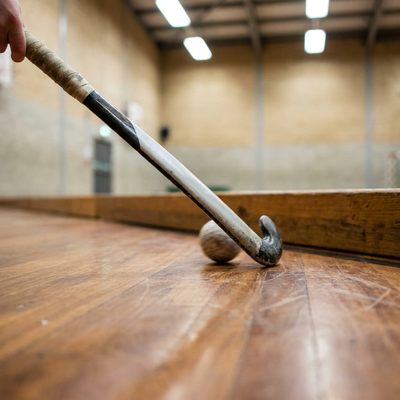
As clubs start their indoor fixtures, outdoor habits get punished fast. Here is how to retrain the skills that actually change indoors.

Two defenders chase the ball, nobody covers the runner, and a soft goal goes in. Here is the five-step treat for the mix-up haunting hockey defences this October.