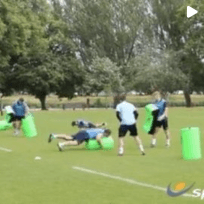
Attacking formation from Breakdown Pre - Breakdown Ball carrier runs and hits pad, goes to ground and presents ball. Attackers running attacking line with 2 supporting ball carrier. Post Breakdown Attacker on ball carriers left shoulder, moves over to protect ball, Attacker on ball carriers right shoulder moves to ball and passes to out to the left When the ball carries goes to ground, remaining attackers (those not involved in the ruck) move back quickly to form the attacking line again.
Coaches should watch and guide Good ball presentation Speed covering the Ball Speed picking and passing the ball Attackers getting back into the attacking line quickly and correctly.
This practice has no coaching points
This practice has no progressions

in more ways than one
 sportplan_rugby



Tacklers are aiming lower, so carriers who dip late put heads at risk. Teach footwork, a strong early body height and leg drive to win the collision safely.

The hooker's brake foot moved from trial into full law in July 2026. Here is how to coach it so your front row stays stable, legal and safe.

Your players can pass beautifully in a warm-up grid. Then a defender closes, their lungs are burning, and the ball goes to ground. Here is how to build catch-pass skills that hold up when it matters.