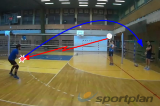
One player stands in Zone 3 and spikes the ball into the court.
The other players, starting from behind the sideline, take it in turns to receive the ball, return it to the player acting as the feeder and runs to Zone 1.
Once all the players are in Zone 1, the player feeding continues to spike the ball into the court but the other players must change positions from side to side in the backcourt.
In this drill players need to dig the ball directly to a setter's zone and change positions after each consecutive spike. This makes them watch the court, assess changeable situation and cover back zones.
To make it harder have the players stand on the baseline so they have to dig the ball from a further distance and receive the spiked the ball which has been hit harder.
In this variation the ball's trajectory will not be as accurate as before so the receivers must stay in a low position ready to return the ball.
New hitters rarely miss because of their arm. They miss because of their feet. Build a reliable approach, then time it with your setter.
When your hitter gets stuffed, five teammates standing and watching is how you lose the point. Good attack coverage turns a blocked ball into a second swing.

Coaches spend hours correcting arms in serve receive when the real fault is almost always the feet. Fix the movement and the platform fixes itself.


Register for FREE and get coaching tips, top drills, session and more every week!