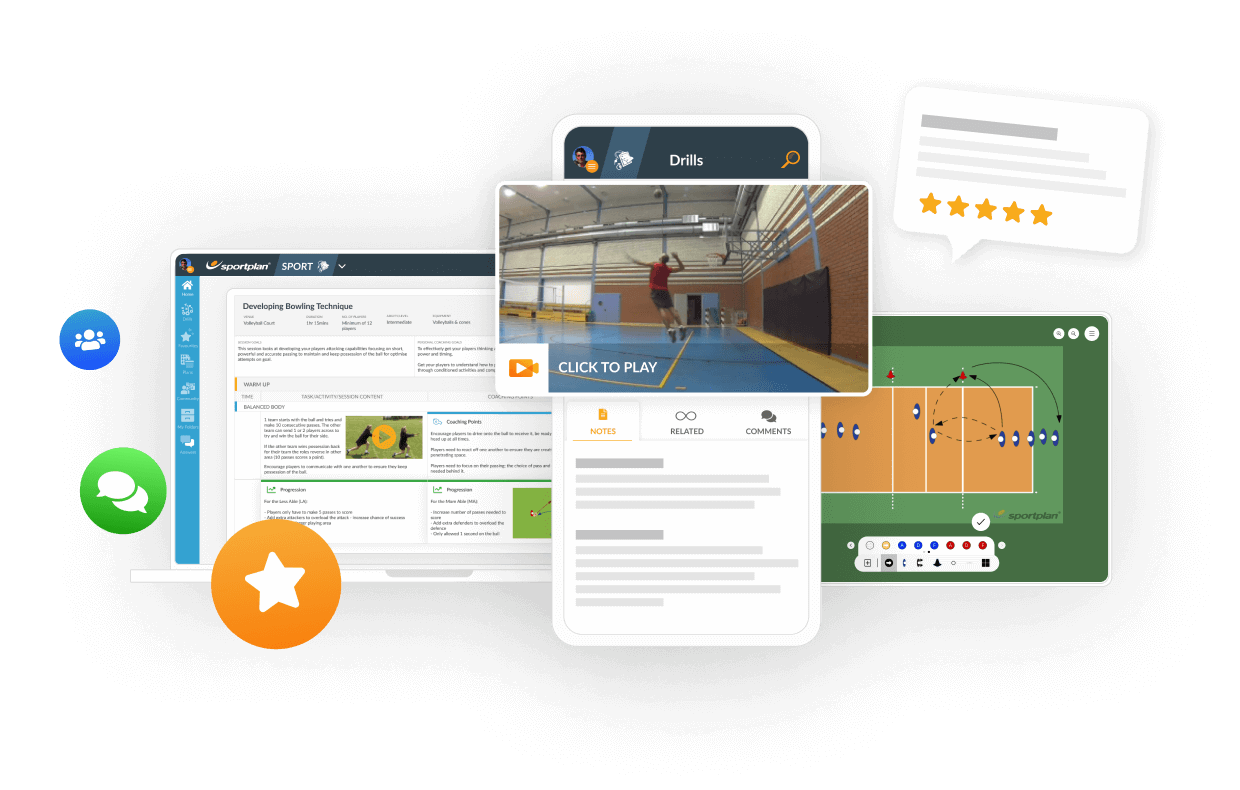
Three players stand on one side of the court with a receiver on the other.
One setter stands near to the net while another is one the baseline, and a spiker is on the wing. The receiver passes the ball to a setter who sets the ball up to the other setter and runs back to the baseline. The other setter now passes to the player on the wing and runs back to the baseline, while the spiker now hits a winner over the net before returning to the baseline.
Tell your players to pass and set high at the beginning so they have more time for returning but after 2-3 minutes they should start playing more flat to speed it all up.
Consecutive spikes require high-performance jumping abilities and endurance development. Running is what make athletes fit and may be combined with technical tasks as it is here in the drill.
When the first pass breaks down, most teams collapse into a high ball straight into the opposing block. The best 2026 sides are building structured out-of-system offences that turn broken plays into scoring chances using libero sets, left-side options and disciplined hitter routes.
The modern pipe attack has evolved from a high middle-back set into a flat, fast weapon that arrives at quick tempo. Coaches at every level are now drilling it as a primary scoring option, forcing blockers into impossible decisions and unlocking four-hitter offences.
The back row attack adds a powerful offensive dimension that stretches the opposing block and creates scoring opportunities from unexpected positions. This guide covers the rules, approach footwork, setter-hitter timing, and progressive training methods for introducing back row attacks to developing teams.