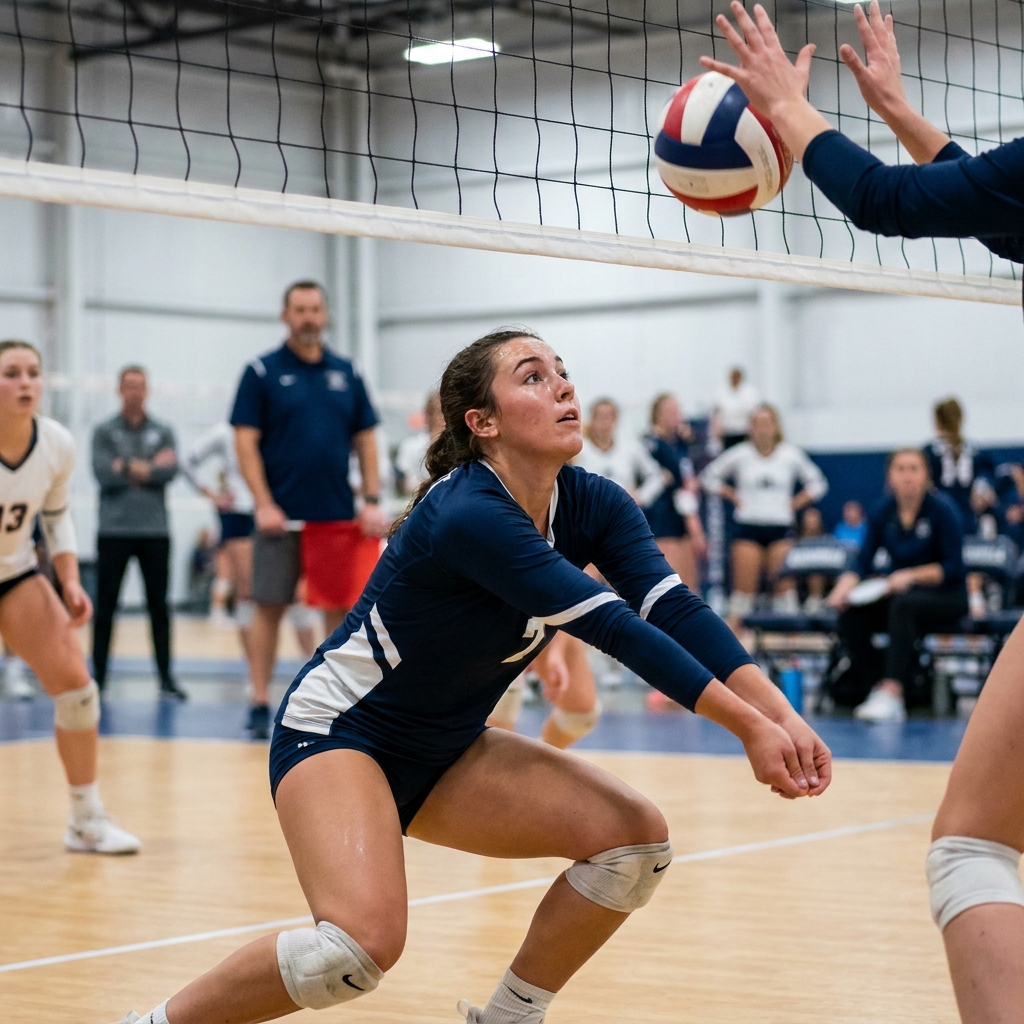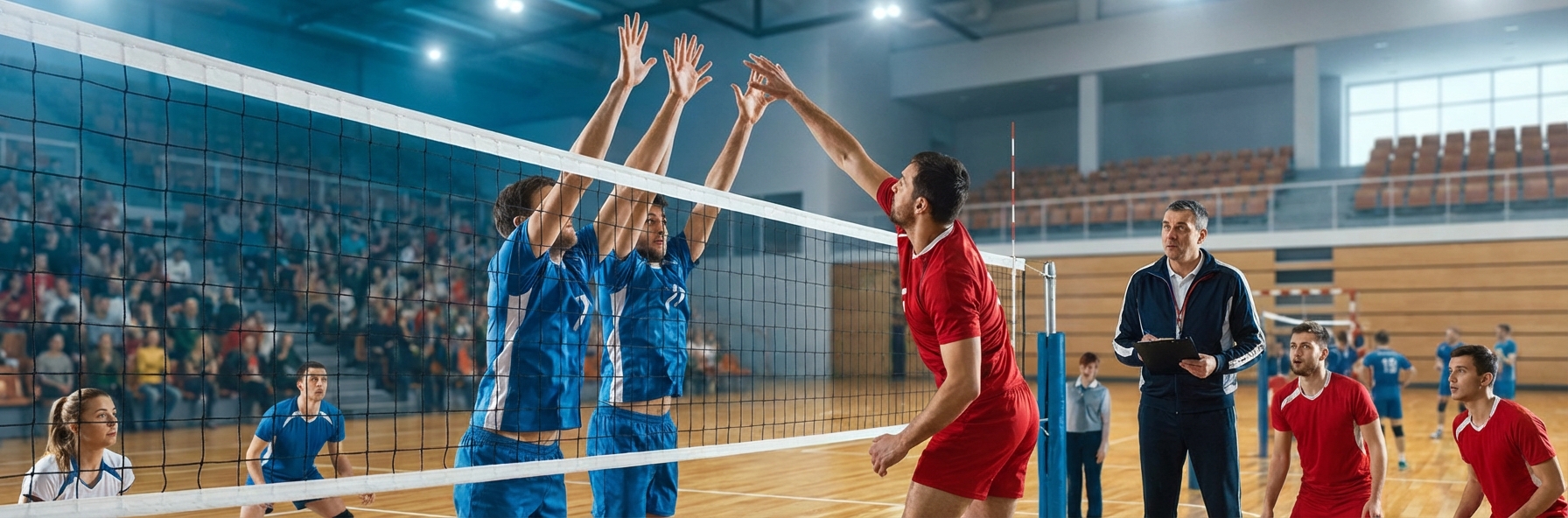
Blocking in volleyball has evolved from simply jumping and reaching to a sophisticated skill requiring reading ability, precise timing, and tactical understanding. Great blockers don't just stop attacks - they influence where attackers can hit and set up their team's defence.
Reading the Play
The blocking sequence begins before the attack:
Watch the pass: Pass quality determines setting options.
Read the setter: Identify where the set is going as early as possible.
Track the hitter: Watch approach angle and body position.
Adjust in flight: Final hand positioning happens during the jump.
Footwork Patterns
Efficient movement across the net:
Slide step: For short distances, maintain facing position.
Cross-over step: For longer distances, turn and run then square up.
Ready position: Hands high, knees bent, weight on balls of feet.
Jump timing: Jump after the attacker to meet the ball at highest point.
Hand Positioning
Penetration: Reach over the net, not just up.
Hands together: Close the gap to prevent balls splitting the block.
Angle the block: Turn hands to direct blocked balls into the court.
Soft block option: Intentionally deflect up for your defence to play.
Blocking Schemes
Commit blocking: Middle commits to quick attack, relies on reading.
Read blocking: Wait to see set before committing, more conservative.
Bunch blocking: Start close together, spread as needed.
Spread blocking: Cover width of net, close gaps when set is identified.
Key Coaching Points
- Reading starts with the pass and continues through the attack
- Footwork efficiency determines blocking range
- Jump timing is critical - after the attacker, not with them
- Hand position and penetration over the net
- Blocking scheme depends on opponent's attack patterns