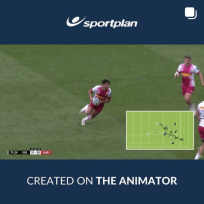
This is a model of our attack pattern. The "1-3-3-1" describes the manner our pack players line up across the pitch. (For purposes of easier identification of pack players and back line players, pack players are blue and back line players are red). A flanker is within each 15 meter channel and two pods of 3 pack players move flexibly across the middle of the field, based on direction by the scrumhalf/flyhalf/fullback. "Flow" means we continue to move across the field in the same direction for consecutive phases. "Bounce" indicates that we switch direction of play by moving a pod back the direction we came from. "Flood" may be called when we reach the 15 meter line-this should be a 9/10 pick into the tram line and should include the associated flanker and wing flooding up together in a flat, urgent line. "Highway" refers to a pass from the 10 to the 12 or 15, intended to move our channel of attack even wider.
This practice has no coaching points
This practice has no progressions

in more ways than one
 sportplan_rugby

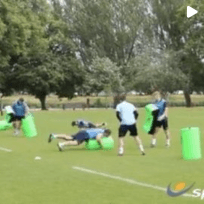

Tacklers are aiming lower, so carriers who dip late put heads at risk. Teach footwork, a strong early body height and leg drive to win the collision safely.

The hooker's brake foot moved from trial into full law in July 2026. Here is how to coach it so your front row stays stable, legal and safe.

Your players can pass beautifully in a warm-up grid. Then a defender closes, their lungs are burning, and the ball goes to ground. Here is how to build catch-pass skills that hold up when it matters.