PASSING DRILL 2 (HUSAIRI)

June 2026

If you watch the data, restart kicks happen more often than any other set-piece in a modern rugby match. A Six Nations game produces around twelve to sixteen restarts, more than the average lineout count and far more than scrums. Yet most teams - especially below elite level - still treat them as an afterthought. That is the gap top coaches are now closing.

The phrase "restart is the third set-piece" has become a coaching slogan in 2026 for good reason. The team that wins the restart battle controls field position, momentum and the opening sixty seconds of every passage of play. Conceding a try and then conceding the restart immediately afterwards is one of the most common ways to lose a match.

Why Restarts Are Suddenly Critical

Two things have changed. First, kickers have become more accurate. Restarts now land precisely on the 10-metre line and in the 15-metre channel, contested by tall, athletic chasers who jump for the ball. The days of a 22-metre dollop into the middle of the pitch are gone.

Second, the reward for retention has grown. With modern attacking shapes, a team that retains its own restart is straight into structured phase play in the opposition half. A team that loses the restart is defending in their own 22 with a disorganised line. The swing between those two outcomes is enormous.

Building a Reception Pod

Top teams now train a dedicated restart reception pod, exactly as they train a lineout pod. The pod typically has four roles, and every player must know which role they have before the kick is taken.

The catcher: Usually a lock or back-rower, chosen for height and timing. They call early - "mine" or the channel number - and commit to the catch.

The lifter: A prop or hooker who arrives at the catcher's side, hands ready, to give a lift on the contested ball. Lifting is legal at restarts and dramatically improves your win rate against good chasers.

The protector: A second forward who stands between the catcher and the chase, taking the contact if it comes and forming the first ruck cleanly.

The exit option: A back, usually the fly-half or full-back, in position to receive the next pass and either kick to touch or launch a counter.

How to Coach Restart Reception

Restart skills are perishable. Train them every week, even if only for ten minutes. Build the session in three blocks.

Block 1 - Catching under contest (5 minutes): One coach kicks high balls from the halfway line. Your designated catchers work in pairs - one catches, one acts as a chaser jumping to contest. Rotate every two reps. The focus is timing the jump, not winning every ball.

Block 2 - Receiving as a unit (10 minutes): Full pod of four sets up. Coach kicks restarts. Pod must catch, secure, ruck and recycle clean ball to a back. Add an opposition chase line of three after five reps.

Block 3 - Restart-to-exit scenarios (10 minutes): 12v12 or 10v10 game starting from a restart. After receiving, the team in possession has one rule: get out of their own half within three phases. This trains the link between reception and territorial exit.

Attacking Restarts - The Other Half

Receiving is half the picture. The other half is recovering your own restart. Modern restart kicks are aimed at one of three landing zones: short on the 10 (5-7 metres beyond the kick mark), mid-deep at the 15-metre line, or long into the far corner. Each option requires a different chase pattern.

The short restart is the highest-percentage recovery option but the hardest to execute accurately. Reserve it for moments when you genuinely need the ball back - after conceding a try, with time running out, or to disrupt a stronger opponent. Drill the kicker until they can land a restart in a one-metre window on demand.

Key Coaching Points

  • Restarts are the most frequent set-piece - train them weekly
  • Build a named reception pod with four clear roles: catcher, lifter, protector, exit
  • Lifting is legal at restarts - use it
  • The exit kick after a clean catch is as important as the catch itself
  • Reserve the short restart for moments when winning it really matters

Recommended Drills

VIEW ALL KICKING DRILLS

husairi Teacher, Malaysia

DESCRIPTION

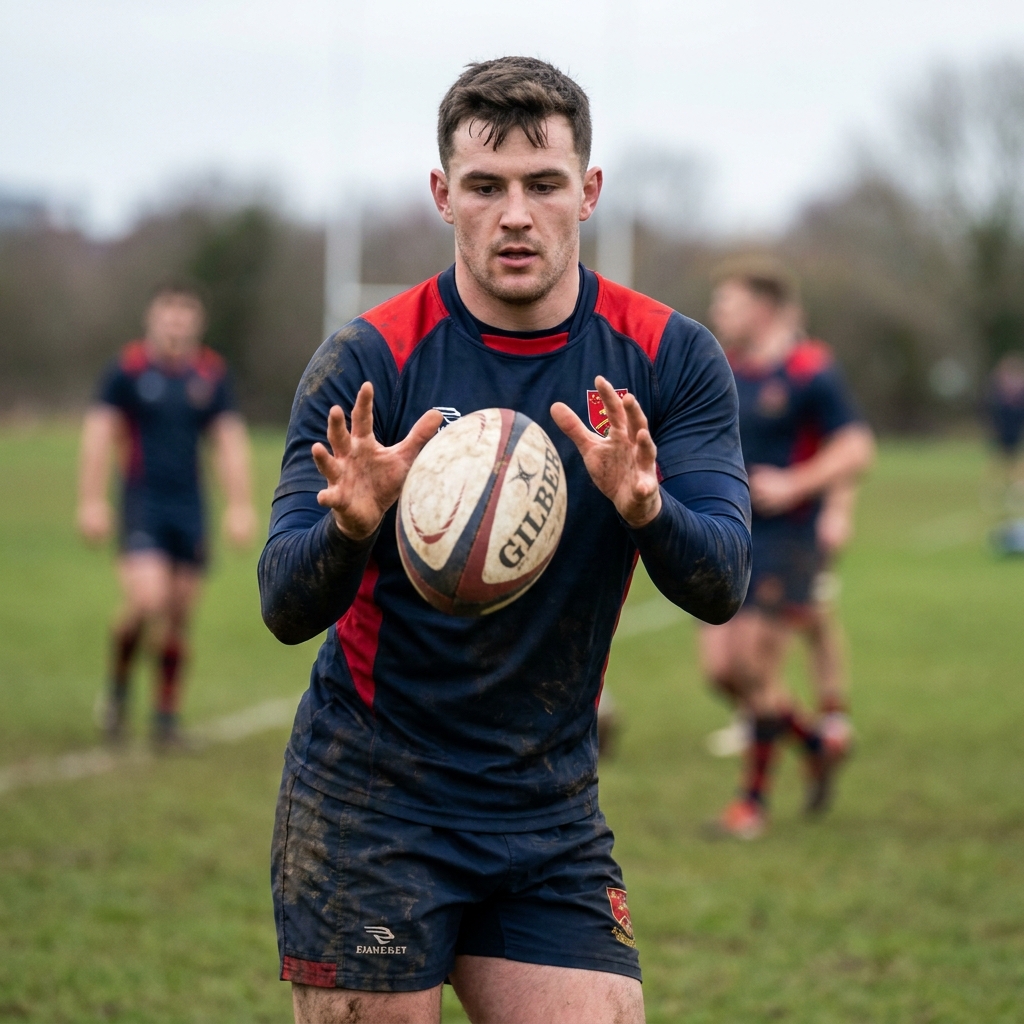
Lets get the ball and the players moving with lateral passing through the hands. Each training area only needs one ball, and that ball should start with the player at the end of the line Tell players to move forward, passing the ball down the line. Return the ball by passing in opposite direction (left to right vs right to left)

COACHING POINTS

Players should work to keep the tempo of the session high. Receivers hands should be out, presenting a target. Ball carriers carry the ball in two hands. The pass is weighted in terms of distance, speed, and accuracy. The pass is only complete when caught. Players do not spin the ball over short distances and their pass should be sympathetic to the receiver. Ball carriers pass to where the receiver is going to be, not where they are. Ball carriers provide a flat ball or a ball that the receiver can run onto. The receiver attacks at pace, receiving the ball while moving forward at pace. Players demonstrate good communication . Communication should be efficient, effective, and encouraging. Receivers should identify themselves, their location etc. Ball carriers should verbally seek out support. Mistakes will be made, allow your players the freedom to make mistakes without feeling a failure. Passing should be off both hands. There is no weak or strong hand, just hands that need a little more work. Work is the key, not talent. The ball should be held on either side with both hands, with; fingers spread, the passing hand should be slightly lower, the opposite hand is the guiding hand, raise the elbow on the passing hand, draw the pass across the body with the passing hand raising and progressing over the top of the ball to create the spin, push through the pass with both hands finishing in the direction of the target, keep the point of the ball slightly up and use the wrists to generate more power. Be careful not to give the players too much to think about e.g. if they are worrying about foot position etc - it may impact on their ability to - just pass the ball. With respect to foot position, the opposite foot to the direction of the pass should be forward (this opens up the hips) - but this won't always be possible in the game. As this point we have a bigger training area with more distance between the players, so we do want to spin the pass. We spin the pass to have it cut through the air quicker, moving faster over distance. Allow players to discover, question - try not to tell. Speed, Speed, Speed - get the attack to the point where they move/attack at pace.

This practice has no coaching points

PROGRESSION

This practice has no progressions

READ MORE
READ LESS

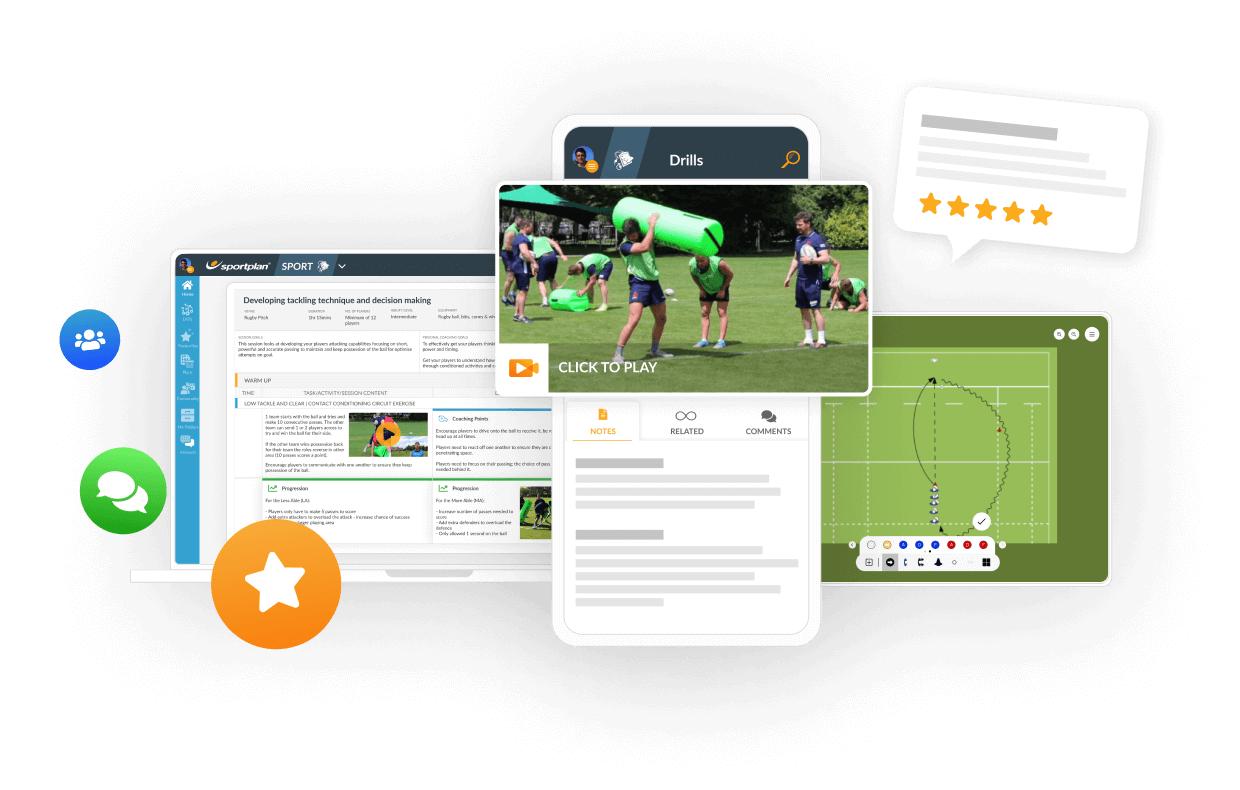
JOIN SPORTPLAN FOR FREE

  • search our library of 1100+ Rugby drills
  • create your own professional coaching plans
  • or access our tried and tested plans

JOIN SPORTPLAN FOR FREE

  • search our library of 1100+ rugby drills
  • create your own professional coaching plans
  • or access our tried and tested plans
;

Sportplan App

Give it a try - it's better in the app

X
YOUR SESSION IS STARTING SOON... Join the growing community of rugby coaches plus 1100+ drills and pro tools to make coaching easy.
LET'S DO IT