

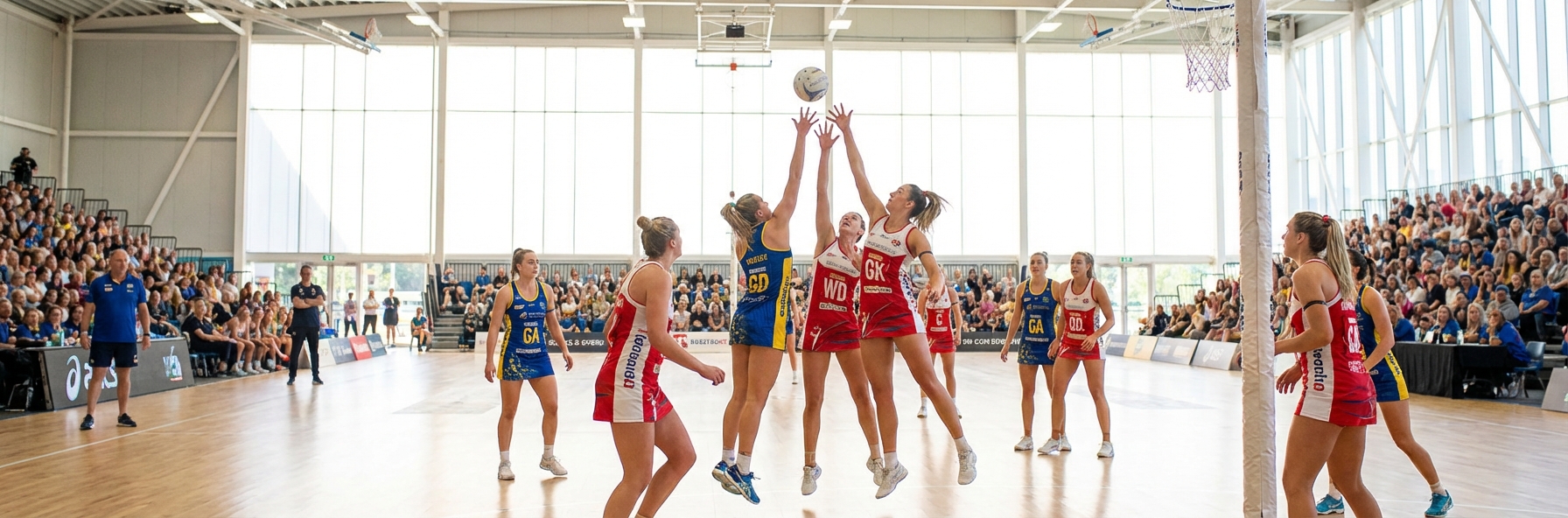
The Super Shot has changed netball's tactical landscape. Longer-range shots are more common, conversion rates have dropped, and the ball rebounds further from the post. One skill has emerged as the critical differentiator: rebounding.
Analysis of Super Netball data shows that missed goal turnovers - losing possession after a missed shot - is the single best predictor of Power 5 outcomes. Teams that secure their own misses and force opponents into turnovers dominate the crucial final minutes. Rebounding, once an afterthought, is now essential.
The Physics of Super Shot Rebounds
Super Shots are taken from further out. When they miss, the ball travels further from the post than a standard miss. The rebound zone is larger and less predictable. A shot from the edge of the circle can bounce anywhere within a 3-4 metre radius.
This changes positioning. Traditional rebounding - standing under the post and waiting - no longer works. Players must read the shot trajectory, anticipate the bounce angle, and attack the ball aggressively.
Offensive Rebounding
When your shooter takes a Super Shot, the offensive rebound becomes gold. A secured offensive rebound gives you a second chance at goal - and often from closer range than the original attempt.
Positioning
Both shooters should position for the rebound on every Super Shot attempt. The shooter follows their shot rather than admiring it. The non-shooter reads the trajectory and moves to the likely landing zone.
Timing
Leave too early and you're called for obstruction. Leave too late and the defender has position. The ideal timing is to move as the ball leaves the shooter's hands, arriving at the rebound zone as the ball bounces.
Technique
Attack the ball at its highest point. Don't wait for it to come down to you - go up and get it. Use both hands, protect the ball with your body, and be prepared for contact.
Defensive Rebounding
Preventing offensive rebounds is equally important. A missed Super Shot should result in your possession, not a second chance for the opposition.
Boxing Out
Establish position between the shooter and the likely rebound zone. Make contact (legally), hold your ground, and force the attacker to go around you. Boxing out is more about positioning and timing than strength.
Communication
GK and GD must coordinate. Who takes the shooter? Who takes the support? Clear calls eliminate confusion: "I've got the shot, you box out."
Aggression
Defensive rebounding requires a mentality shift. The ball is yours. Attack it like it belongs to you. Passive defenders get beaten to rebounds by hungrier opponents.
Training Rebounding
Box-out drills. Pairs compete for rebounds from deliberately missed shots. The defender must box out; the attacker must find a way around. Winner secures the ball.
Rebound reaction. Coach throws ball off the post at random angles. Players react and compete for possession. This develops reading ability and reaction speed.
Game-realistic scenarios. 2v2 or 3v3 in the circle with live shooting. Track rebound wins as a key metric. Reward the team that secures more.
Fitness under fatigue. Rebounding requires explosive effort at the end of quarters when players are tired. Include rebounding drills at the end of conditioning sessions when legs are heavy.
Player Selection for Power 5
Not every shooter is a good rebounder. Some have exceptional range but disappear when the ball misses. Consider your personnel for Power 5:
- A shooter who follows every shot vs one who watches
- A physical GS vs a finesse GS
- A GA who competes around the post vs one who drifts wide
The best Power 5 combination might not be your best standard-play combination. Select for the skills that matter most in those minutes.
The Mentality Shift
Rebounding requires effort when others are mentally resting. The shot has been taken - most players relax momentarily. Rebounders do the opposite. They see the miss as an opportunity and attack it.
This mentality must be coached and cultivated. Celebrate rebounds as highly as goals. Track rebounding statistics. Create competition around securing the ball.
The Competitive Advantage
Most teams haven't adjusted to the rebounding demands of the Super Shot era. They're still coaching shooting without coaching what happens when shots miss. This is an opportunity.
A team that dominates rebounding during Power 5 gains possessions that opponents waste. Over four quarters, that advantage compounds. Close games are decided by margins that rebounding can provide.
Invest in this skill now. By the time opponents catch on, you'll be a season ahead.
Where to Go Next
Develop your team's circle skills and movement with these resources:
- Shooting Drills - Includes rebounding and circle work
- Movement Drills - Positioning and anticipation skills
- Session Plans - Complete training sessions