Defence in volleyball is about positioning, anticipation, and reaction. Teams that defend well create more transition opportunities and put psychological pressure on opposing attackers. Understanding defensive systems gives players clarity on where to be and what to do.
Perimeter Defence
The traditional defensive system:
Back row positioning: Defenders spread across the back court, covering deep attacks.
Strengths: Covers hard-hit balls to corners and deep line shots.
Weakness: Tips and roll shots to middle court can find gaps.
When to use: Against power-hitting teams that attack deep.
Rotation Defence
Adjusting to the attack direction:
Rotate to the attack: Back row shifts towards where the attack is coming from.
Middle back coverage: One defender covers tips and roll shots behind the block.
Wing defenders: Cover line and cross-court angles based on block position.
Reading the Attacker
Great defenders anticipate:
Approach angle: Where the attacker is coming from indicates likely shot direction.
Arm position: High elbow usually means cross-court, wrapped arm often means line.
Body rotation: Attackers telegraph direction with their torso.
Setter location: Tight sets limit attacking options.
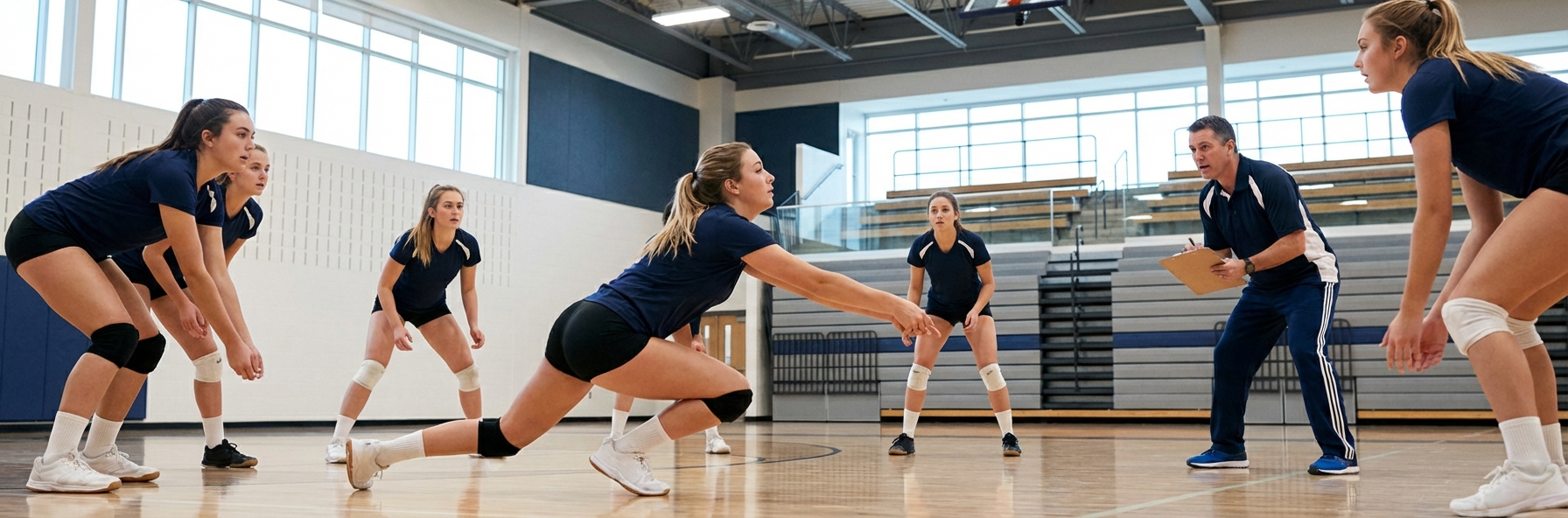
Digging Technique
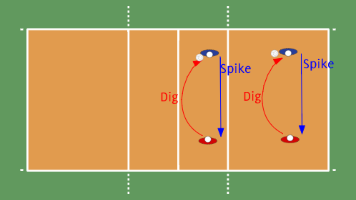
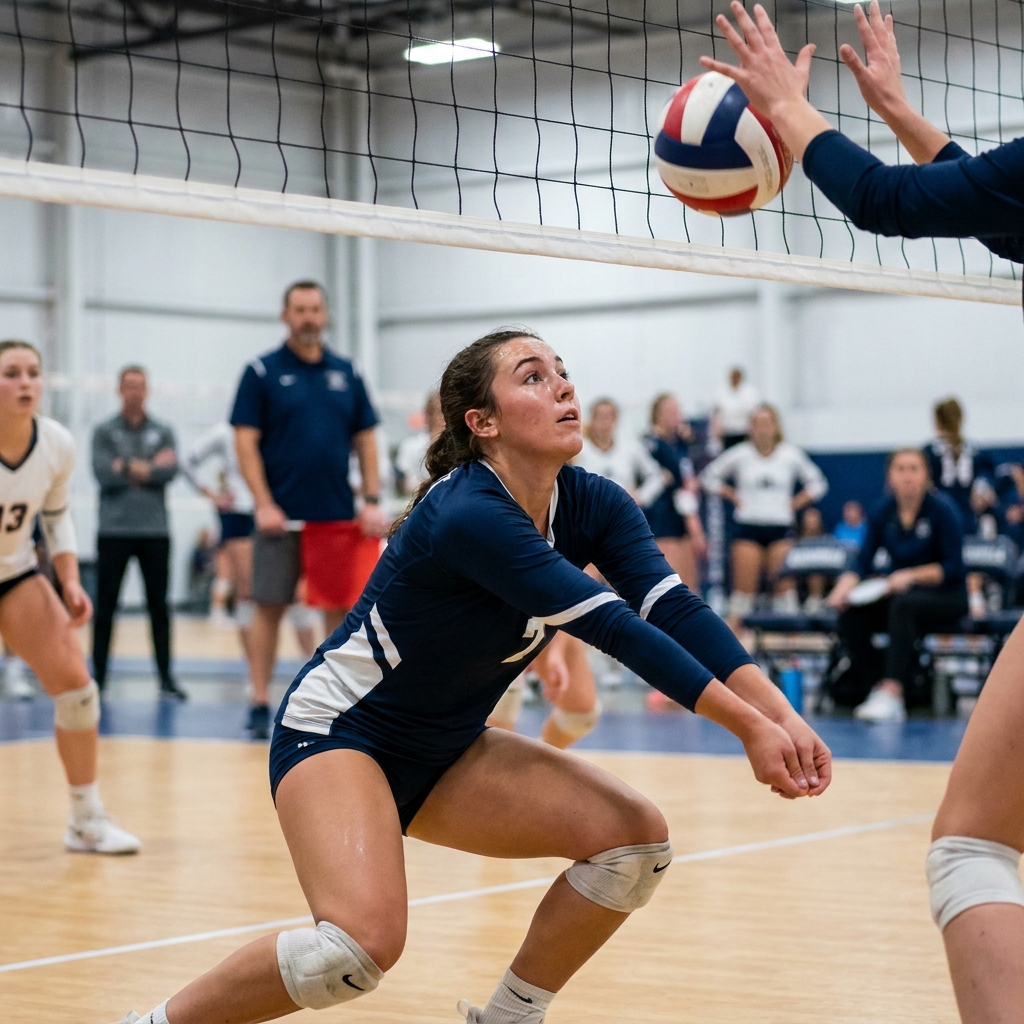
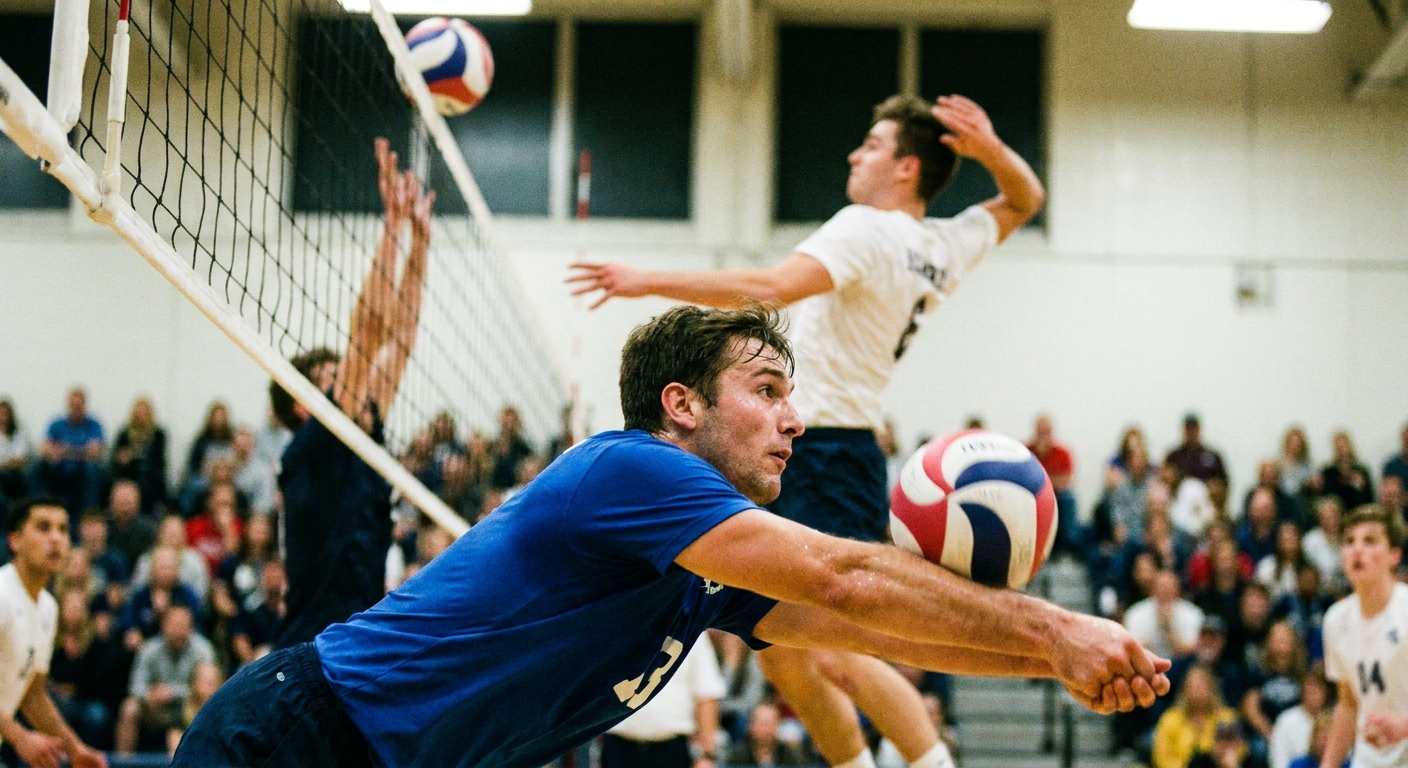
Platform position: Arms together, shoulders forward, platform angled to target.
Low body position: Low centre of gravity allows quick lateral movement.
Soft hands: Absorb pace rather than redirecting with force.
Eye tracking: Follow the ball from setter to hitter to contact point.
Key Coaching Points
- Choose defensive system based on opponent's attacking tendencies
- Players must understand their role in each rotation
- Reading attackers improves with deliberate practice
- Digging technique must be automatic under pressure
- Communication prevents confusion between defenders