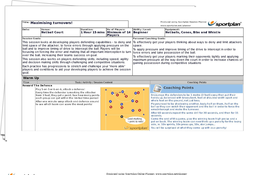
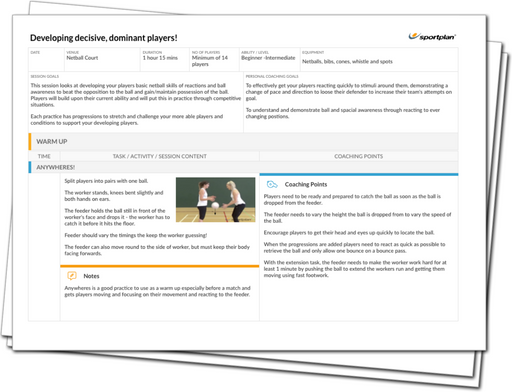
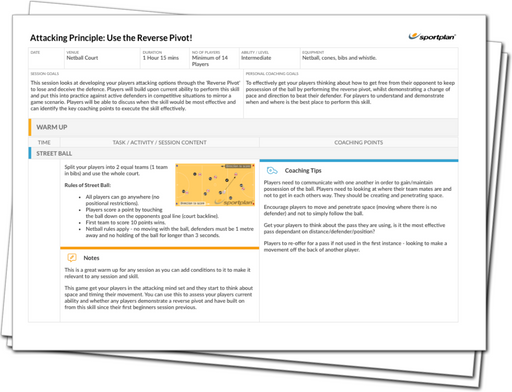
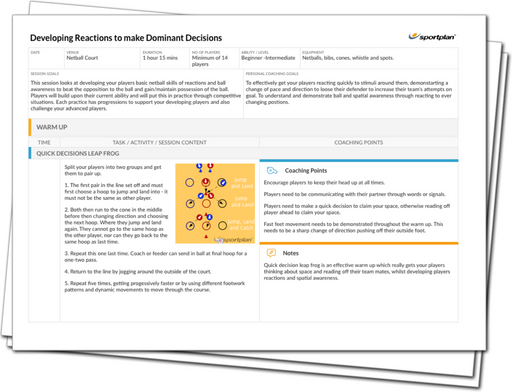
This session focuses on developing players defending capabilities to limit and deny space for the attacker to either force errors or to intercept the ball. The session aims to improve players timing of movement in order to apply pressure through improving their speed and agility.
What?s in the Session?
The session starts off relatively passive, getting the players working on their movement, practicing closing down the player in possession. As the session progresses, the intensity builds with the players gradually being worked harder throughout. The next practices work on the timing of interceptions, but it makes sure your players are working hard enough? you will soon see those who aren?t! The practices gradually add the next phases after the intercepts, working on what to do once the turnover has been achieved before culminating in a conditioned game at the end to encourage each player to put into practice what they have learnt in the session.
There is no hiding in this session and your team will sure know that they have worked hard after it! But when it comes to game day, they?ll definitely see the benefits.
in more ways than one
 sportplan_netball

in more ways than one
sportplan_netball
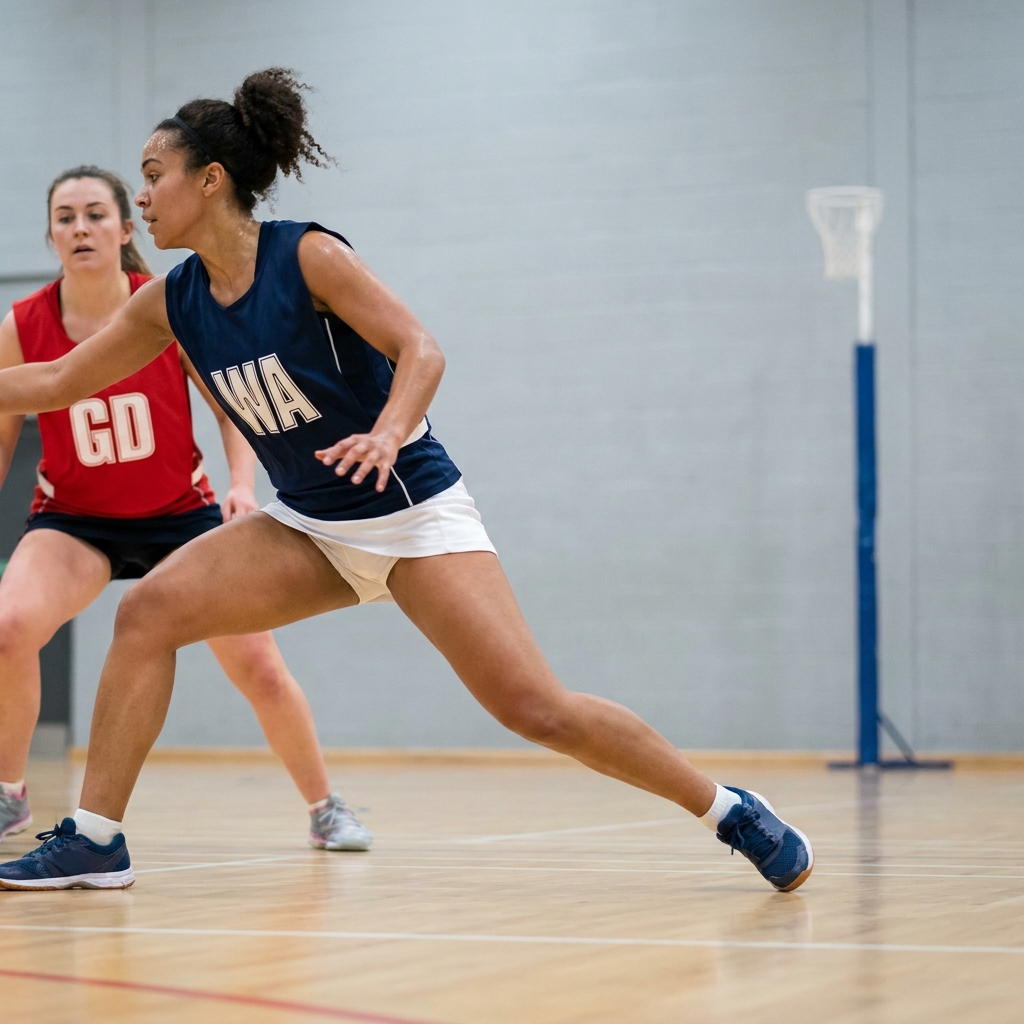
Tight markers win when attackers run in straight lines. Teach your players to dodge, change pace and time their drive so they get free when the ball is ready.
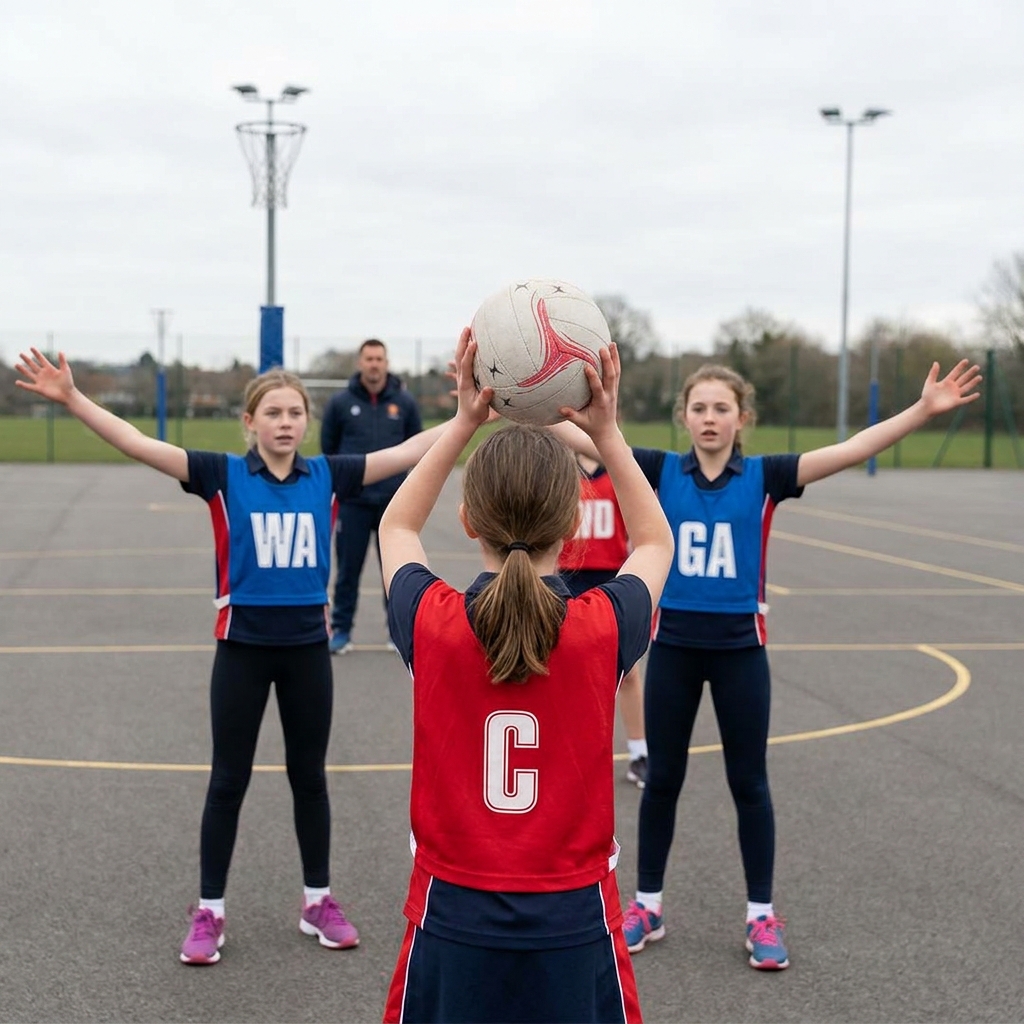
When everyone chases the ball, nobody is free. Teach your team to spread out, offer two options and clear space so the ball moves cleanly down court.
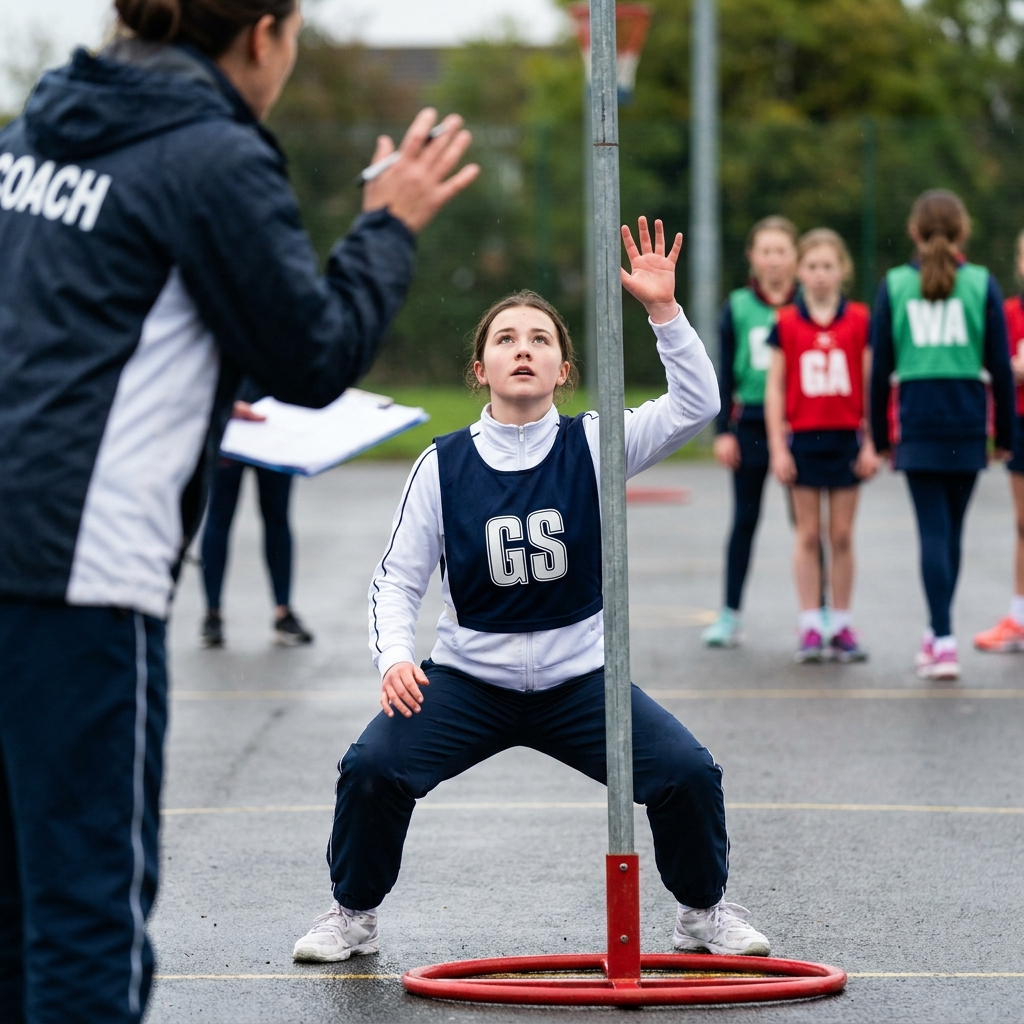
A shooter who can hold a strong position under the post is worth more than one who runs all over the circle. Here is how to coach body shape, a legal hold and a well-timed release, and how feeders make the most of it.