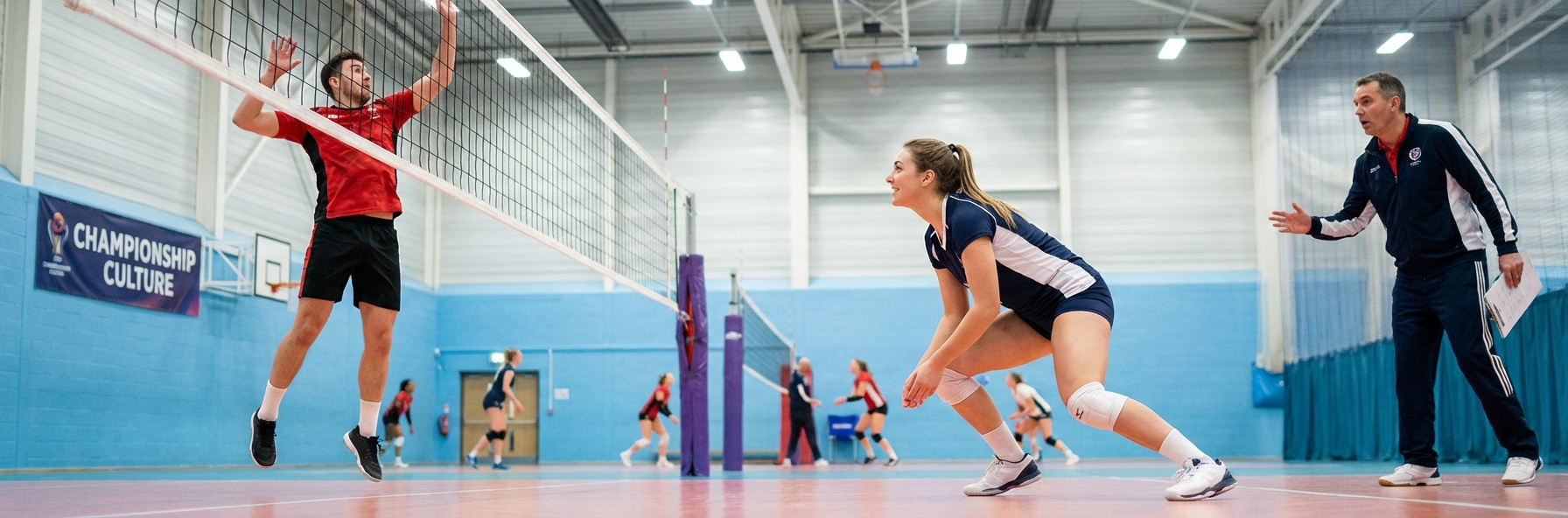
The Coaching Problem
Your players react late. The ball is already past them before they move. They dig well when the ball comes straight at them, but anything off-angle beats them. They're always a step behind the play.
The problem isn't physical speed - it's reading speed. Elite players start moving before the attacker contacts the ball because they've read the cues. Your players wait to see where the ball goes, and by then it's too late.

What Does "Reading" Mean?
Reading is anticipating what will happen before it happens, based on visual cues. It's the mental skill that separates beginners from advanced players. Good readers process information faster and start their movements earlier.
In volleyball, reading happens at multiple levels:
- Reading the setter - predicting where the set will go
- Reading the hitter - predicting shot direction and speed
- Reading the situation - understanding what's likely based on rotation, score, and game patterns
The Three Levels of Reading
Level 1: Reading the Setter
The setter's body position, hand position, and approach angle telegraph where the set is going. Cues include:
- Shoulder angle: Which way are they facing?
- Hand height: Low hands often mean back set
- Footwork: Where their feet are pointing
- Ball position relative to body: Behind them = back set, in front = front set
Level 2: Reading the Hitter
Once you know who's hitting, read their approach to predict the shot:
- Approach angle: Steep angle = cross-court power; shallow angle = line shot possible
- Arm swing: Full swing = power; abbreviated swing = tip or roll shot
- Shoulder rotation: Early rotation = cross-court; late rotation = line
- Eyes: Where are they looking? (Advanced cue - hard to see but valuable)
Level 3: Reading the Situation
Game context influences what's likely:
- Out-of-system: High ball to the outside is most common
- Tight set: Power options are limited; expect tips or off-speed
- Hitter's tendencies: What do they do under pressure? From this rotation?
- Score situation: Different players perform differently in high-pressure moments

Progressive Drills for Each Level
Setter Reading Drill
Setter performs sets without a ball. Defenders must move to the correct position based on the setter's body language. Coach confirms correct or incorrect read. No ball makes reading the only focus.
Freeze Frame Drill
Hitter approaches and the coach calls "FREEZE" at different moments. Hitter stops; defenders must point where they think the ball is going. Reveals whether players are reading or just reacting.
Colour Cone Drill
Place coloured cones in different court positions. Before the attack, defenders must call out which cone the ball will go nearest to. Verbalising the read improves awareness.
Video Pause Drill
Show game footage, pause before contact, and have players predict the shot. Discuss the cues that informed their guess. This builds reading without physical fatigue.
Recommended Drills


Video Analysis: Teaching Players to See
Video is powerful for teaching reading because you can pause, rewind, and focus without physical fatigue:
- Pause before contact: What cues are visible? What would you predict?
- Slow motion: See the cues unfold at a pace where they're visible
- Compare plays: Show the same hitter doing different shots - what's different in their approach?
- Self-analysis: Have players watch themselves - were they in position? Did they read correctly?
Frequently Asked Questions
Can beginners learn to read?
Yes, but start simple. Basic setter reading is appropriate for intermediate players. Advanced hitter reading takes years to develop. Build progressively - don't overwhelm beginners with too many cues.
How do you train anticipation?
Remove the ball initially - have players read body language only. Slow the action down so cues are visible. Use video to discuss what information is available. Then gradually add speed and live balls.
What cues should players look for first?
Start with setter shoulder angle - it's the clearest cue for predicting set direction. Once players reliably read the setter, add hitter approach angle. Build one layer at a time.
What if players guess wrong?
Wrong guesses are learning. Review what cues they read and what they missed. Over time, reading accuracy improves. Early in training, reading anything is better than purely reacting.