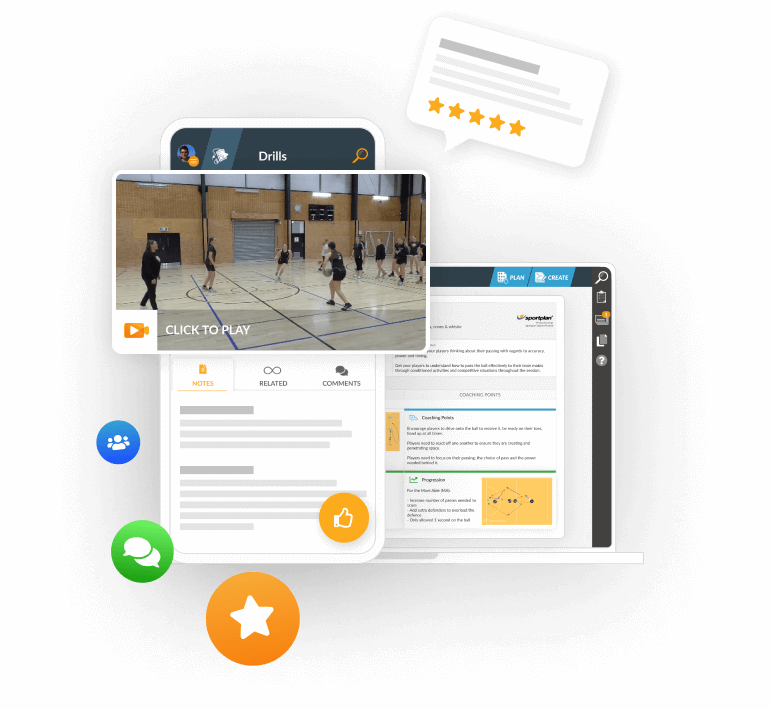
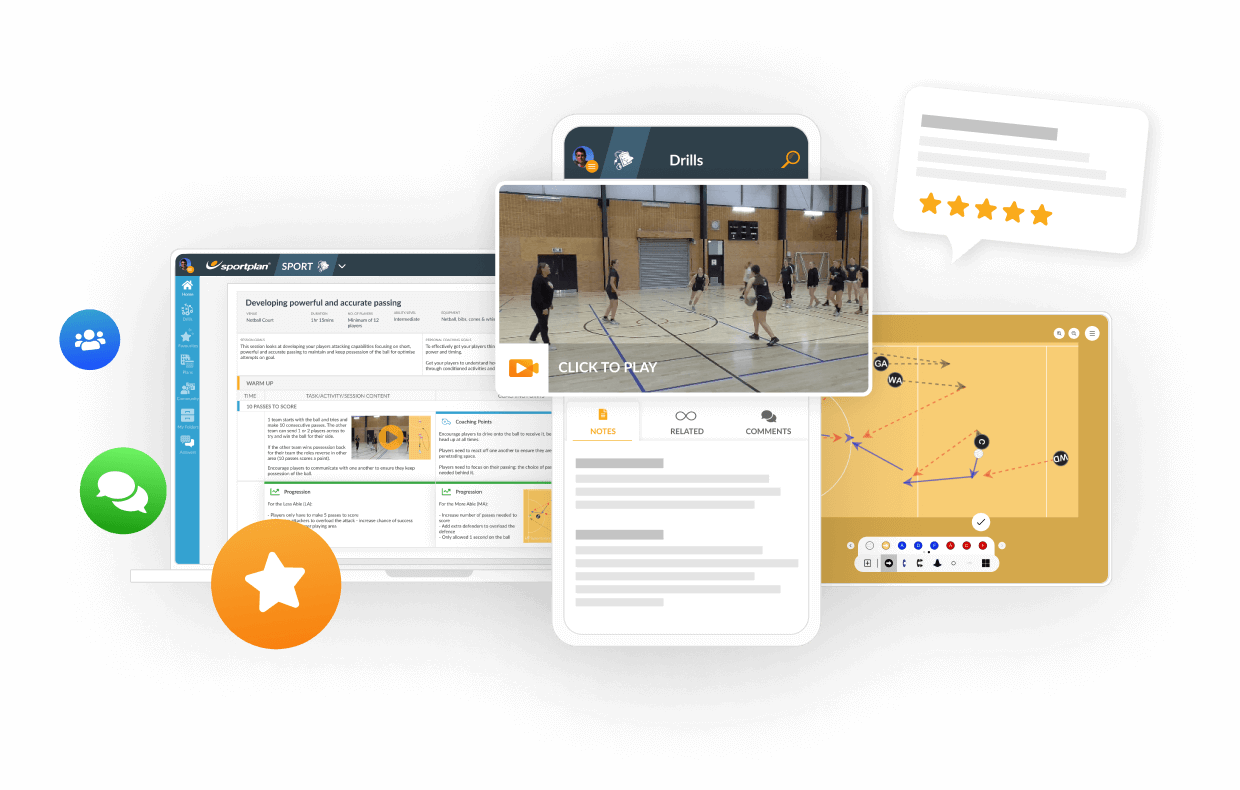
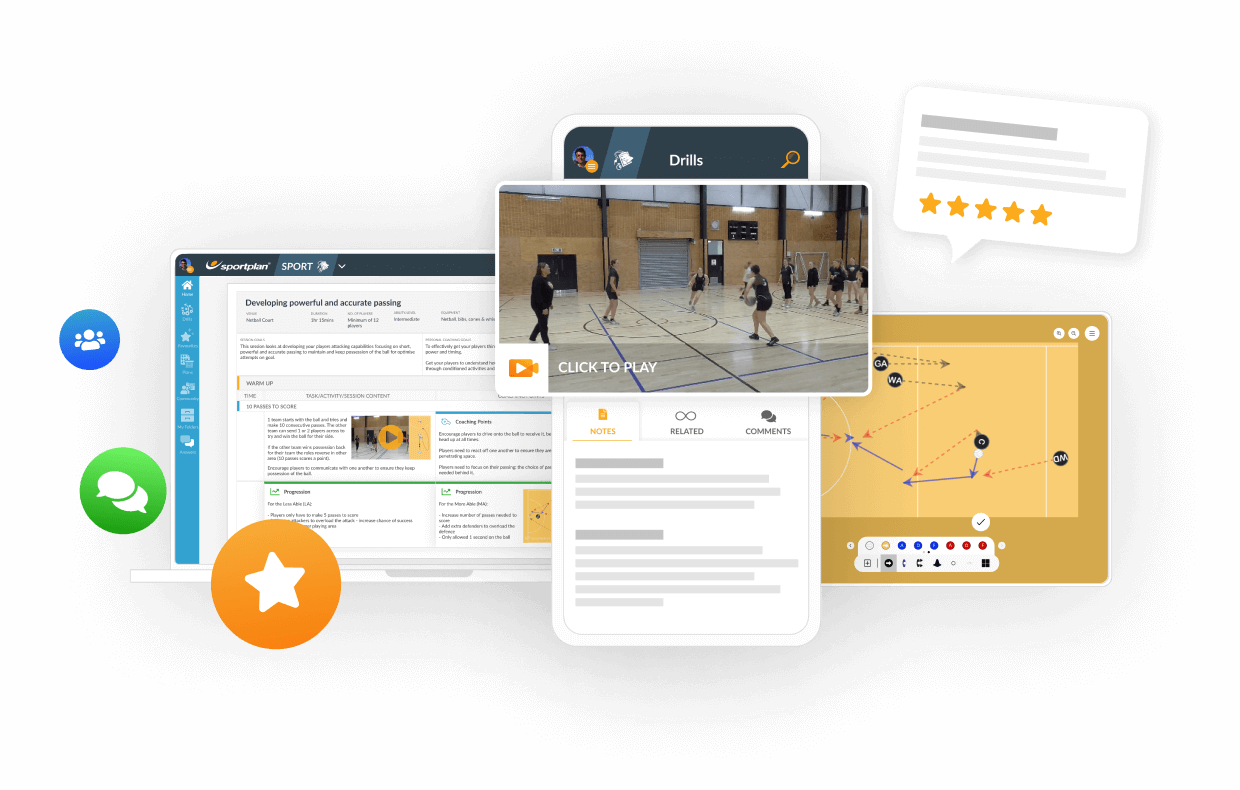
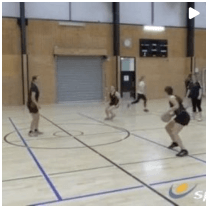
Practise 1: Practise tracking the attacker along the straightline. Start with A working at about 50% but should be meaningful movement (not just dodging around) F can drop the ball at any point for the A and D to chase down D should try both sides, and also being open OR closed Practise 2: Following discussion /questionning, look to encourage D to allow the ball to land high and wide. F will now pass the ball to the A on the 3rd second. A must always look down the court first, before returning ball to F. Repeat x 3. D practising how high they need to come with the A and how quickly they can retreat to get arms over Allow D to switch between open and closed body defence Practise 3: Take away the 3 second condition and let D experiment with whether their strength is in taking on the front pass or encouyraging the lofted ball for a back and up.
Feet under body, but never lateral to the court Angle to see player and ball Head up (not tracking feet) - chin paralleel to floor Maintain touching distance from A Keep feet moving, light and short Limiting player to one side The front shoulder of the A should be the trigger for a switch from open to closed defence Back and up: take feet first and jump up from 2 feet! Success is forcing / dictating that the A takes a pass high and wide!
This practice has no coaching points
This practice has no progressions
in more ways than one
 sportplan_netball

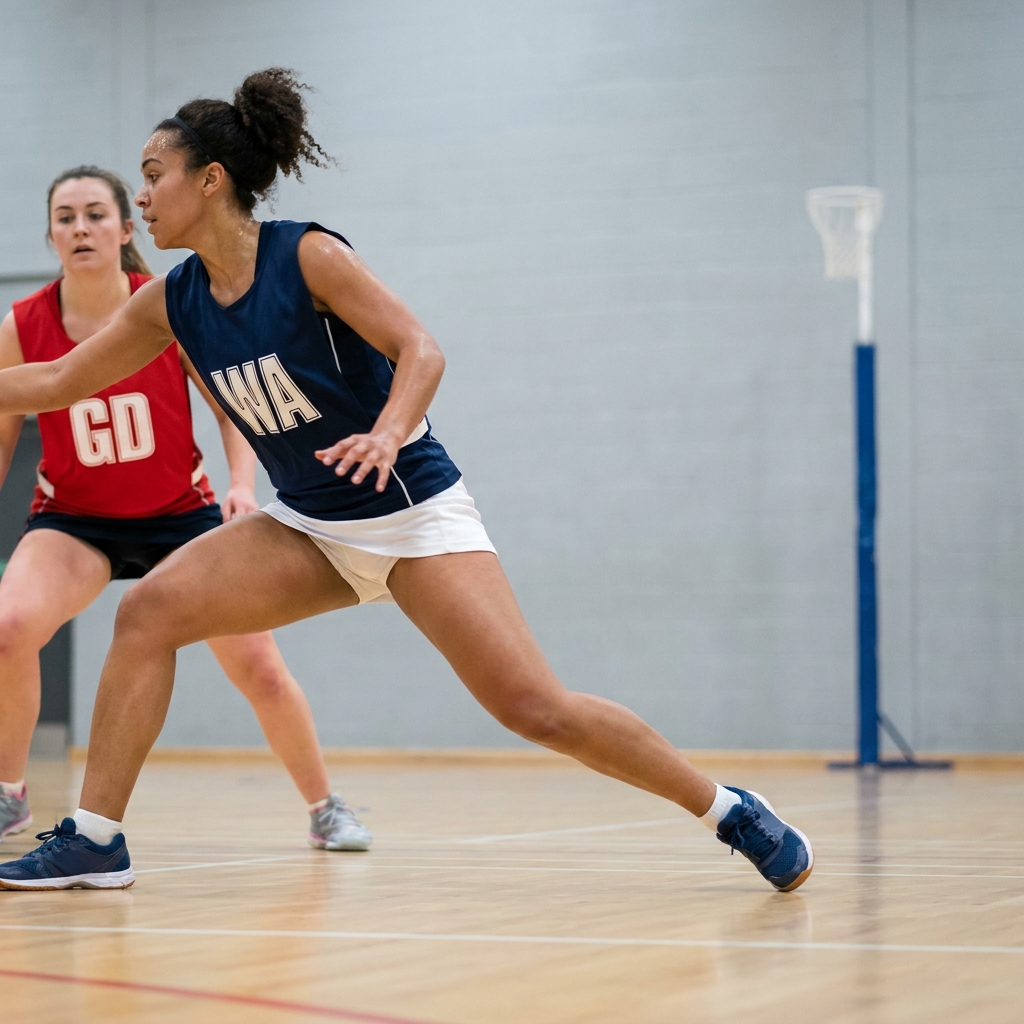
Tight markers win when attackers run in straight lines. Teach your players to dodge, change pace and time their drive so they get free when the ball is ready.
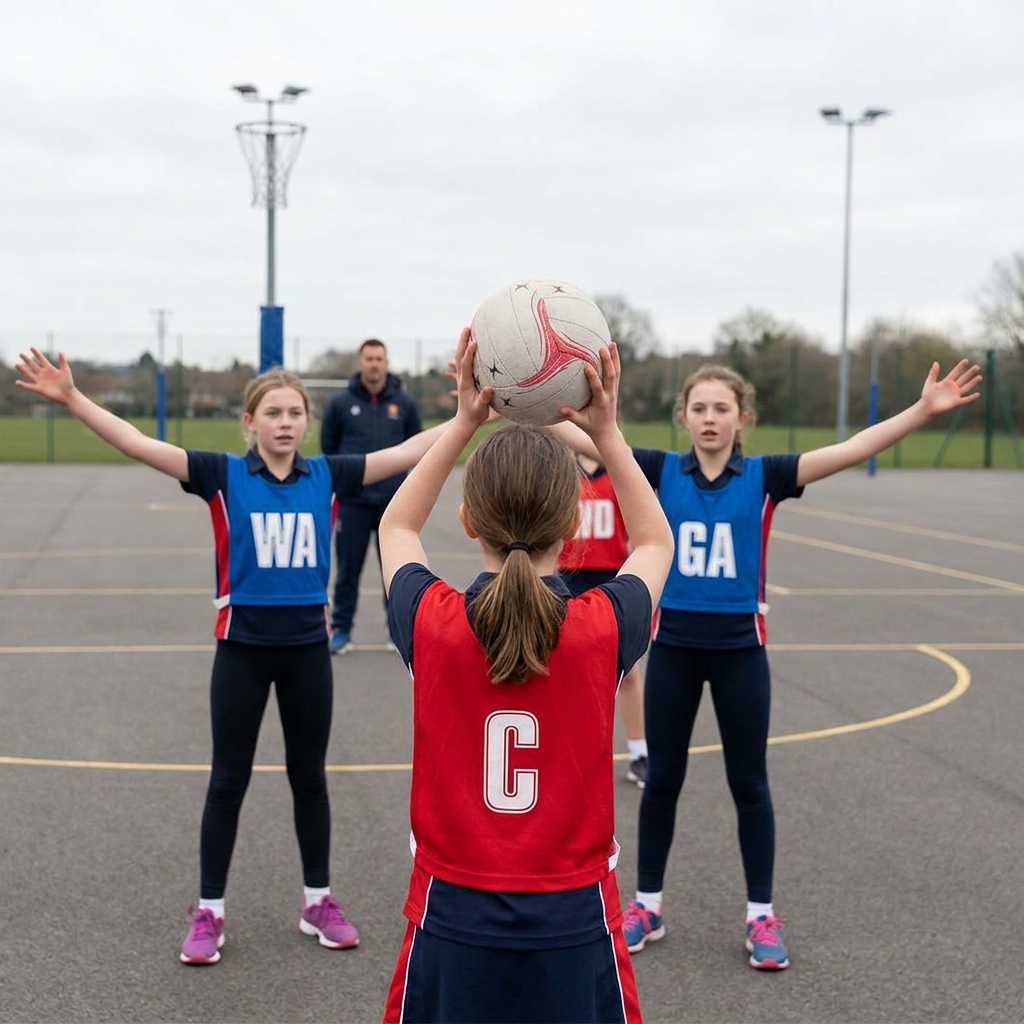
When everyone chases the ball, nobody is free. Teach your team to spread out, offer two options and clear space so the ball moves cleanly down court.
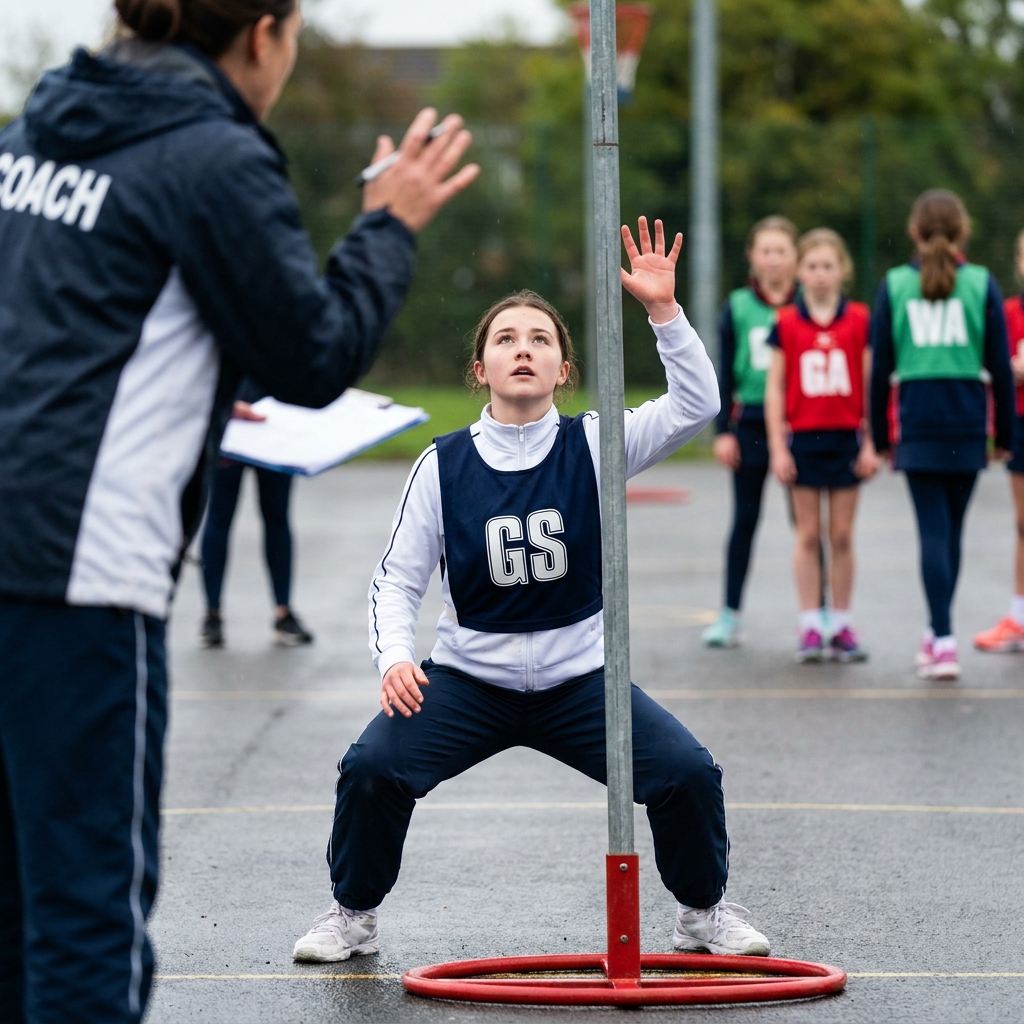
A shooter who can hold a strong position under the post is worth more than one who runs all over the circle. Here is how to coach body shape, a legal hold and a well-timed release, and how feeders make the most of it.