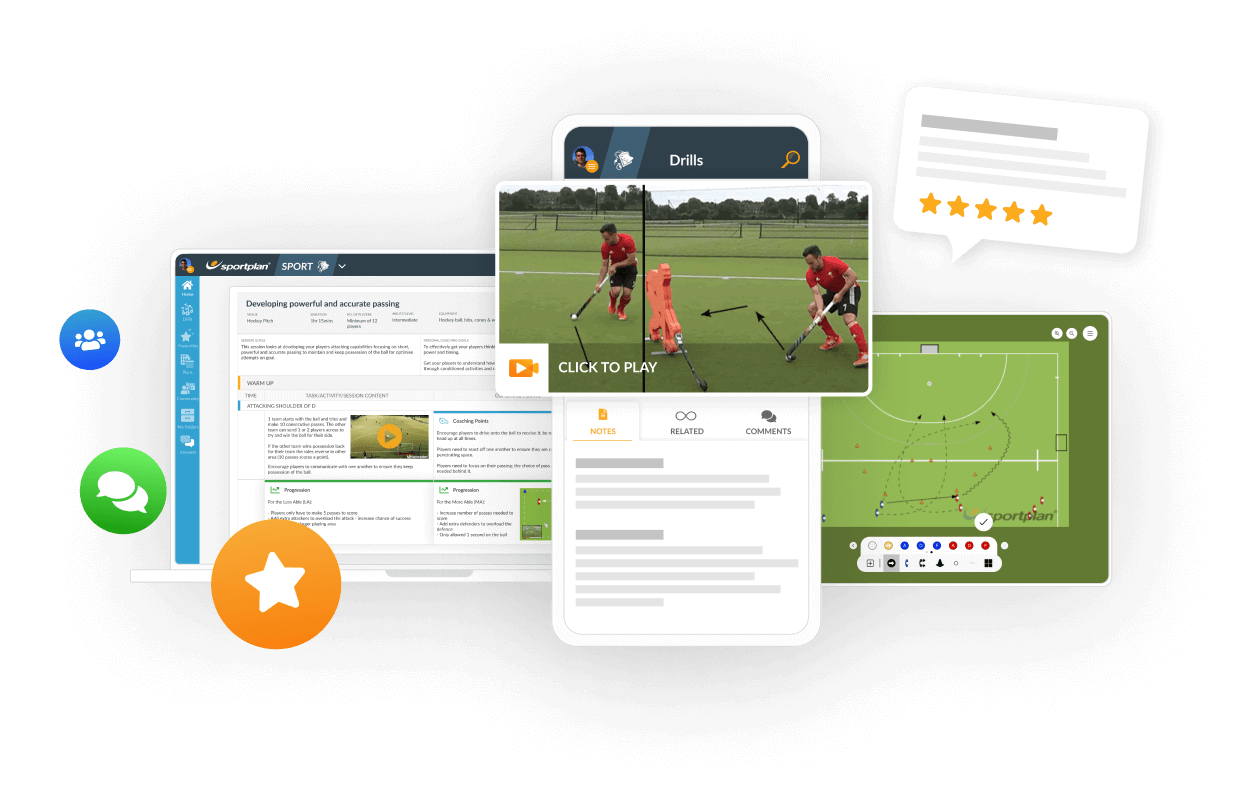
One team starts on the winning side of the court, another starts on the challenging side. Remaining teams wait to enter the drill on the challenging side. Players stick with their team the entire drill. To start play, the coach enters a free ball to the challenging side, then a free ball to the winning side. If needed, the coach enters a third free ball to the challenging side. The first team to win 2 free balls earns a big point and advances to (or stays on) the winning side. The other team exits the court, and a new team steps on to the challenging side. The drill ends when a team earns 5 big points. Note that players line up 2 in the front row and 2 in the back row. Only the back row players can set, and the hitters cannot attack at Zone 6.
This competitive drill will pick up the tempo of practice and incorporates attack, set, defense and blocking Change scoring as needed (point reduction for errors, play by time, points for block, etc.) Transition was a focus of this session, so extra attention to transition attack approaches.
This practice has no coaching points
This practice has no progressions
There are currently no more drills being shared in this category
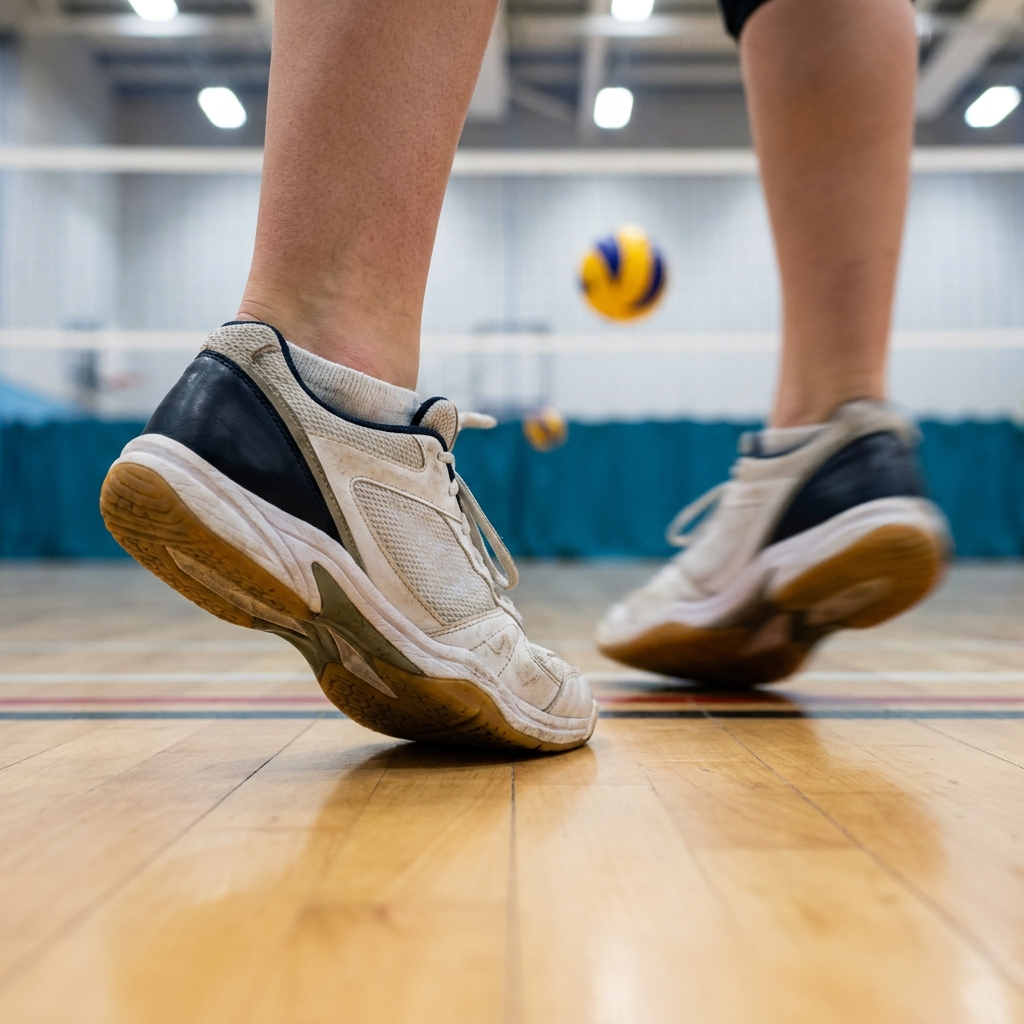
New hitters rarely miss because of their arm. They miss because of their feet. Build a reliable approach, then time it with your setter.
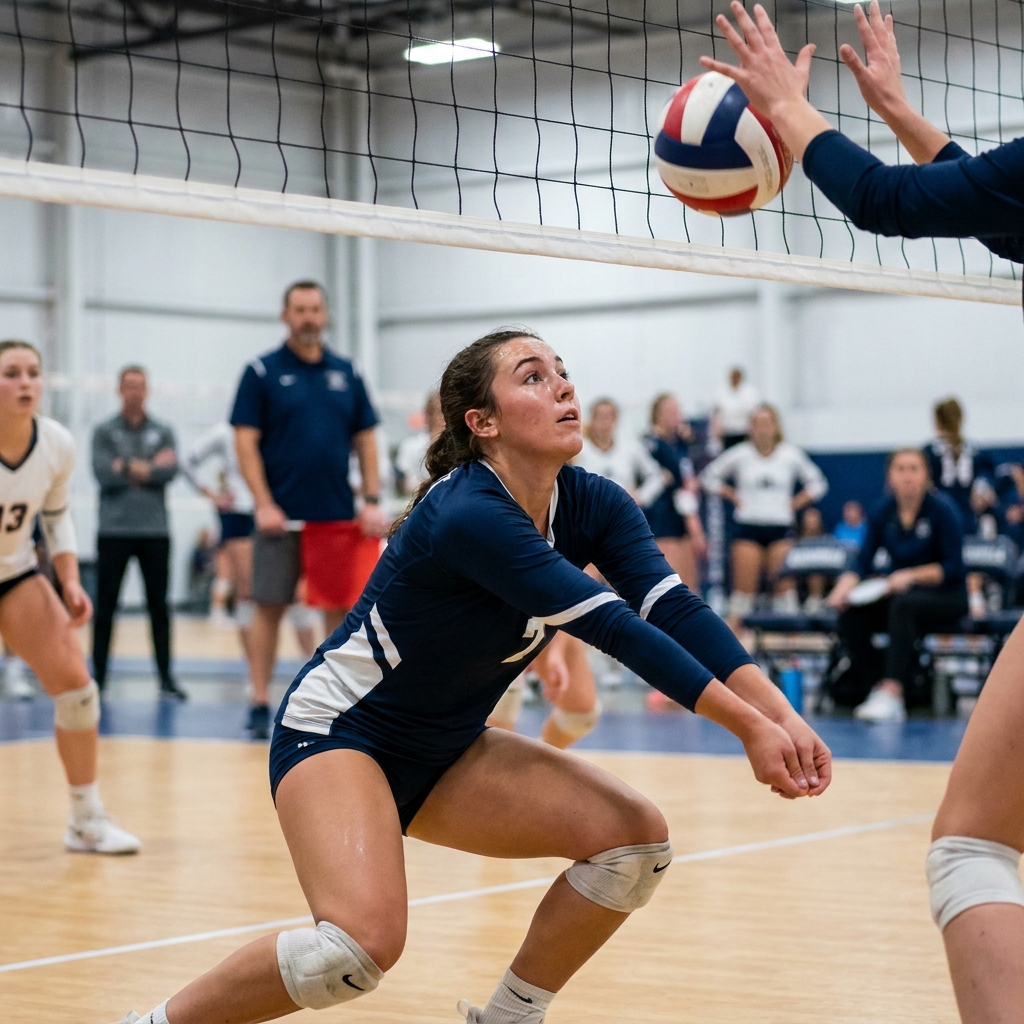
When your hitter gets stuffed, five teammates standing and watching is how you lose the point. Good attack coverage turns a blocked ball into a second swing.

Coaches spend hours correcting arms in serve receive when the real fault is almost always the feet. Fix the movement and the platform fixes itself.