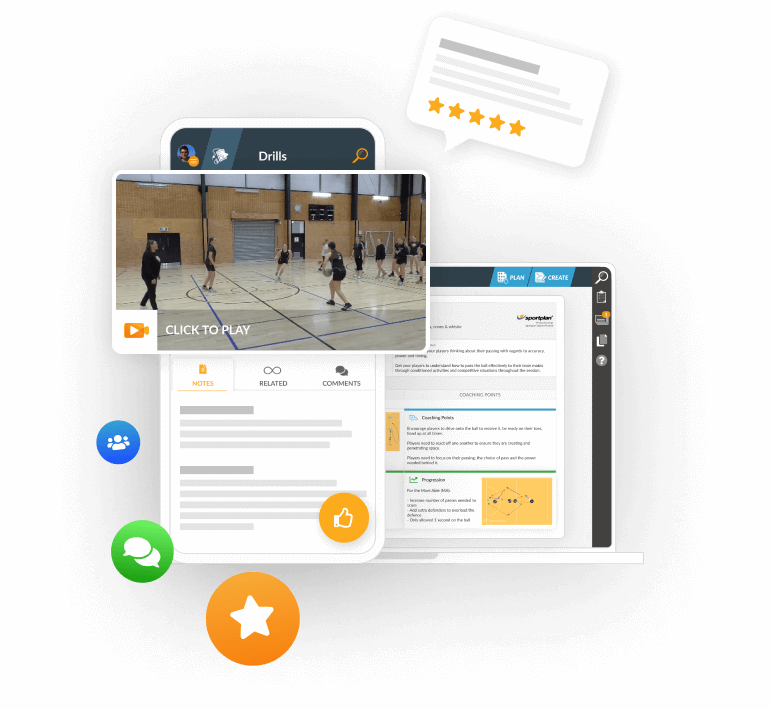
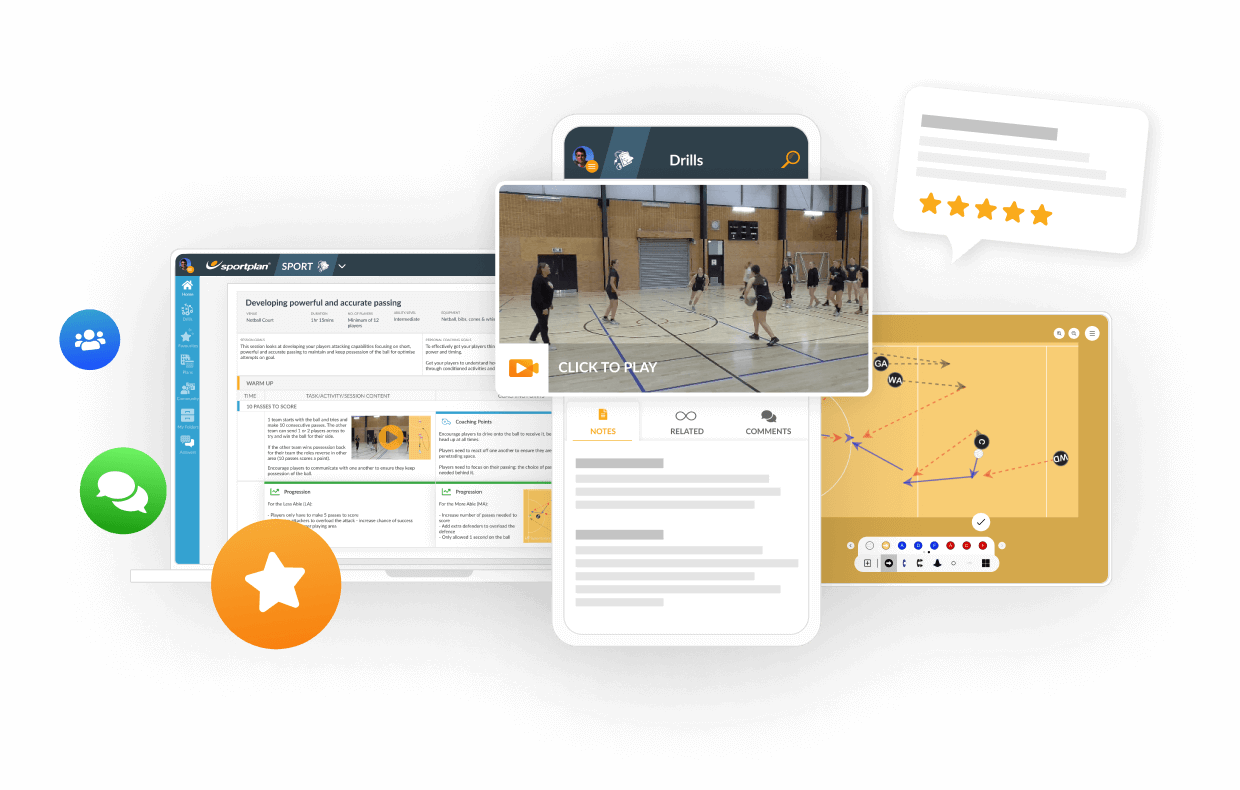
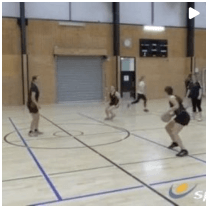
Aim: Attackers create a clear first-pass option by shifting the defender before the whistle, then drive straight over the transverse line. No faffing! Defenders make the attackers earn it. C feeds as the centre pass. Group into 3s or 4sWork in a limited space (half width of a court) with a line and 2 target areas about 45 degrees out from a central point. These can be lines or spots. Players should work in their normal positions as much as possible. Attackers: WA, GA, GS (as GA) Defenders: WD, GD, GK (as GD) Feeder: C Attacker wins: a clean catch in a target spot, with space. Defender wins: a touch, an interception, or a catch forced outside the spots. Defenders start at 50â70% and build to full intensity. They must remain in touching distance of players as much as possible â i.e. they canât sag off to mark the target spaces. 1 v 1 with feeder Defender ahead of the line. Attacker behind. C feeds. Start on the whistle (or call). The attacker works to shift the defender BEFORE the line, then drives towards one of the spots to receive the pass, ideally on 1 plane. Cue: Shift the defender, then go! Explore different ways to win it: Turning the defenders before the drill starts by prelim movements Change of pace Change direction and pace together before the line 1 v 2 defenders with feeder One defender behind the line with the attacker, the other in front of it. The attacker needs to beat / negate one defender first, then solve the second problem! That might mean: shifting one defender away holding one defender in place (screen) attacking the gap between them (definite!) Apply the same shift-then-go principles against the second defender. Cue: Negate one, beat the other. 2 v 3 with feeder and second phase 2 attackers behind the line, each with a defender on them. 3rd defender over the line. C feeds. Keep to the same small space at first. This increases the pressure and intensity and shows why every movement must be definite. Apply lead and read principles. The CPA principle is one over the line, but the leader might get shut down. Before the line Leader and reader can switch roles through their movement before the line. The reader does not assume the leader will get through. The leader must: make a committed attempt to get through; two defenders on her is not a reason to stop recognise when she really is closed if closed, use timing and position to give depth The reader must: step forward if the lead is not on, even just to shift her defender and create room for her second-phase drive keep her defender occupied or screened avoid crowding the same space remain available if the first option is not on be ready for the second phase Cue: One beats the line, the other finds the depth. Time allowing â full width court practise.
Eyes up: see the defender, connect with the the feeder and understand the available space. Make sure the first movement has purpose. Use definite steps, no faffing and dodging on the spot. Shift the defender far enough that they transfer weight, turn away or go too flat. Get their eyes off the feeder! When theyâre working with other defenders as a unit, you are trying to disconnect them too. Change direction to open the space, change pace to win it. You do not always need both. You can do them in either order! Then be definite and committed. Any change of direction happens before the line. Once over the line, stay on a straight, readable drive for the feeder, who can then place early and ahead with confidence. Defenders Start at 50-70% intensity and build. But always make them work for the shift! Feeder (C) Hold the ball strong, with your eyes on the drive. Release as the attacker commits, not before. Place the ball ahead, into space. If the movement is unclear, hold the ball! Explain what you saw /didnât see that meant you didnât have the confidence to release.
This practice has no coaching points
This practice has no progressions
in more ways than one
 sportplan_netball

Fixtures are stacking up and legs are getting heavy. Here's how to manage training load through the winter block so your squad stays on court, not on the sidelines.
Quiet teams concede easy goals. Teach your players to call for the ball and talk through defence, and your combinations hold up when it matters.
A ready-to-run Halloween session for High 5 and junior netball. Real drills in spooky costume, with a warm-up, a technical block, a decision-making game and a finish.