Taking on the defender (2)

August 2026

Ask a club coach what their defensive system is and the answer is almost always the same: mark your player, work hard, get a hand over. That is a perfectly good default. The problem comes when it is the only thing a team knows, because some opponents are simply better at one-on-one than you are.

A zone changes the question. Instead of asking your defenders to win individual contests they might lose, it asks them to protect space and force the ball into areas you want it to go. Against a team with a dominant attacking pairing, or one that lives on quick front-cut feeds, it can turn a game.

When a Zone Is the Right Call

Use a zone when you are being beaten individually rather than collectively. If your goal defence is losing a physical battle every centre pass, moving to a zone stops that contest from deciding the game.

It also works well against a side that moves the ball fast down one channel, or one that relies on a single feeder. A zone congests the space in front of the circle and forces the ball wide or backwards, which slows everything down.

Equally, know when not to. Against a patient team with good long passing and a shooter comfortable at distance, a zone can simply hand them time and space. A zone is a tactical choice, not a hiding place.

The Principles That Make It Work

A zone is not standing still. Every player has an area of responsibility, but the whole shape slides together as the ball moves. If one defender chases and the others do not adjust, the zone has a hole in it and the ball goes straight through.

Communication is the difference between a zone and a mess. Players have to call the ball's position, call handovers as an attacker moves from one area to another, and call when the shape needs to compress or expand.

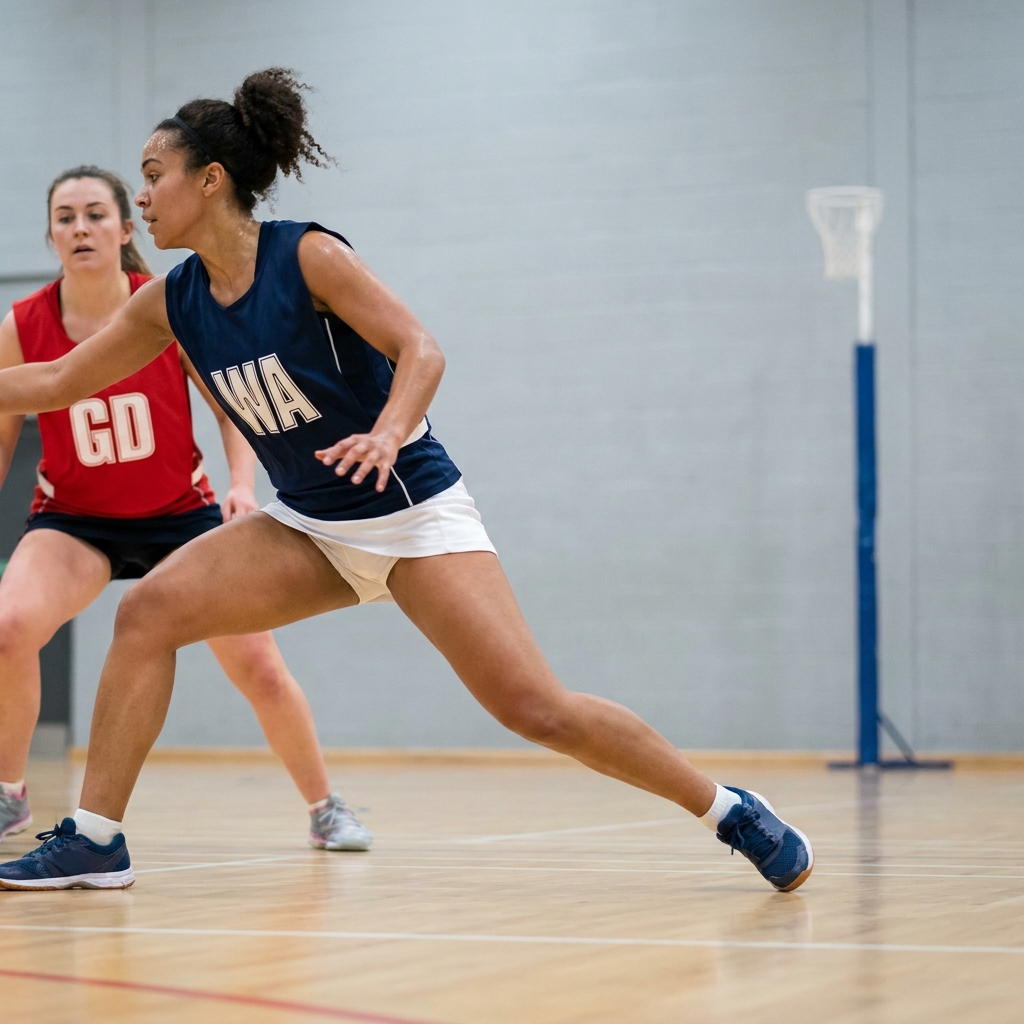
The hands matter more than the feet. In a zone, defenders are often a metre or two off their player rather than tight to them, so pressure has to come from arms over passing lanes rather than from body contact.

Building It in Training

Step One: Start without attackers. Walk the shape through, ball in hand, moving the ball around the court so players feel how far and how fast the whole unit slides.

Step Two: Add passive attackers. Let the attacking side move the ball but not attack the space, so defenders can practise the slide and the handovers without panic.

Step Three: Name the trigger. Decide as a squad when the zone goes on, whether that is from a centre pass, after a goal, or on a call from the captain, and rehearse the switch itself.

Step Four: Coach the handover. The moment an attacker crosses from one defender's area to another is where zones break down. Drill that specific moment on its own.

Step Five: Play it live and lose a few. A zone will leak goals while it is being learned. Give it a full quarter in a practice match rather than abandoning it after two possessions.

Key Coaching Points

  • Use a zone when you are losing individual contests, not as a general default.
  • The whole shape slides together; one player chasing the ball breaks the system.
  • Constant communication about ball position and handovers is non-negotiable.
  • Pressure comes from hands over passing lanes rather than close body contact.
  • Rehearse the switch into the zone as its own skill, with an agreed trigger.
  • Give it time in practice matches, because a new zone always leaks before it holds.

Recommended Drills

VIEW ALL ZONE DEFENCE DRILLS

Frequently Asked Questions

Is a zone legal in netball given the obstruction rule?

Yes. Defenders in a zone are usually further from their opponent than in one-on-one marking, which if anything makes the three-foot distance easier to respect. The rule to watch is defenders drifting in to contest without re-establishing distance.

What age can players start learning a zone?

Once players reliably understand their own position and can communicate under pressure, which for most is around the upper junior age groups. Below that, one-on-one defending teaches the individual skills a zone later depends on, so there is no rush.

How do we switch out of a zone if it is not working?

Have an agreed call and practise it. Switching systems mid-game is a skill in itself, and a team that has only ever rehearsed going into a zone will get caught halfway between two systems when they try to come out of it.

Sharon Baker Coach, England

DESCRIPTION

W drives forward for ball, looks down the line, but can’t give it so returns to F1 Then drives down court to get long ball Start with relatively passive defender, but build quickly Variations depending on defender movement Defender is beaten, can you get quick long ball? Look at front cut (defender has overcooked it) and back cut? Defender comes with: can attacker clear slowly, then make drive for 3rd second ball Attacker goes for front cut, but is blocked by defender; can they flick out and take ball on the run? Defender stays with; does attacker have guts to go with momentum and still run on it? (at what point do they cut back or clear for someone else?)

COACHING POINTS

The ball needs to be received ahead of the driving player, so they catch it on the move; placement of ball and timing of the run are both key! Keep feet under the body, and no leaping onto the ball. This way, you are ready to send the next ball on in balanced and controlled manner. Sight down the court first each time. Adding in defender often causes players to hesitate; preliminary work to get angle on defender so that the intensity of the drive is maintained (or intensified!) Recognising that knowing where defender is a benefit; it can help keep our attacking angles tight (stops lazy curve runs) and gives feeder clear space into which to feed

This practice has no coaching points

PROGRESSION

This practice has no progressions

READ MORE
READ LESS

JOIN SPORTPLAN FOR FREE

  • search our library of 700+ Netball drills
  • create your own professional coaching plans
  • or access our tried and tested plans

JOIN SPORTPLAN FOR FREE

  • search our library of 700+ netball drills
  • create your own professional coaching plans
  • or access our tried and tested plans
;

Sportplan App

Give it a try - it's better in the app

X
YOUR SESSION IS STARTING SOON... Join the worlds largest netball coaching resource for 700+ drills and pro tools to make coaching easy.
LET'S DO IT