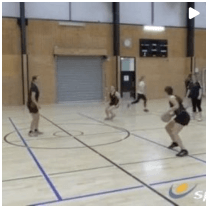
The attacking player is looking to receive a pass from one feeder then send to the opposite feeder. The defending player is looking to push (encourage by body angle pressure, not physically!) towards one of the front corners (high and wide). Once the attacking player is committed to the movement and ball released, the defending player can release to come off the body and prepare for the 3-foot mark, getting arms up high. This will likely force the next pass to be a high pass. As this pass is released, the defending player can drop off and drive towards the destination feeder to challenge for the intercept with a vertical jump. Progression The destination feeder can move along the line. If the feeder is parallel down court, then defender should look to run on that intercept. However, if they head across to opposite corner, this is signal for defending player actually to stay arms over (in game-play, this would be for someone else to run onto!) Run as a continuous drill, ball moving to either feeder. Defending player measure themselves against all possible success criteria; for example, Intercept, high and wide, not being able to release to opposite feeder.
Body angle to encourage that high and wide Angle when arms over so can see attacking player, ball and the destination feeder in peripheral vision. Angled run as dropping back, but hips and feet in direction of travel. Looking to arrive then jump vertical for intercept and avoid the contact.
This practice has no coaching points
This practice has no progressions

in more ways than one
 sportplan_netball


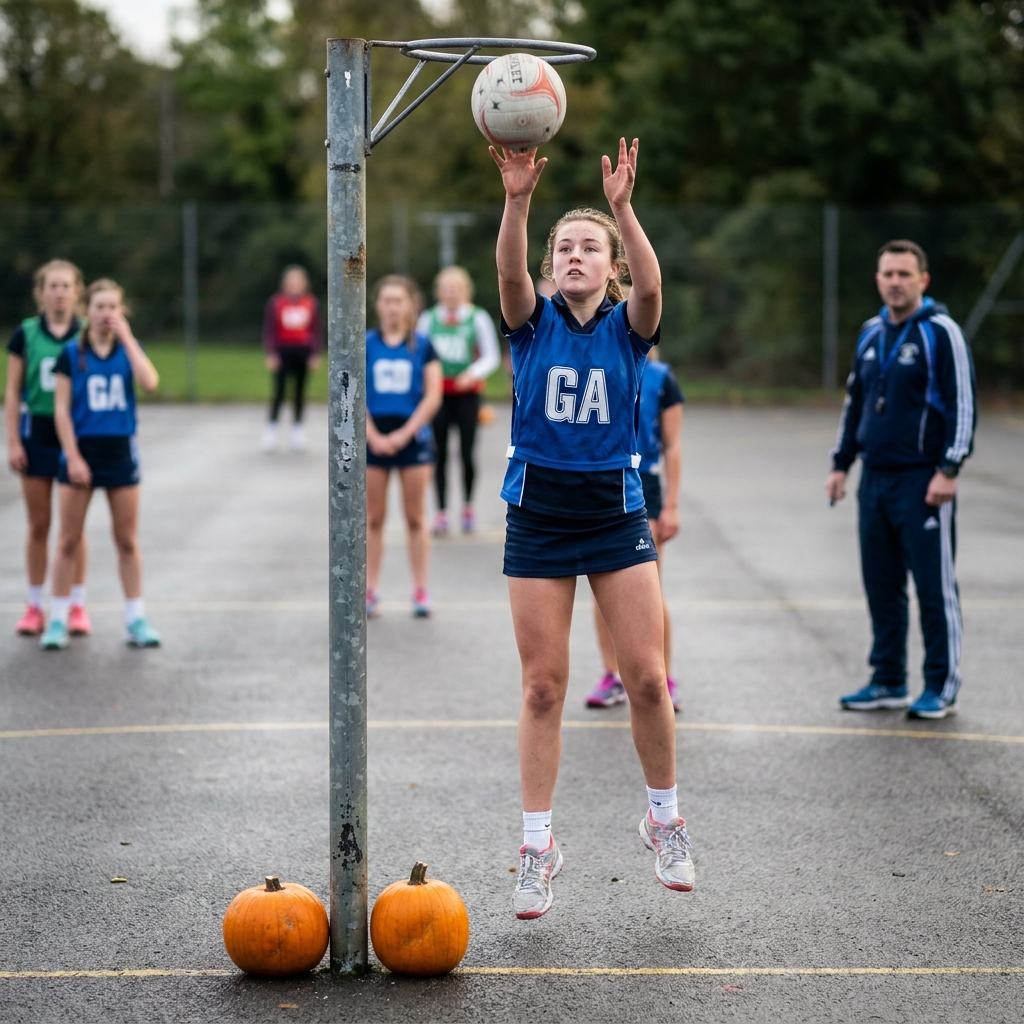
A ready-to-run Halloween session for High 5 and junior netball. Real drills in spooky costume, with a warm-up, a technical block, a decision-making game and a finish.
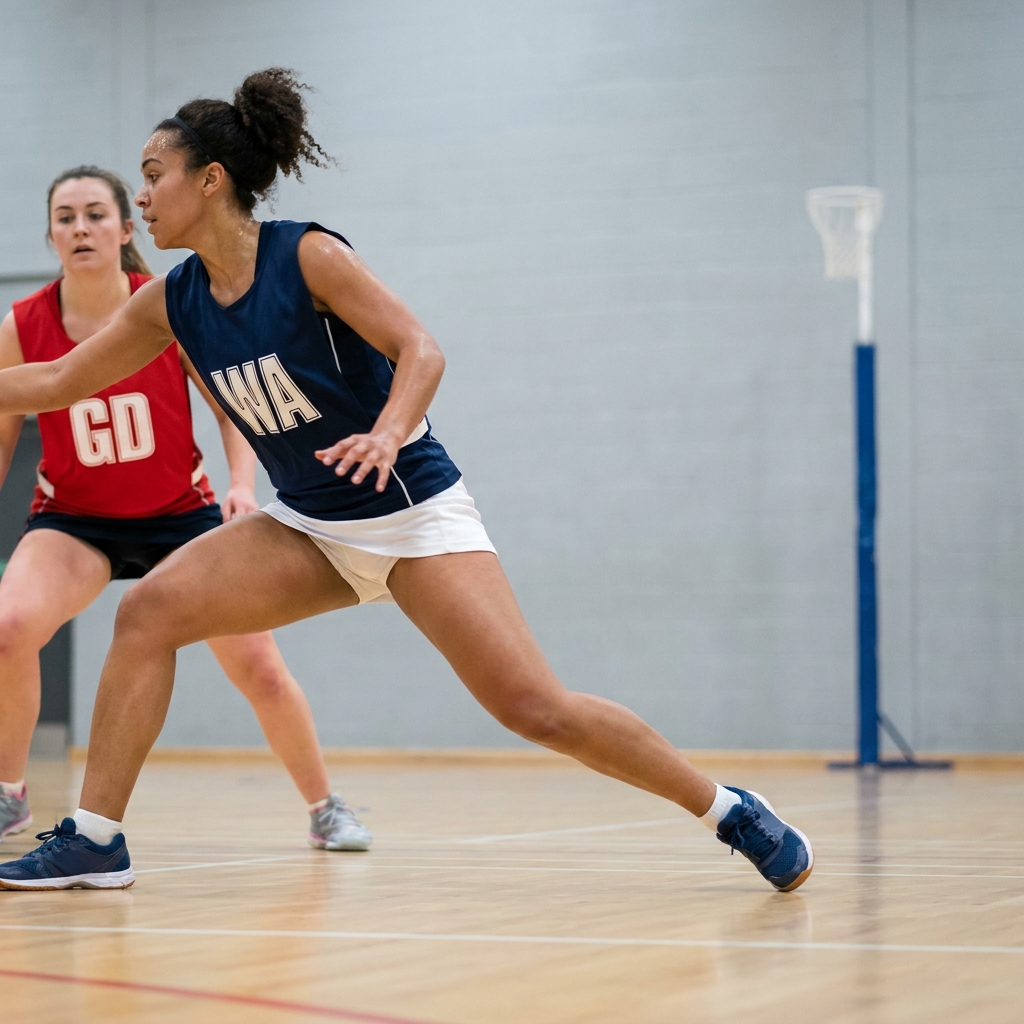
Tight markers win when attackers run in straight lines. Teach your players to dodge, change pace and time their drive so they get free when the ball is ready.

When everyone chases the ball, nobody is free. Teach your team to spread out, offer two options and clear space so the ball moves cleanly down court.