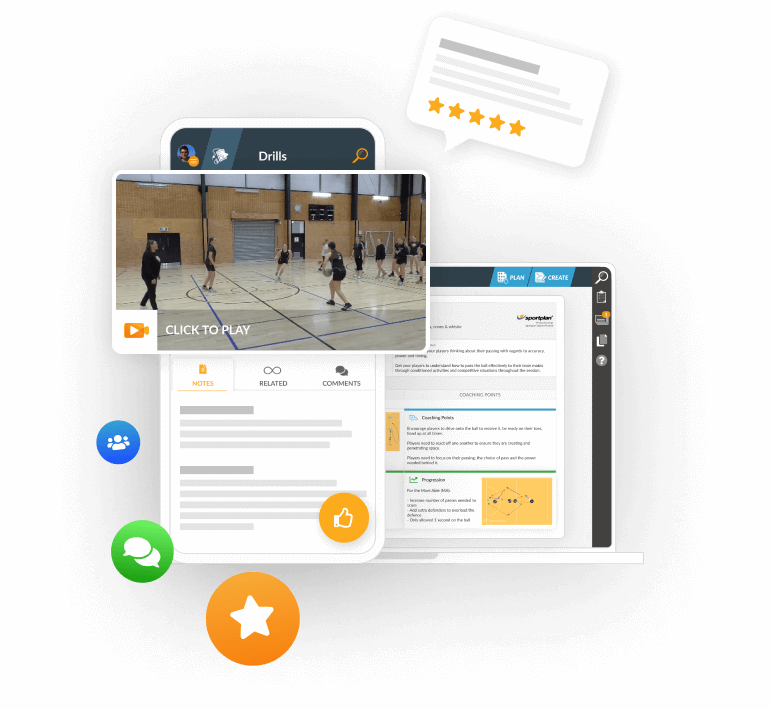
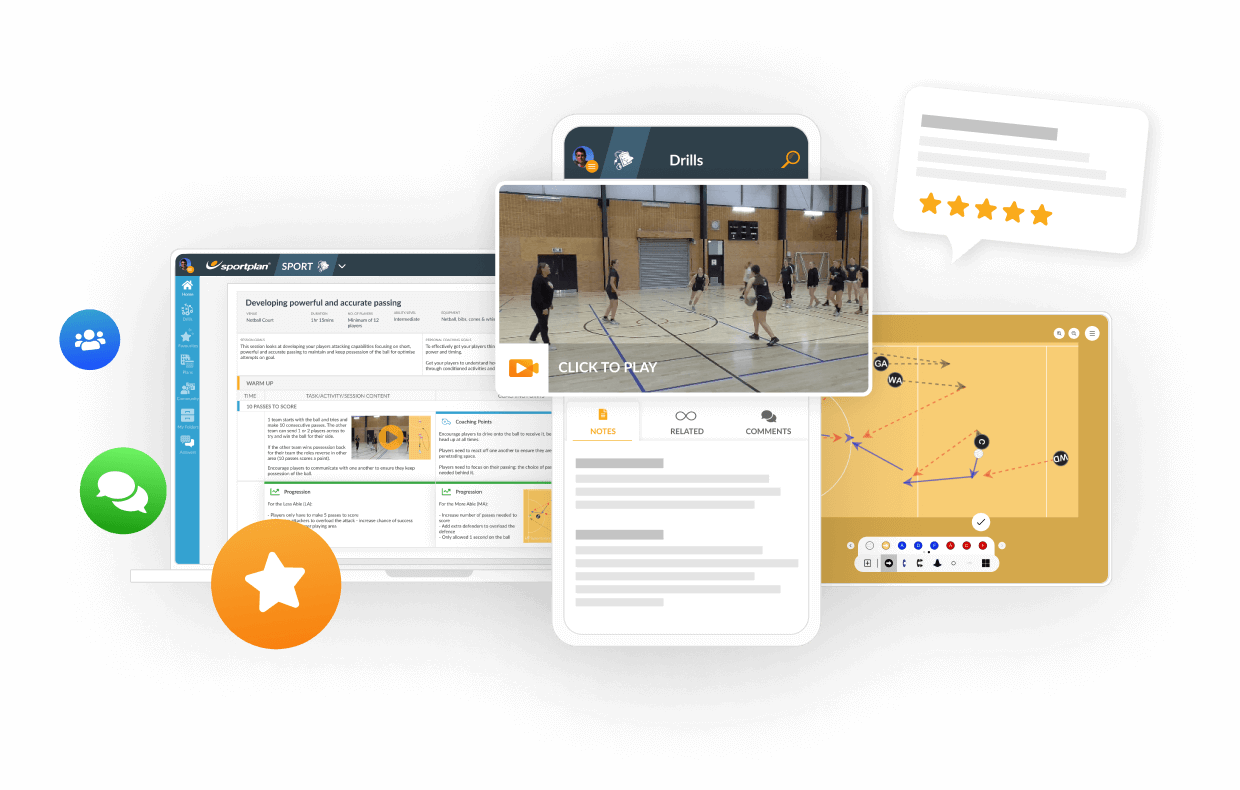
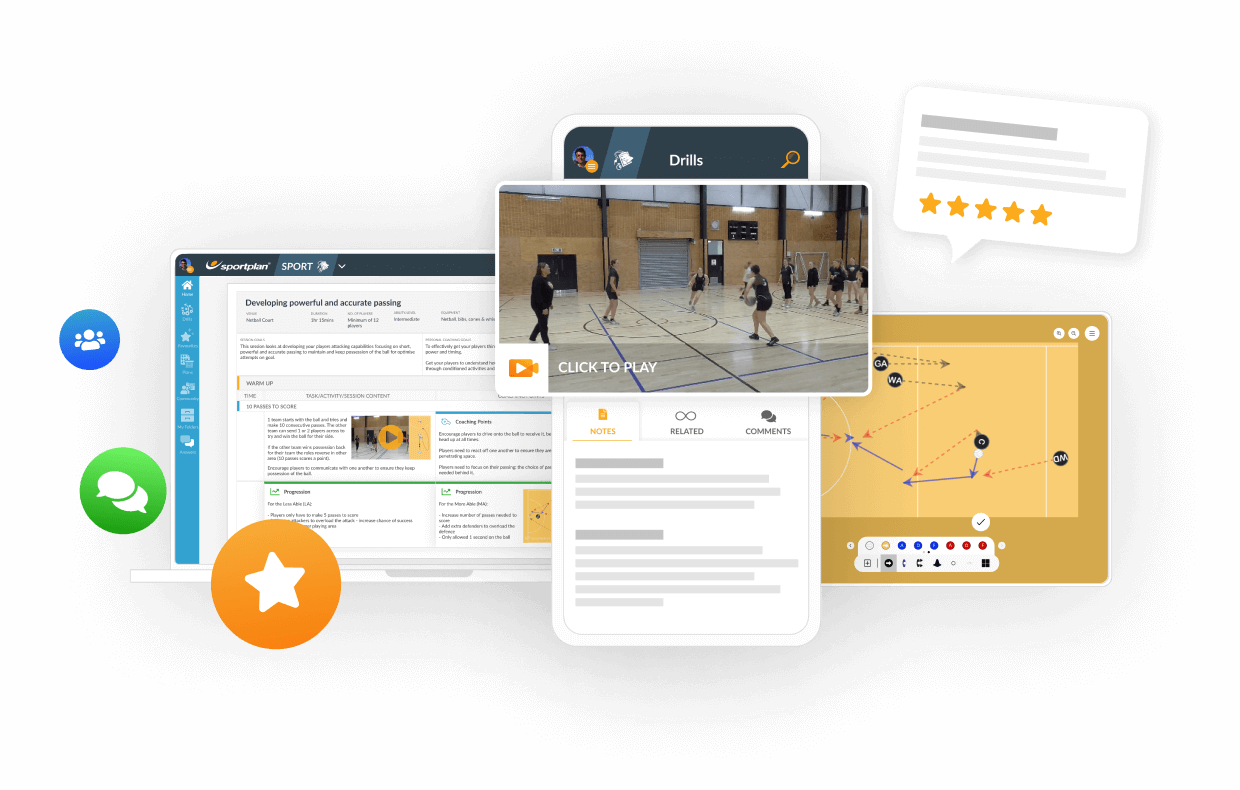
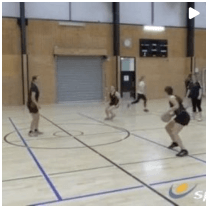
Use small space, about 2m x 3m, in pairs with a ball. The feeder is standing just beyond the marked area with the ball. The attacking player starts at one of the back corners and drives on the diagonal to receive a straight pass ahead of them at the front. They return the pass. Turning their hips inwards, they then drive towards the back corner, using peripheral vision to keep the feeder and ball in sight. The feeder will send a lifted ball into that corner for the attacking player to take in the air on the run. They return that ball, then turn their hips again to run on the next diagonal. The pattern continues. First time through, at a pace to help understand the movement. Swap over. Repeat building the intensity. Give a specific number of repeats or time to complete each set.
Feet under body and keeping them moving until ball is secured. Using arms to run until ball has been released, then grabbing out to catch it. Small jump to catch to help control momentum especially at the back space. Landing upright and balanced with weight over both or landing foot. Strong onwards pass. Push off outside foot as changing direction. Hips always in direction of travel whilst body angled open to view feeder and ball - this is especially tricky on the back straight run! Keep head and eyes up.
This practice has no coaching points
This practice has no progressions
in more ways than one
 sportplan_netball

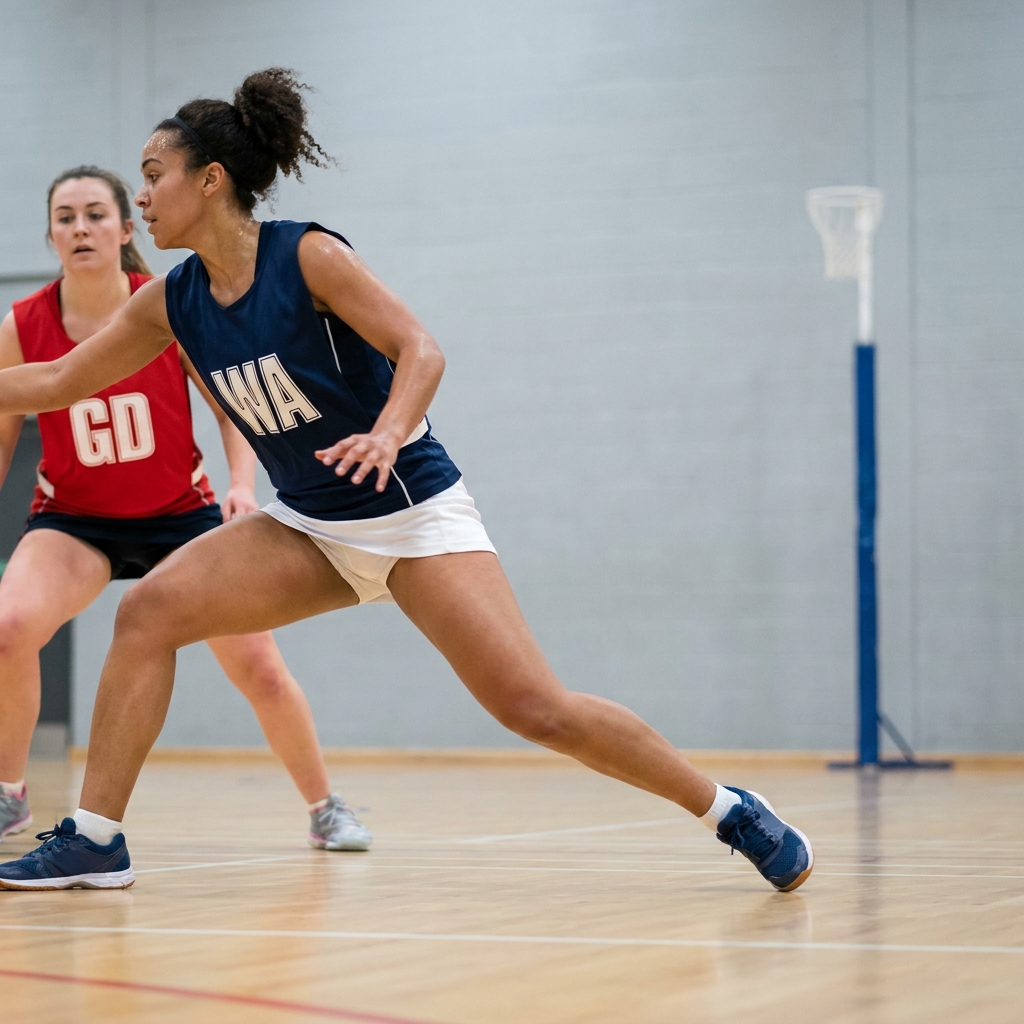
Tight markers win when attackers run in straight lines. Teach your players to dodge, change pace and time their drive so they get free when the ball is ready.
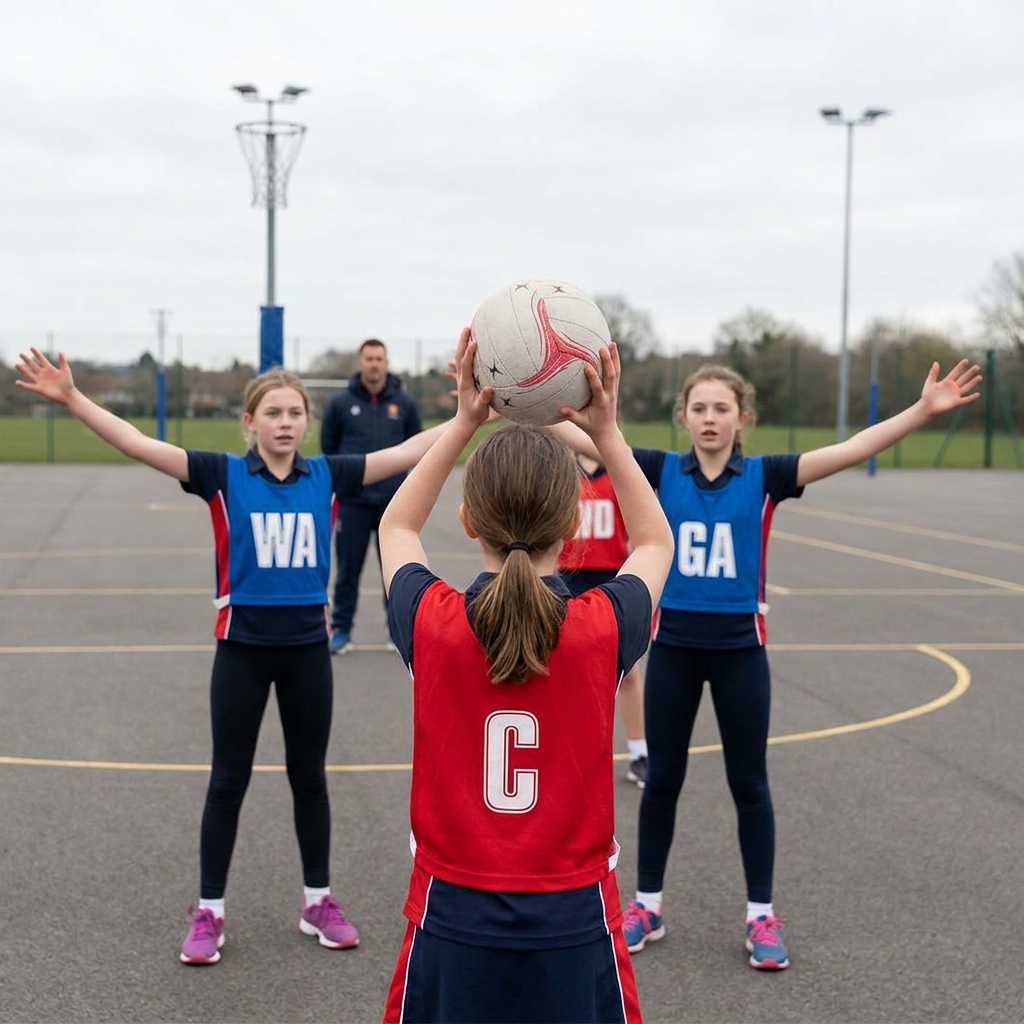
When everyone chases the ball, nobody is free. Teach your team to spread out, offer two options and clear space so the ball moves cleanly down court.
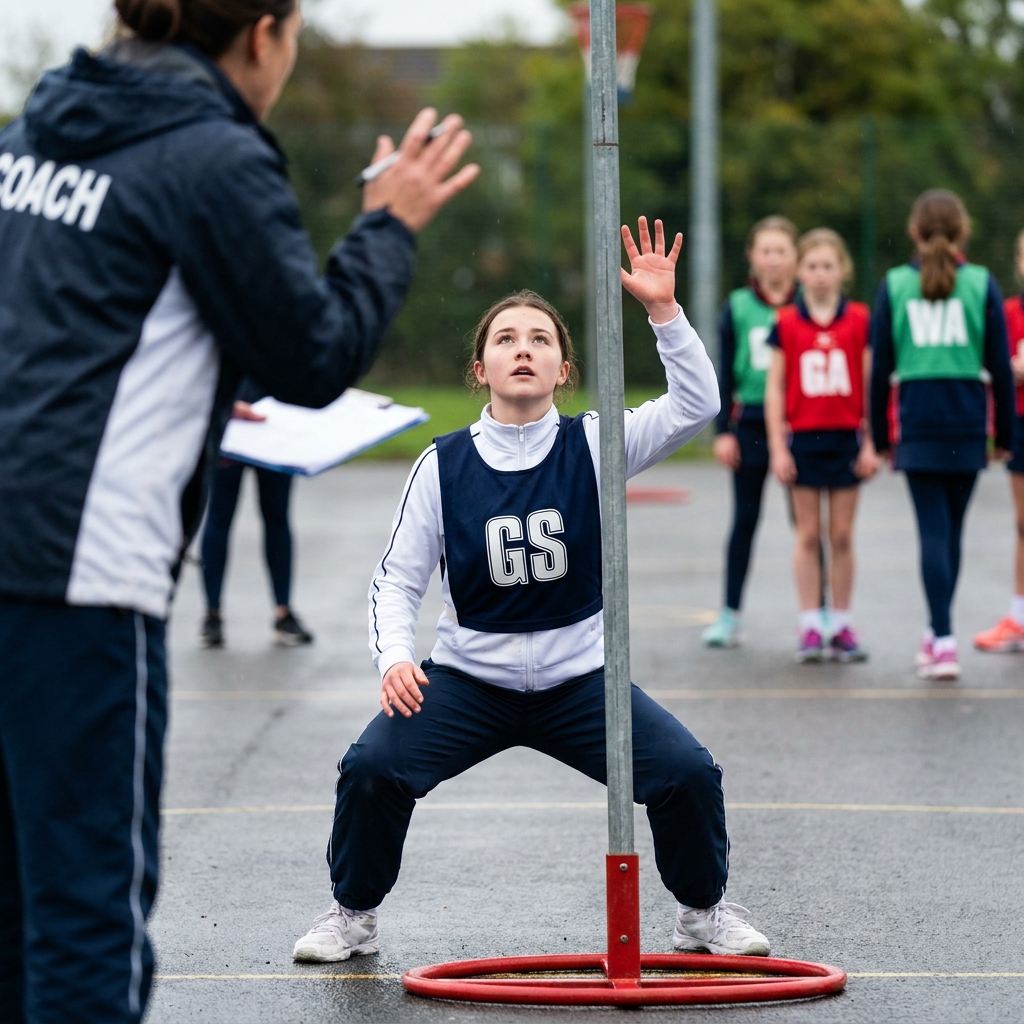
A shooter who can hold a strong position under the post is worth more than one who runs all over the circle. Here is how to coach body shape, a legal hold and a well-timed release, and how feeders make the most of it.