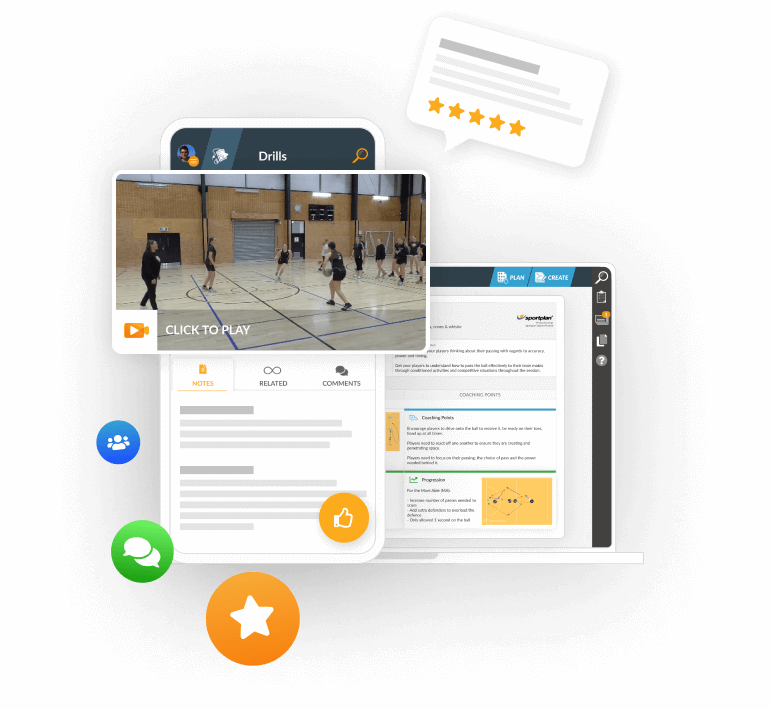
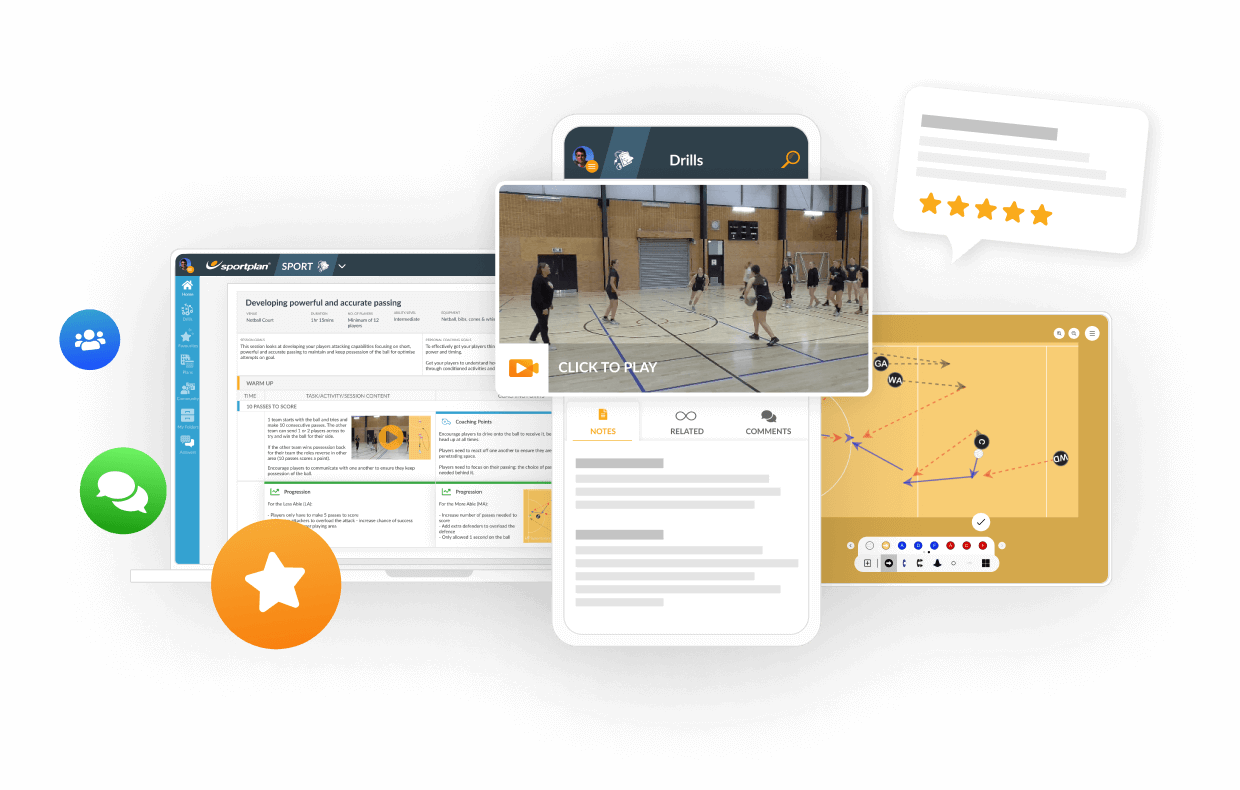
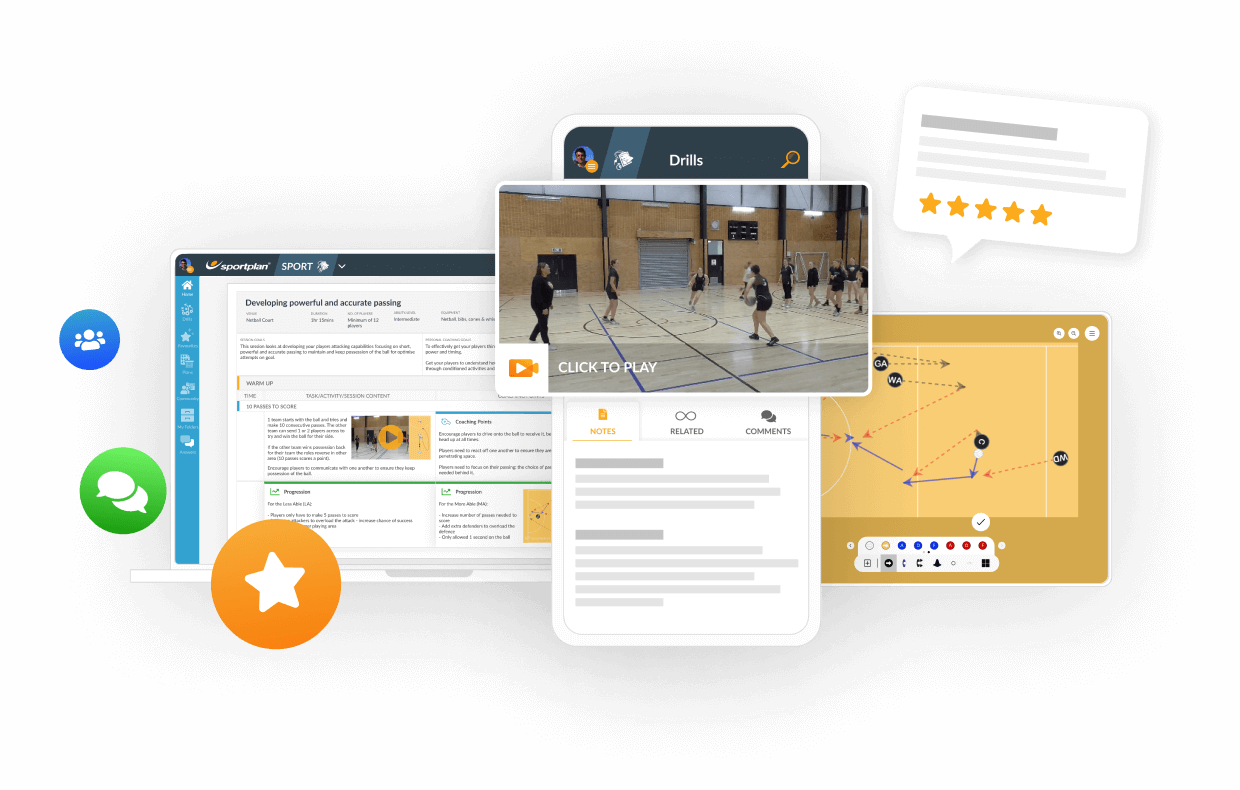
In groups of 4 or 5, using a space relevant to players. In this example, we're set up for a centre pass WA player drives forward to recieve a pass. She turns in air to send ball onwards onto one of two options (could be GA, GS or a C). She then drives to edge of circle and recieves a return ball, whereby she should be landing balanced on edge and able to place ball neatly into shooters. Progressions:Other players should be moving for 1st and 2nd phase, and vary movements Add in a defender
Get head and shoulders around quickly and sight the straight line ball Use of legs and arms to get power into jump to increase elevation How quick can the player make the turn; how quick can they release the ball? Some will be from balanced position; others may be able to release whilst in the air. The quicker they can turn though, the less time a defender has to set up on them. Quality and accuracy of the pass must remain high Ability to land on either leg to enable a turn away from a defender or into a good position for onward pass. In addition, consideration as a feeder about how to help enable your team-mate to take off and land on the turn; release point, timing. When adding in defenders in later stages of practise, ask them to vary their style to encourage the attacker working to think more (on side, in front, close, off body, behind) - can attacker turn AWAY from defender?
This practice has no coaching points
This practice has no progressions
in more ways than one
 sportplan_netball

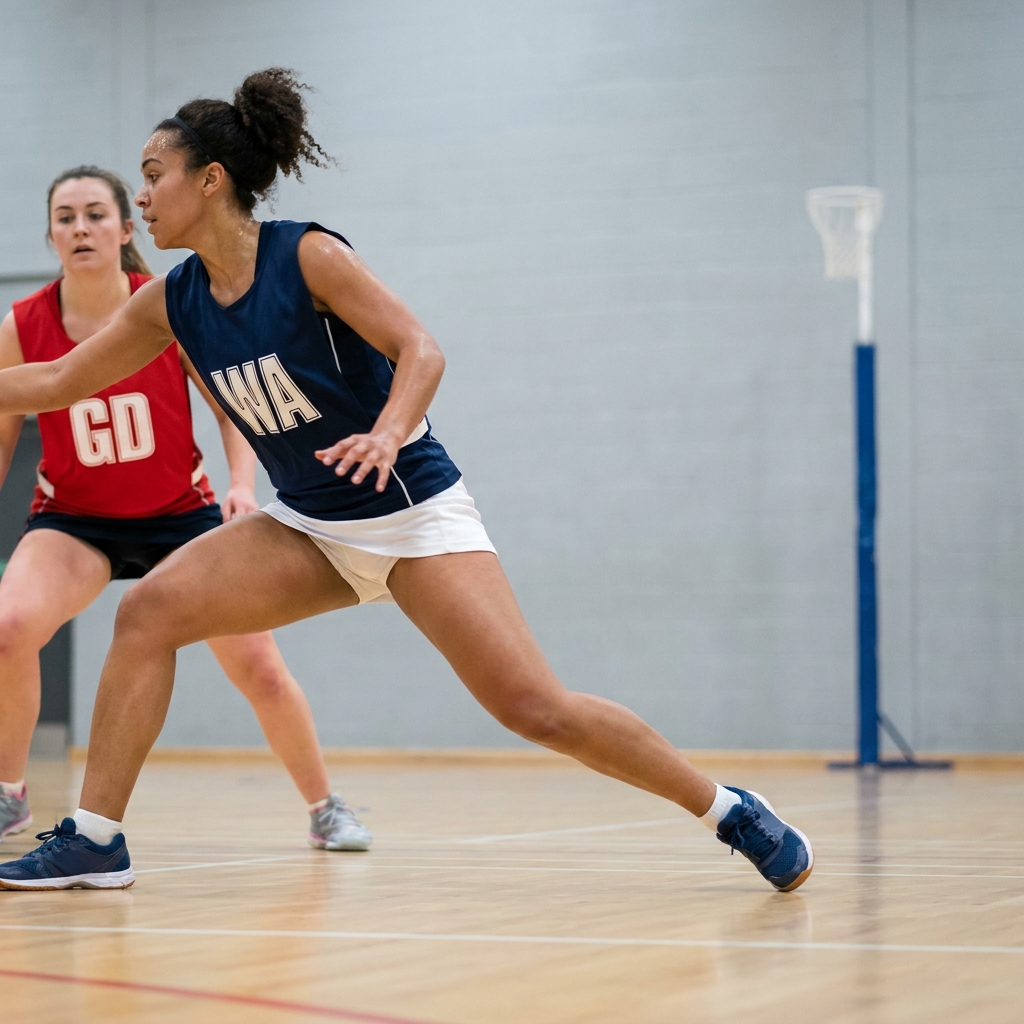
Tight markers win when attackers run in straight lines. Teach your players to dodge, change pace and time their drive so they get free when the ball is ready.
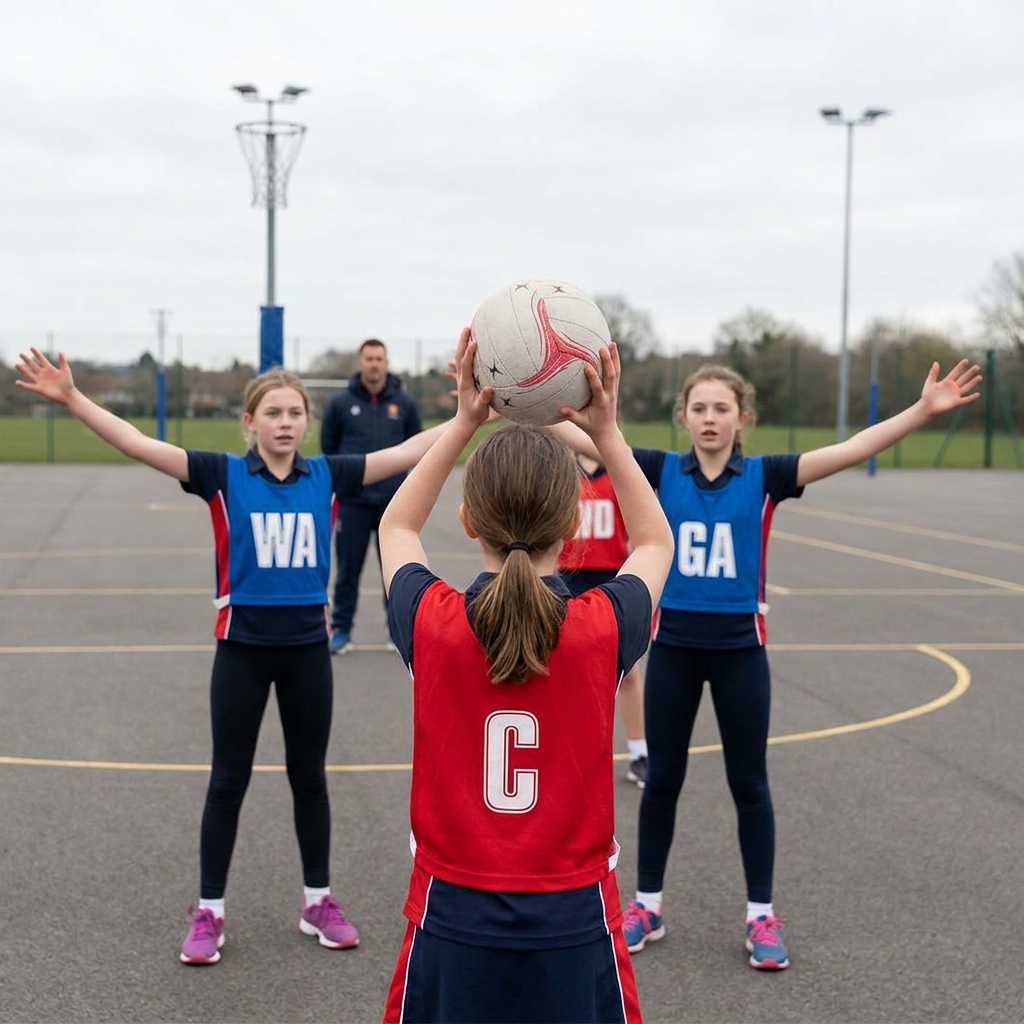
When everyone chases the ball, nobody is free. Teach your team to spread out, offer two options and clear space so the ball moves cleanly down court.
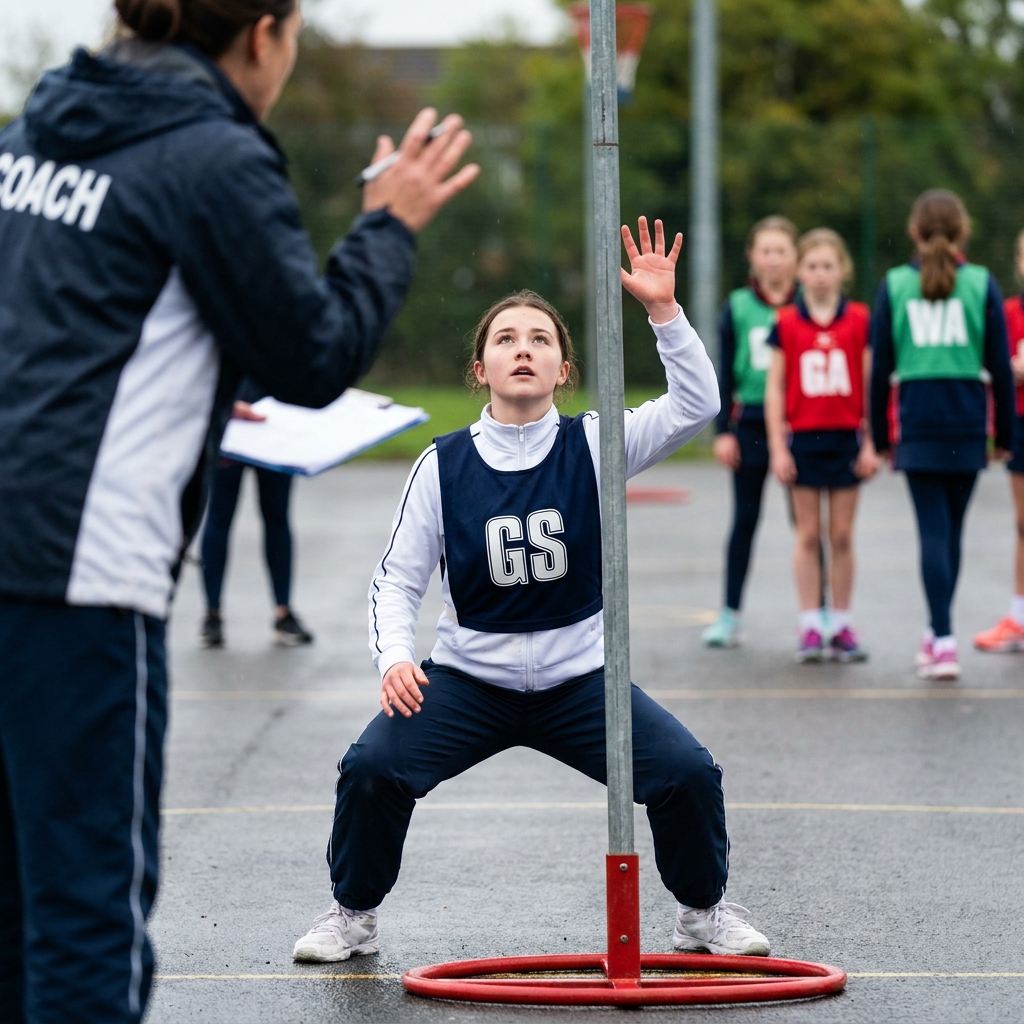
A shooter who can hold a strong position under the post is worth more than one who runs all over the circle. Here is how to coach body shape, a legal hold and a well-timed release, and how feeders make the most of it.