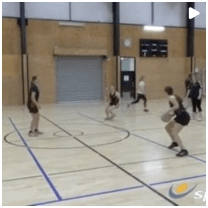
Movement 1: From a centre pass, C passes to GA, then runs forward to receive the return pass. WA runs forward then loops outside down the side line. GA pivots to the outside to run down the sideline and in toward the goal circle. Movement 2: On the run, WA pivots toward the top of the circle to receive the pass from C. Movement 3: GA continues into the circle to receive a pass from WA. GS leads to the opposite side and loops to the outside to return along the baseline to position under the goal. C runs forward to the cirlce to position into the space left by the GA. Movement 4: GA shoots.
Engage the attack in structured movement toward the goal. Reinforce how space is created in the centre by pulling defenders toward the sidelines. Explore the options of WA passing to GS. GA passing to GS. WA passing to C. Once movement is walked through pick up the pace, engage defence at 50%, 75% and 100%.
This practice has no coaching points
This practice has no progressions
in more ways than one
 sportplan_netball

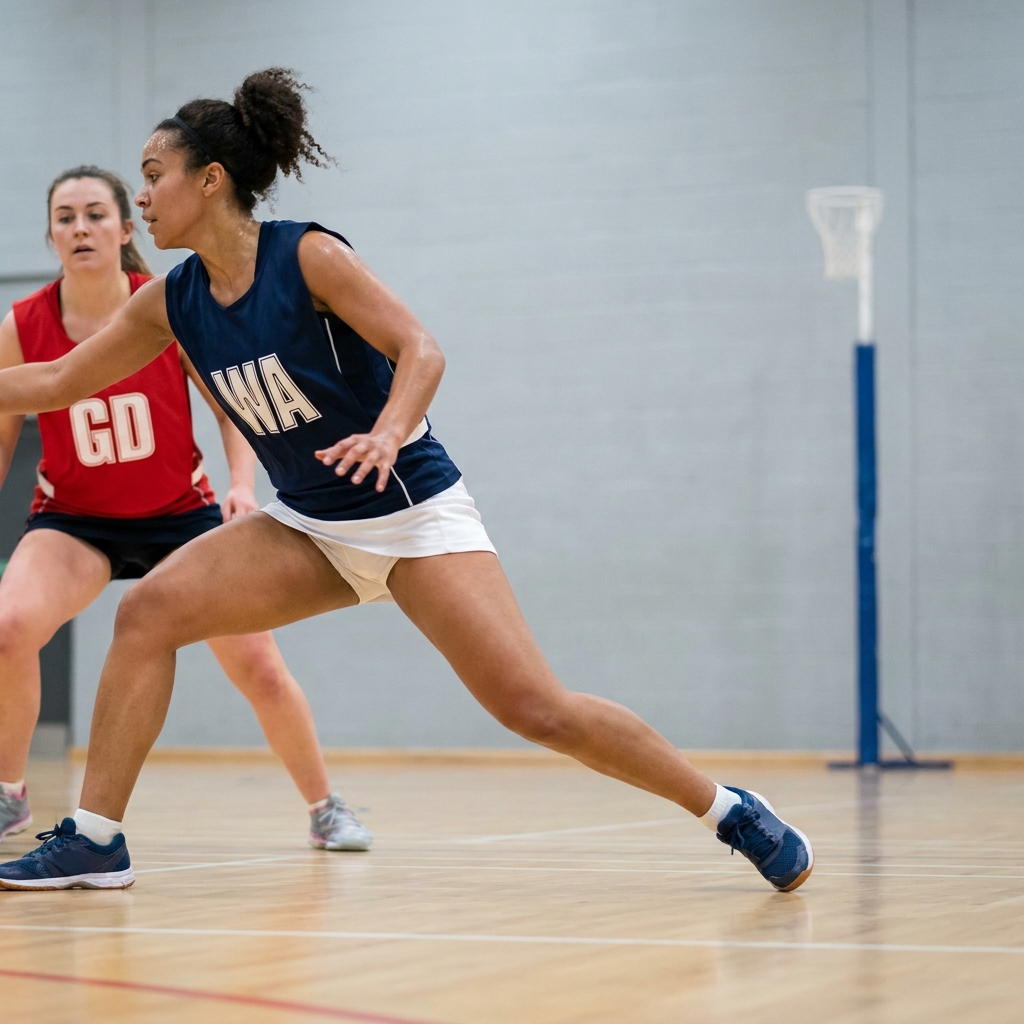
Tight markers win when attackers run in straight lines. Teach your players to dodge, change pace and time their drive so they get free when the ball is ready.
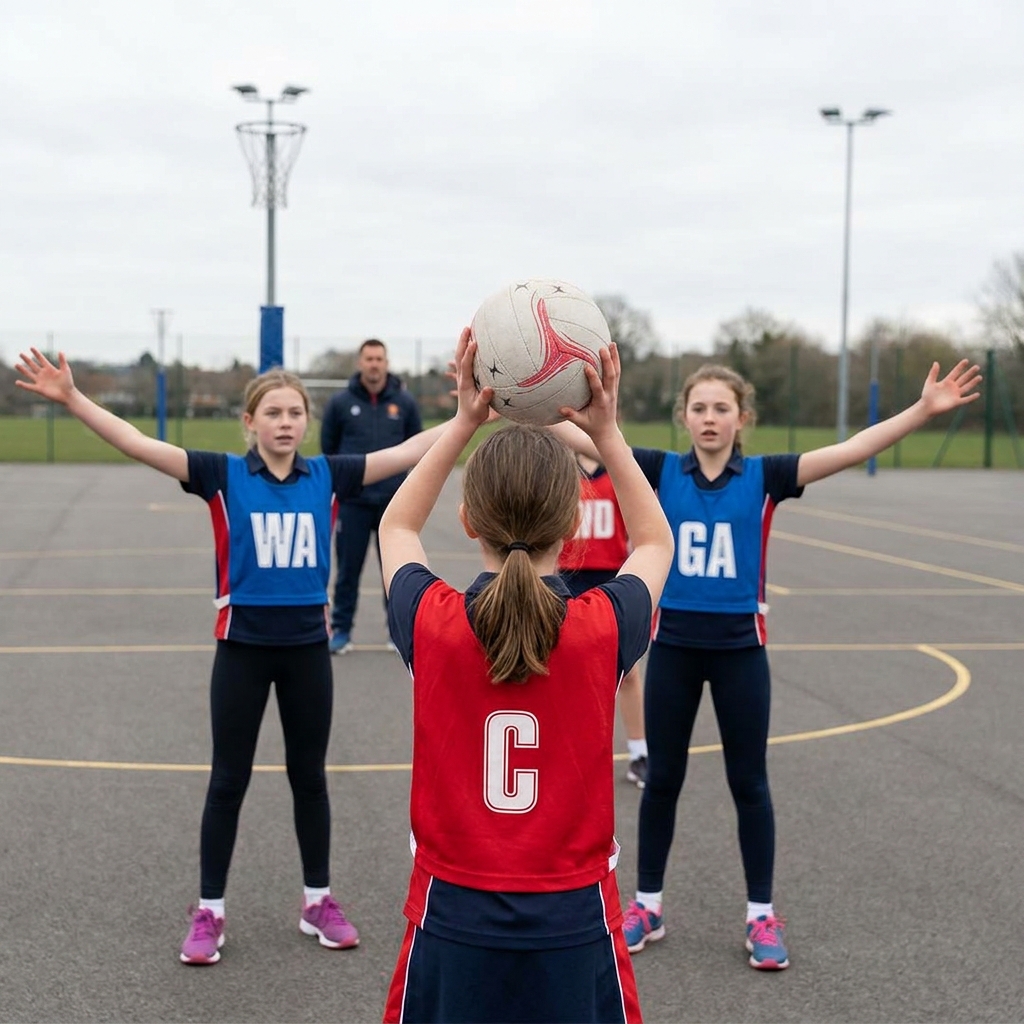
When everyone chases the ball, nobody is free. Teach your team to spread out, offer two options and clear space so the ball moves cleanly down court.
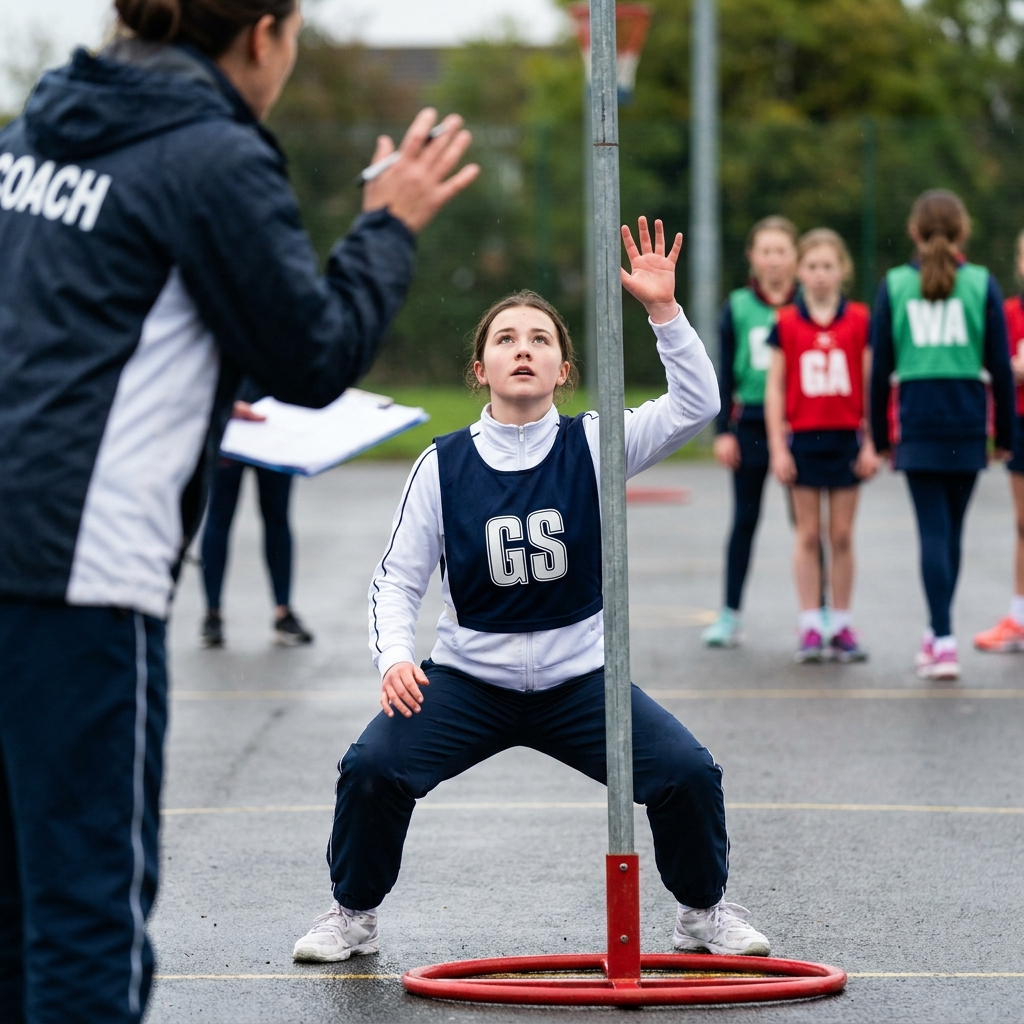
A shooter who can hold a strong position under the post is worth more than one who runs all over the circle. Here is how to coach body shape, a legal hold and a well-timed release, and how feeders make the most of it.